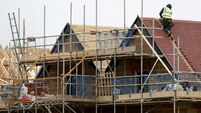
Grants of up to €50,000 are to be extended to all vacant properties across the country in a bid to bring as many unoccupied buildings back into use as family homes.
Housing Minister Darragh O’Brien had been under pressure to expand the Croí Cónaithe scheme which, up until now, has provided financial supports to refurbished vacant properties in towns and villages only.
However, it is expected that Mr O’Brien will announce after Cabinet on Tuesday that he is bringing properties in inner city areas including Cork, Dublin, Galway, and Limerick as well as one-off farmhouses in rural locations into the scheme.
Around 365 applications have been made to the scheme since it opened in July. It is now expected that this number will increase significantly after it is opened up to all vacant and derelict properties nationwide.
It means that the 700 derelict properties which campaigners have identified within a 2km radius of Cork city centre will now be eligible to receive funding.
Frank O’Connor and Jude Sherry, who have tracked unused properties in Cork, have been calling for measures to tackle the scourge of dereliction blighting towns and cities across Ireland.
While the qualifying criteria for Croí Cónaithe funding is to be broadened out, it is understood that there are currently no plans to increase the €50m which had been originally allocated for the scheme.
However, this could be reviewed if the scheme is oversubscribed.
Under the scheme, a grant of up €30,000 is available for the refurbishment of vacant properties for occupation as a principal private residence, including the conversion of a property which has not been used as residential heretofore.
However, people can apply for a top-up grant of up to €20,000 where the property is derelict and structurally unsound.
The grants, which are primarily aimed at helping first-time buyers to bridge the cost of refurbishing older and unused homes can also be combined with supports received under the Sustainable Energy Authority Of Ireland (SEAI) Better Energy Homes scheme.
Properties must be vacant for two years or more and built before 1993 to qualify.
Fine Gael senator John Cummins, who had called for an expansion of eligibility for Croí Cónaithe, said the target to bring 2,000 derelict or vacant homes back into use by 2025 under the scheme simply is not ambitious enough and it should be aiming to bring in a multiple of that.
Preliminary results from Census 2022 recorded more than 166,000 dwellings as vacant in the State.
While some of these may have been unoccupied on a temporary basis, more than 30% (48,387) of the dwellings vacant in 2022 were also out of use when the previous Census was carried out in 2016.
Mr Cummins said: “We need to ditch the red tape and simply open it up to any vacant or derelict property, no matter where it exists.
He added: “The public have seen what is possible from TV programmes such as Cheap Irish Homes, Room to Improve, and The Great House Revival and the appetite is there to see such properties being restored to their former glory for future generations.”
Meanwhile, Mr O’Brien is expected to bring measures that could have a major impact on people’s ability to challenge planning decisions to Cabinet in the coming weeks.
It is understood that Attorney General Paul Gallagher is currently studying proposals in relation to the Consolidated Planning Bill and the minister hopes to have it ready for Government approval before the end of this month.
Delays in the planning process have constrained the delivery of infrastructure including renewable energy and housing projects, sparking calls for a swifter system.
The new consolidated planning laws would reduce the legal risk of judicial reviews and give the power of planning decisions back to local authorities, rather than the courts.

Subscribe to access all of the Irish Examiner.
Try unlimited access from only €1.50 a week
Already a subscriber? Sign in
CONNECT WITH US TODAY
Be the first to know the latest news and updates