Catherine Conlon: Why are there so many empty houses in a housing crisis?
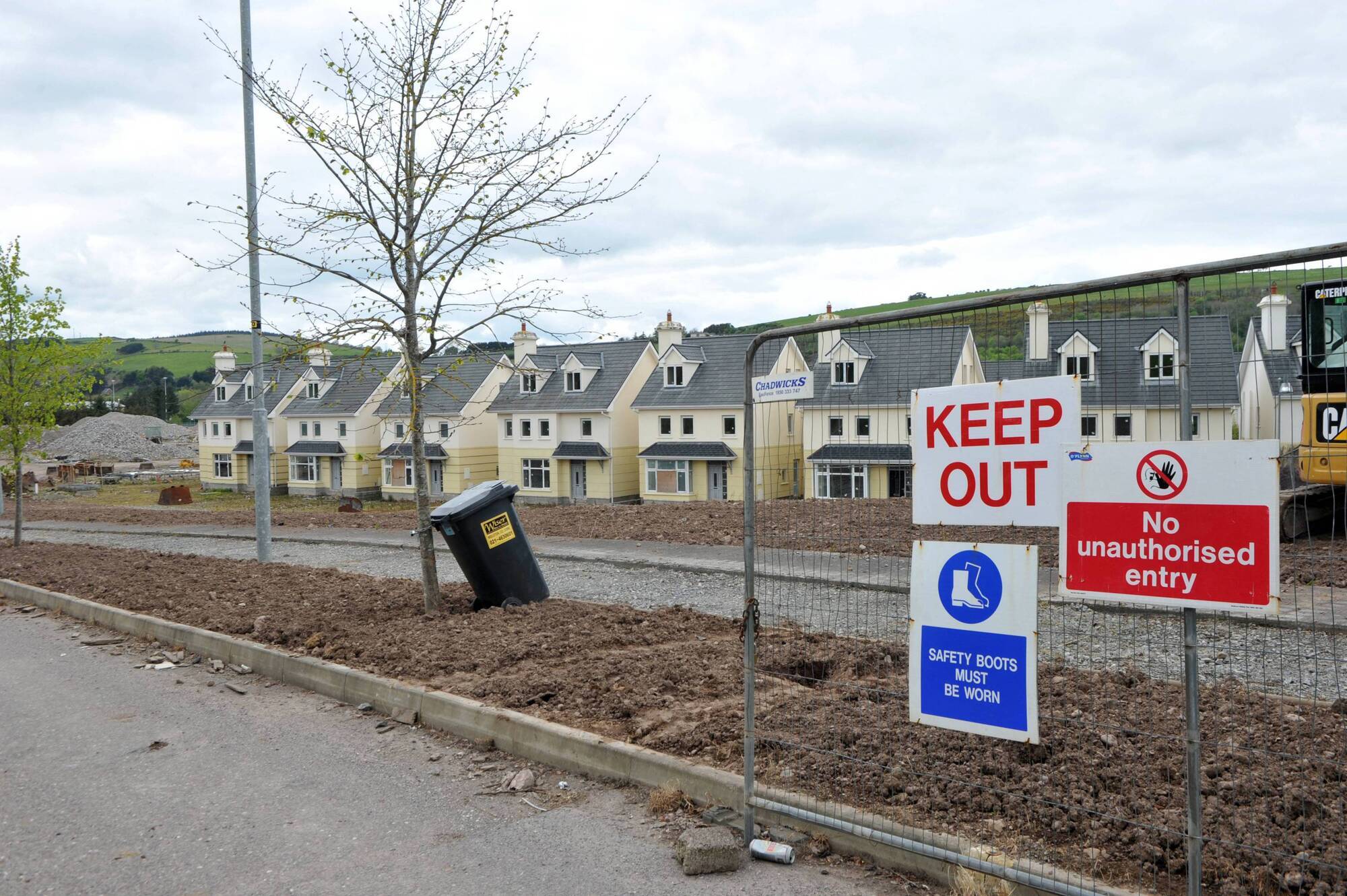
Frank O Connor and Jude Sherry have been shining a light on levels of dereliction through social media, posting pictures of empty buildings around the country. Picture Dan Linehan
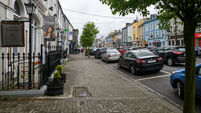
Caherciveen, once regarded as the capital of south Kerry, was a bustling market town with a cathedral, over 50 pubs, butchers, bakeries, barbers, and boutiques – many of which bear the evidence of their former existence as thriving hubs of activity in the centre of the town.
This is a town within a stone’s throw of Waterville, Portmagee, Valentia, and Ballinskelligs – a haven of golf, fishing, sandy beaches, mountain walks, ditches full of wildflowers, star-filled silent nights, the wild Atlantic way, surfing, sailing, fresh seafood, and island life – all immersed in the authentic flavour of a Gaeltacht area.
Despite all that, the town is forlorn. The main street is marred by closed-up shop fronts and empty buildings - up to 40 buildings appear empty in or near the centre of town. Some are derelict. Visitors in the summer have a handful of cafes and restaurants to choose from, a newsagent run by the inimitable Colman Quirke who will give a stalwart recommendation for the best books of the year, and smattering of art galleries, pottery, and craft shops – all of which give a flavour the town’s potential as a thriving tourist hub and bustling rural town.
"We have lost nearly a quarter of our population in south Kerry in the last 15 years, and it is purely down to employment," said Mr Quirke.
"It doesn’t matter where you are, in order to keep people, you need employment."
Many in the town are hopeful that the recent go-ahead for a 27km South Kerry Greenway will revitalise the town. Stretching from Glenbeigh to Renard, the Greenway boasts spectacular coastal scenery, and is predicted that up to 500,000 will avail of it, allowing Caherciveen to rival Dingle as a booming tourist destination.
A similar situation exists in Cork where more than 340 derelict properties were identified in 2021 within a 2km distance of Cork city centre, while just 95 properties were registered on Cork County Council’s Derelict Sites Register. This has been highlighted by Frank O Connor and Jude Sherry since their return from Amsterdam in 2018, with a background in sustainable design.
They have been shining a light on levels of dereliction through social media, posting pictures of empty buildings around the country – inspiring citizens and stakeholders to use their skills to reimagine derelict buildings – where they came from and what they could return to.
I think of Caherciveen when I hear this – on the cusp of the most inspiring hinterland imaginable with blue and green spaces waiting to be further enhanced- what a wonderful lively bustling town it could be for families to live and grow up in if the beautiful old shop fronts and bay- windowed buildings were restored and retrofitted at a fraction of the cost of building new ones, to their original glory.
The pandemic demonstrated the ability of people to work full-time online and allow for a thriving economy. So, why is this not translating into the refurbishment of these once beautiful buildings for families to buy at an affordable cost, compared to the impossible task of buying or renting suitable accommodation to raise a family in one of the major cities?
Rory Hearne in (2022) attempts to explain the incomprehensible. He suggests that part of the problem is the lack of funding given to local authorities - the key agencies to address the problem.
Under the Buy and Renew scheme, in place since 2017, local authorities can use compulsory purchase orders (CPOs) to buy vacant housing which they can refurbish and let as social housing. Since its introduction, just 700 homes have been bought and used for social housing.
The latest housing plan, Housing for All has a target of purchasing 2,500 vacant units by 2026. Hearne suggests the target should be 7,500 CPO buying of vacant and derelict units that are refurbished and retained as social housing, cost rental homes and affordable homes to those trying to buy a home of their own.
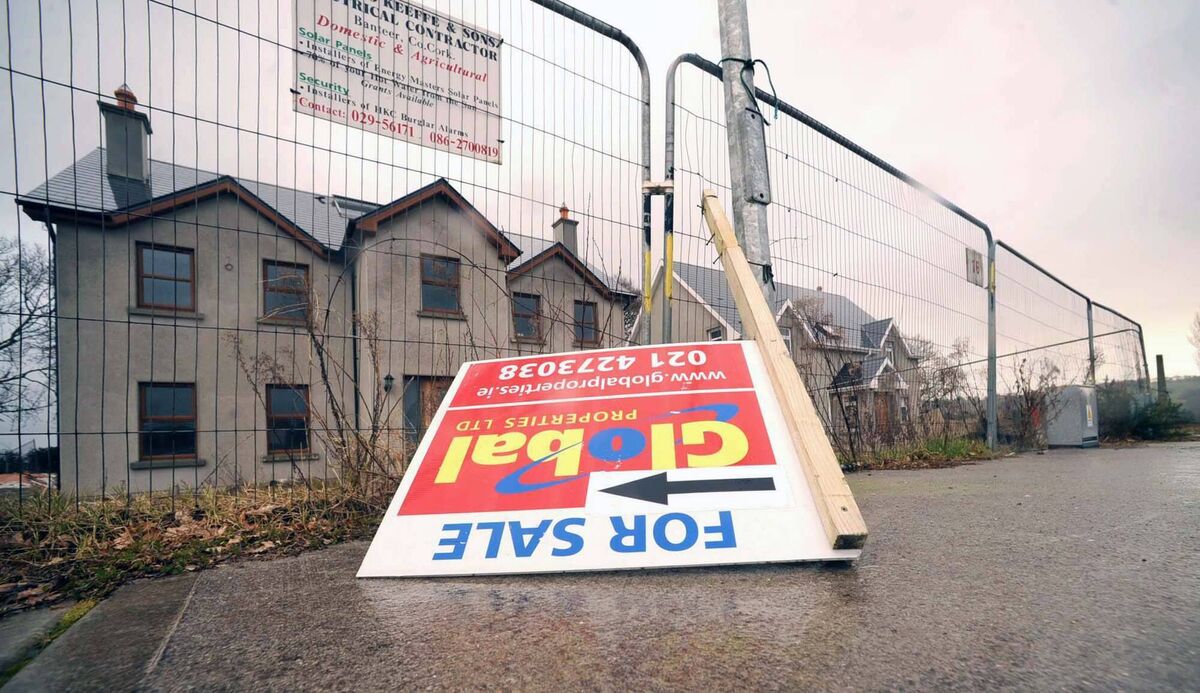
Why is it not happening?
"The council said they would prefer not to use the current dereliction legislation and they like to work with the owners directly and give them time to solve the dereliction before ever putting it on the derelict register," Jude Sherry said earlier this year.
"They think it is too harsh on owners to register their buildings as derelict," she said, adding that most councils approach the issue the same way.
"The council will also say that they don’t have the resources to do it, they don’t have the money, but they have all been funded to have a full-time vacant homes officer."
In the report ‘This is Derelict Ireland’ by O’Connor and Sherry, they highlight that just 90% of the total Irish land mass is in the land registry, meaning that it can be hard to identify property owners. However, the Dereliction Act allows local authorities to put a property on the Derelict Sites Register once they have undertaken a ‘reasonable effort’ to identify them.
Once on the register, a local authority can impose a fine of up to seven percent of the market value of the property on the owner. The local authority can also issue a CPO if a property is on the Derelict Sites Register.
Hearne has tried to explain this reluctance to proceed with fines and CPOs. He states that councils cite Article 43 of the Constitution which sets out the right to private property and enables challenges from the property owners to CPOs as a major barrier to compulsory purchase of vacant properties. But Article 43 states that property rights can be ‘regulated by the principles of social justice’ and delimited in the interests of the ‘common good’.
‘The underlying problem- the vacant or derelict house, the decaying building, the dilapidated shop – is that the property is being treated as a commodity rather than a home.’ So that’s the problem. How to fix it?
Hearne suggests that this can be fixed by a ‘use it or lose it’ tax. A really heavy vacant and derelict buildings and sites tax is needed, along with a massive programme of local authority CPOs on vacant and derelict properties.
‘It is time to assert the principles of the ‘common good’ of society and the environment over the narrow individual private property rights of owners of vacant and derelict buildings and land.’
‘The tax needs to be sufficient to essentially force the sale of the property or site, to make it financially unviable to hold onto it. The Revenue Commissioners should be given full powers to collect this tax.’
‘The tax should scale upwards as the length of time vacancy and dereliction increases.’
Hearne concludes by saying that what is needed is the State to deliver and to back communities and not-for-profit social enterprises and cooperatives to actually guarantee delivery.
A cost-effective and sustainable way to refurbish towns across rural Ireland, revitalise communities like Caherciveen and critically, provide young families with a real chance of living in green affordable, secure homes.
This can happen if the political will and the voice of the people make it so.

CONNECT WITH US TODAY



Be the first to know the latest news and updates