Pressure builds to reduce tax on fuel and put money back into people's pockets

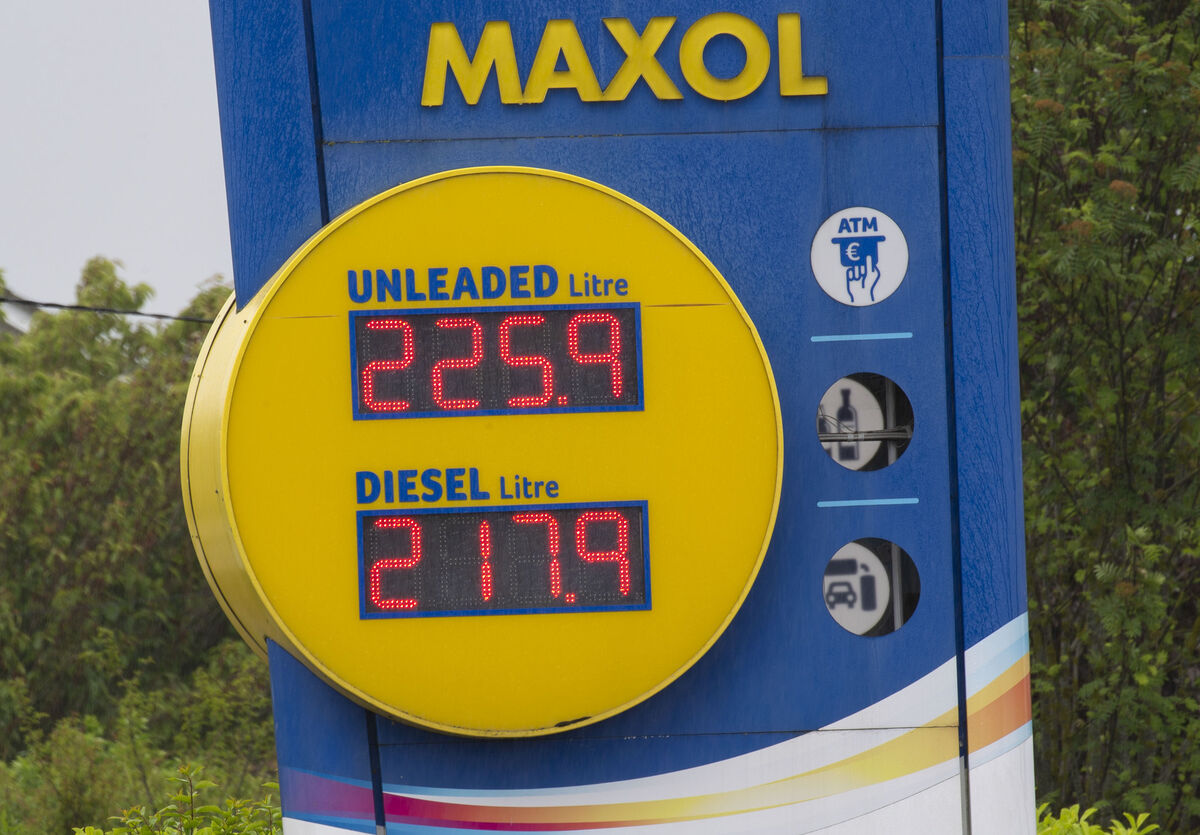
The price of petrol and diesel -- statistics from pumps.ie shows prices as high as €2.19 a litre of petrol and €2.10 per litre of diesel in Cork yesterday. Picture: Andy Gibson
There is an immediate need to reduce tax on petrol and diesel as consumers face phenomenal price hikes when filling their car, the Government has been told.
Despite reducing excise duty on fuel earlier this year, surges in costs have seen that reduction wiped out, with motorists now seeing prices of up to €2.25 per litre at the pumps. Statistics from pumps.ie shows prices as high as €2.19 a litre of petrol and €2.10 per litre of diesel in Cork yesterday.
Transport expert Conor Faughnan said the prices “are a disaster as far as consumers are concerned”.
“It’s one of the most tangible impacts of the inflation we’re feeling,” he said. “It’s costing hundreds of euros more to fill the car.” Yesterday, the price of Brent crude oil was above $123 a barrel, its highest in three months.
While the price per barrel of oil was around $20 higher during the financial crash of 2008, Mr Faughnan said that Ireland is on the wrong end of the exchange rate with the dollar this time which is contributing to the higher costs.
“The price of oil is not unprecedented,” he said. “The big difference for us is the exchange rate between the euro and the dollar. In 2008, a euro got you $1.47. It gets you $1.06 today. The last time around, the exchange rate shielded us from it somewhat.”
Anna Cullen, a spokesperson for AA Ireland, said the rise in the price of oil since March is also coinciding with factors such as increased demand in the US during its traditional “driving season” in the summer months and the announcement from the EU that it would agree to ban most Russian oil imports.
“For a while there, the price of diesel was higher than petrol,” she said. “But we’ve seen petrol shoot right back up again as demand has increased.”
These problems are not exclusive to Ireland.
In the UK, the automotive company, RAC, described Thursday as a “truly dark day” for drivers as the latest data showed filling a typical family car with petrol had exceeded £100.
Trade unions in Britain have also claimed that workers are ringing in sick because they don’t have money for petrol, as they urge the Government and private sector to raise wages due to cost-of-living pressures.
At home, unions are also hearing concerns from their members about the heightened cost of living. Chris O’Leary, a Siptu activist and community-based worker, said staff in the community and voluntary-based sector often have to dip into their own pockets to cover the cost of travelling to provide essential care.
“It’s a real worry,” he said. “I hear it quite clearly from people who go to deliver meals on wheels, those who work with people with disabilities. Even school transport for young people attending certain schools. They’re all finding it a huge strain at the moment.
“The work we do is critical stuff,” he added.
“Going out to help the most vulnerable in society. We’re hearing these stories constantly. Nobody wants a situation where people are forced to leave the sector because of their conditions.”
Meanwhile, trade union Fórsa is set to meet with Government officials at the Workplace Relations Commission on Monday as it seeks pay rises to meet the cost of living challenges being faced by workers.
Both sides believe the talks could be concluded “quite quickly” but, despite reports which had suggested unions would be seeking wider cost-of-living measures aimed at supporting workers and their families, Fórsa has said that pay and living standards are the sole focus.
“We've made it clear that our sole focus is on pay, the cost of the living, and how inflation impacts workers and their families,” general secretary Kevin Callinan said.
Talks are also taking place across the private sector aimed at securing pay increases to meet rising pressures but, in the meantime, the Government is being urged to do what it can now to alleviate the price of fuel and relieve the strain on beleaguered consumers.
Calling for an emergency budget, Sinn Féin’s Pearse Doherty said the rate of excise duty applied to petrol and diesel should be reduced to the minimum level permissible.
The Government has so far refused to commit to any pre-Budget measures on the issue of fuel and Conor Faughnan has said that adopting a wait-and-see approach is one of two options available.
“They could try ride out the storm and hope the impact is temporary,” Mr Faughnan said. “But the one card they’ve got is excise duty and carbon taxes. It’s not within the Government’s gift to perform miracles. They can’t do anything about the geopolitical situation, or the exchange rate.
“The one card they do hold is domestic taxation.
Indeed, the price of fuel in Ireland at present is similar to that of our EU neighbours, with many other member states experiencing higher costs.
Mr Faughnan did admit it would be a “political challenge” to have to raise those taxes again should the Government see out the storm and, given the uncertainty around the current situation, taking no action could end up working in their favour.
“But I do think the immediate need is so acute, and their ability to act is available, it may be the best course,” he added.
In the meantime, and in lieu of Government action, there are some relatively small, yet effective ways, that motorists can try to save some money on their fuel.
Anna Cullen, from AA Ireland, said literally slowing down from 120km to 100km or 110km on a motorway can reduce fuel consumption significantly. Making sure the pressure in your tyres is correct can also help and, as we move into the summer, not using the air conditioner too much would also be a benefit.
“Our advice in the past was to try shop around,” she said. “Unfortunately, with prices so high, that’s just not helpful anymore.”
CONNECT WITH US TODAY



Be the first to know the latest news and updates