Mass accommodation centres 'not the preference' as Millstreet welcomes first Ukrainian refugees
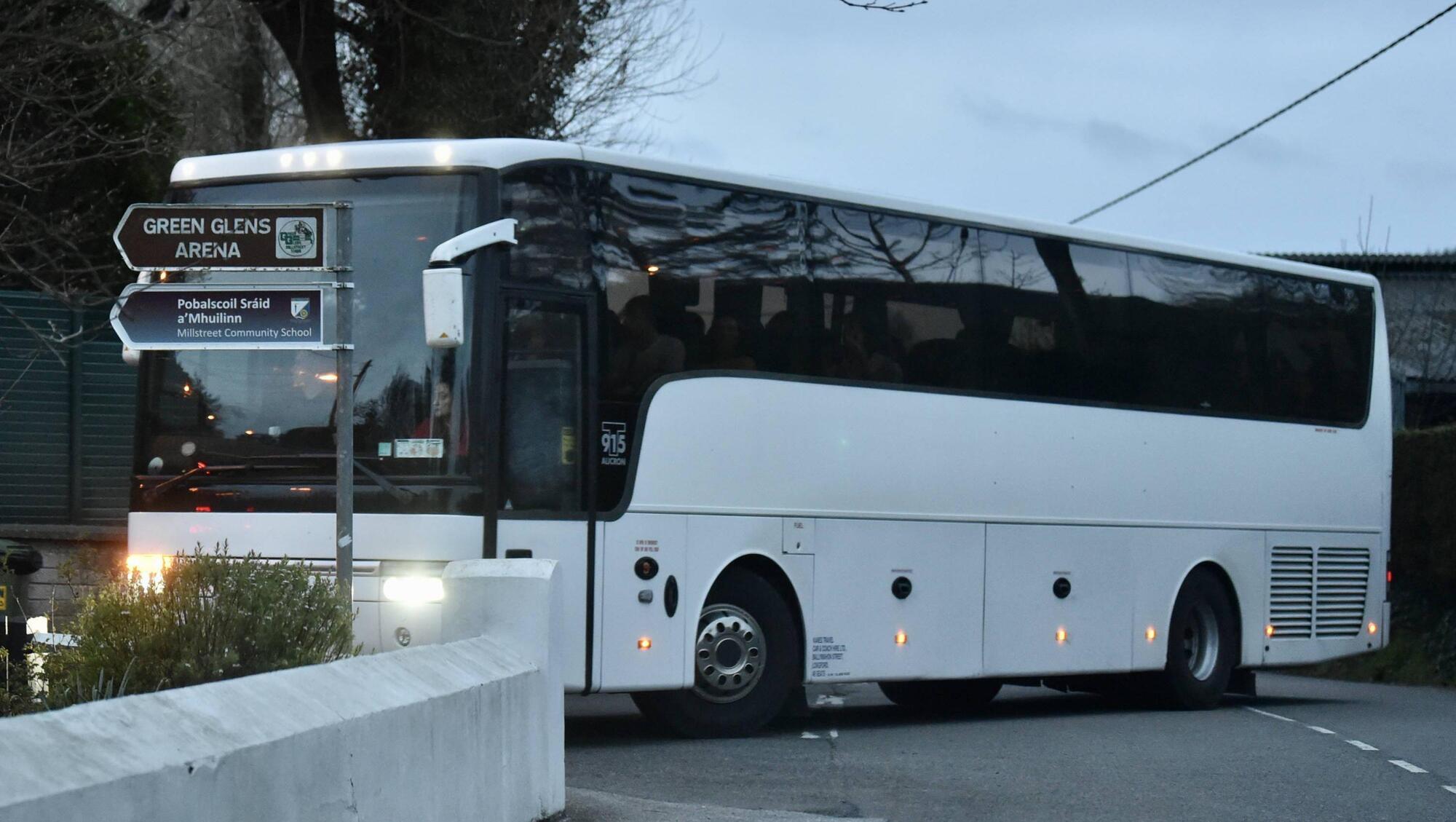
The first Ukrainian refugees arrive at the Green Glens Arena in Millstreet, Co Cork. Picture: Don MacMonagle
The Green Glens Arena in Millstreet, which on Wednesday night saw the first arrivals of people fleeing Ukraine, will be full within a week to 10 days, as the Cabinet was warned on Wednesday that capacity for housing refugees is already nearly exhausted.
A secret Cabinet memorandum provided to ministers on Wednesday night warned:
- That accommodation is the most acute problem facing the Government, while “hyper-inflation” in farming prices threatens food supplies;
- Serviced and emergency accommodation is currently at over 90% utilised, excluding the Gormanstown Defence Forces camp;
- The “worst-case scenario” memorandum, seen by the , warns the disruptions to energy supplies could become “structural” as opposed to temporary, and that this could have “major implications” for Ireland’s corporate tax receipts;
- So far, of the 24,438 people who have arrived in Ireland, more than 16,000 said they needed to be housed;
- Ministers were told that by the end of May, as many as 33,000 people could arrive in Ireland;
- So far, 114 unaccompanied minors have arrived here and are in the care of the children’s agency Tusla.
There will be a shortage of accommodation by the end of April, the Cabinet memo revealed. Up to 8,300 would have no accommodation by end of May as all accommodation types will be at maximum capacity from the fourth week of April, it said.
As the first large-scale refugee centre, the Millstreet Arena has a capacity to hold 320 persons, who will be given beds in small partitioned areas.
It is understood that given the absence of secure separate units, there has been a request not to put children into Millstreet, but that may not be possible, given the pressure on the system.
Maura Walsh, chief executive of community group IRD Duhallow said they were expecting up to 70 Ukrainian people to arrive at the Millstreet Arena late on Wednesday night.
Ms Walsh described the arena as a “massive space” that has been divided into separate “pods” or rooms.
Ms Walsh said some of the facilities already in place for the 74 Ukrainian people in Banteer, such as a shuttle bus for transport to shops, will be extended to Millstreet.
At Cabinet, ministers were told that in addition to Millstreet, contingency options remain in place for centres such as Citywest and Gormanstown Camp.
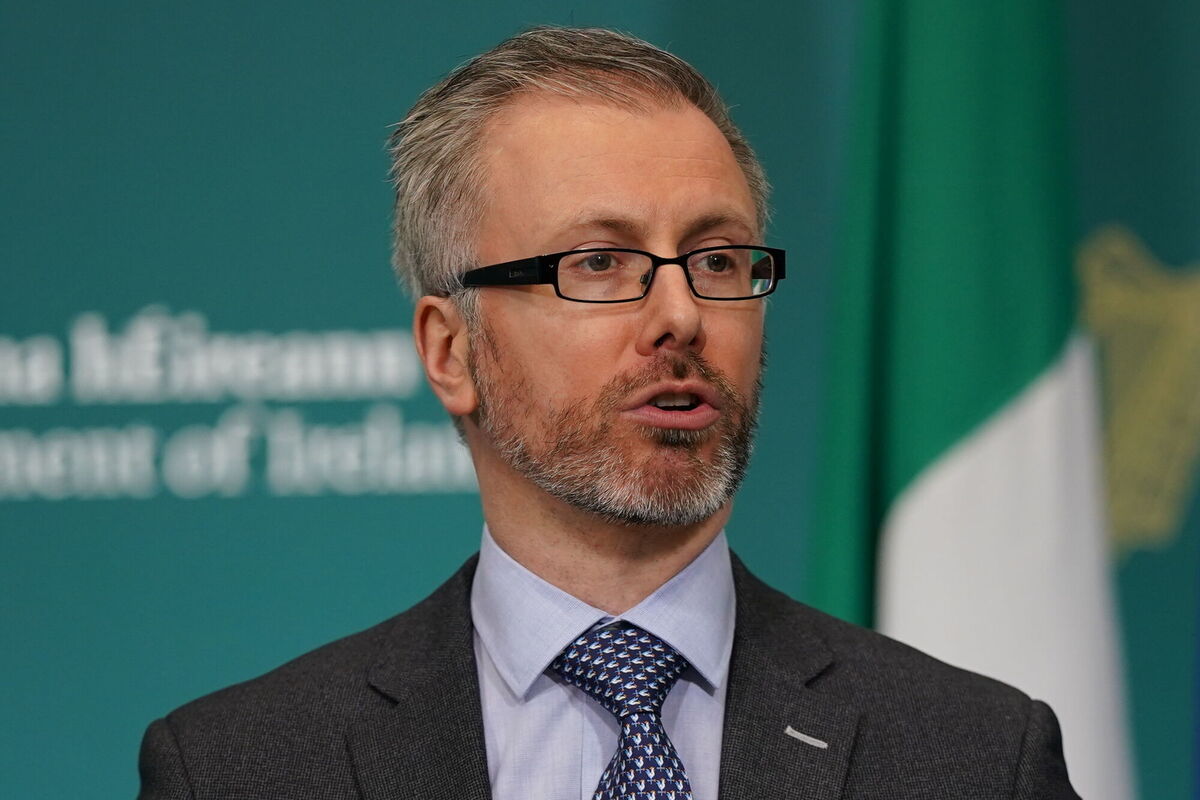
The Integration Minister said on Thursday that mass centres similar to Millstreet area will become a "larger feature" in accommodating Ukrainian refugees.
Roderic O'Gorman said he expected people would stay "a number of weeks" in grouped centres, such as Millstreet, before being moved on to more suitable accommodation.
He said the Government was in consultation with universities and other third-level institutes around the possibility of using thousands of student accommodation places over the summer months.
"From the end of May, about 4,000 beds will become available and we're looking to grow that further and that will give us some flexibility coming into the summer to accommodate people and again that will be accommodation where people will have own door, some privacy, some of their own cooking facilities as well. So we continue to look and see what provisions we can make for this short-term accommodation," he told RTÉ's .
However, he admitted group accommodation, which could include putting people on camp beds, was going to become a "larger feature of how we provide for people", adding he must be "upfront" about that.
Speaking about Millstreet, he said: "It's partitioned inside, so people have privacy for their sleeping spaces. But obviously, living and dining facilities are shared there. We put in wifi, we've put in other supports and there are wrap-around supports for Ukrainians living there.
"It's not the preference. It's not the gold standard, it's not what we would like to see everybody living in. But we are in a crisis situation," said Mr O'Gorman.
A number of organisations, including the Irish Refugee Council, are now calling for a national director to coordinate the response to the humanitarian crisis in Ireland.
Mr O'Gorman said he was "aware of the need for co-ordination" and the Government would listen to the proposals being put forward by NGOs.
Meanwhile, more than 1,000 people have withdrawn their initial offer of accommodation for Ukrainian refugees, the memorandum states.
It reveals that about 17,000 emails sent to those who pledged accommodation were asked to reconfirm their offer. About 5,000 responded, with 1,000 withdrawing their offer. Some 878 assumed-vacant properties which initially offered accommodation have also been withdrawn.
A vetting process is required for moves involving children, and this process is being overseen by the Irish Red Cross, which has been allocated additional resources for this task.
The minimum turnaround for vetting is two weeks, Cabinet was told.
The Cabinet also heard of the dire impact the war in Ukraine was having on the wider Irish economy.
Ministers were told the crisis in Ukraine has had a dramatic impact on Irish agriculture, on supply chains, “with hyperinflation in the price of almost all farm input prices”.
“As in other sectors, increases in energy costs for farming are having a very significant impact,” the memorandum warned.
In a worst-case scenario, the memo states where disruptions to energy supply become structural in nature, the “potential negative impact on industrial production could have major implications inter alia, for corporation tax receipts (20% of the overall tax take). Ireland entered the current crisis with a very elevated debt burden of €237bn.”
Ministers were told that based on the assumption that all refugees are accommodated in emergency hotel accommodation and taking account of additional costs for key supports and services (including social protection, health, and education) each cohort of 10,000 refugees would lead to an estimated cost of €500m.
The memo notes this expenditure cannot be met through the reprioritisation of existing resources, they would, in the first instance, be met with the remaining €2.5bn of the Covid contingency fund — however, this will leave the Government exposed should further surges of the virus emerge later in the year.


CONNECT WITH US TODAY



Be the first to know the latest news and updates