Ciaran O'Connor: Russian disinformation machine labels war crimes in Ukraine as propaganda
If, or when, evidence of further atrocities emerges, it’s imperative that we recognise and counter disinformation efforts and challenge those who dismiss such crimes against civilians as propaganda
Ciaran O'Connor: Russian disinformation machine labels war crimes in Ukraine as propaganda

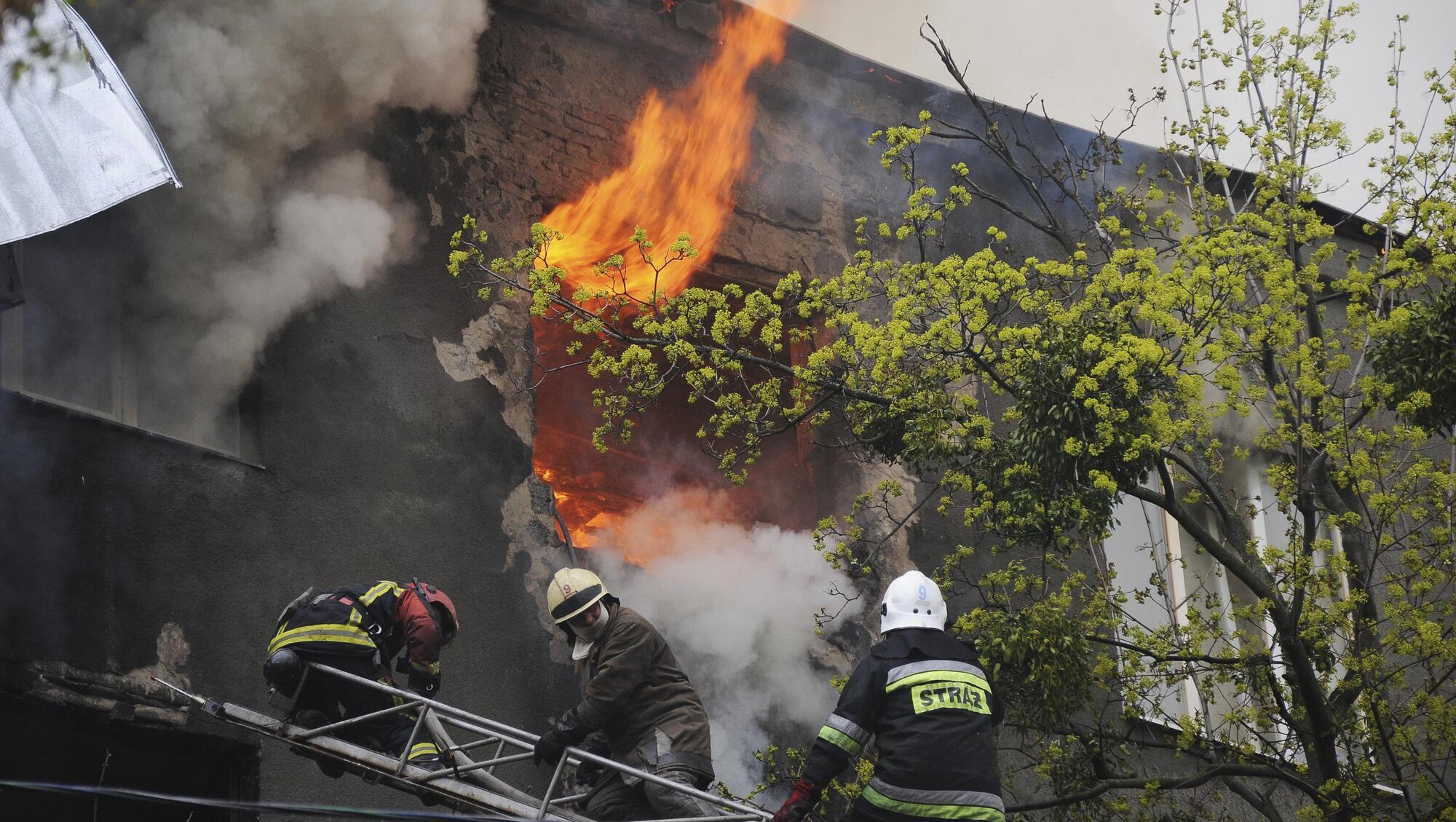
Firefighters work to extinguish fire at an apartments building after a Russian attack in Kharkiv, Ukraine. Generally, when evidence of crimes can’t be ignored, we see Russia seek to pass culpability onto others instead.  Picture: AP Photo/Andrew Marienko

It’s not easy to spot Iryna Filkina at first. Emerging from the bottom of the frame pushing a bicycle down a street, she was captured on drone video footage taken in early March in the Ukrainian town of Bucha, while the area was under the control of Russian forces. Then, just as she turned left around a corner, plumes of white smoke rose from waiting armoured military vehicles pointed in her direction, indicating they had just opened fire.

After the liberation of Bucha at the end of March, Filkina’s body and her bicycle were again captured in subsequent photos taken at the same location, Yablunska Street. Russian denials followed. Since the beginning of April, images and reports from Bucha, occupied by Russian forces for a month, have uncovered sites of unimaginable devastation, unlawful murder and evidence of cruel brutality enacted upon its residents. Bodies are still being discovered and evidence of suspected Russian war crimes is growing.

The war in Ukraine is entering a new phase. As Russia refocuses its efforts on “liberating” eastern Ukraine and its soldiers retreat from other parts of the country, its disinformation machine is pivoting to disseminate grotesque lies disputing its forces were responsible for any violence against civilians. These tactics have already been employed in response to Bucha, and with more atrocities unfortunately likely to come to light, it’s worth exploring what to expect in the weeks and months ahead.

After Bucha

On April 4, Russia’s foreign minister Sergei Lavrov said the discovery of bodies in Bucha was a “provocation” orchestrated by Ukraine, he claimed, to “torpedo the ongoing negotiations” with Russia. Other government officials have amplified claims from pro-Kremlin blogs and social media users that alleged “manipulated” media was used in reporting from Bucha by news organisations like the New York Times, including Dmitry Polyanskiy, the Russian deputy ambassador to the UN.

Across the water, Russia’s embassy in the UK has been even busier, sharing remarks by Russia’s Ambassador to the UK, Andrey Kelin, who said the “Bucha provocation was well planned” and claimed the BBC’s reporting from Ukraine was influenced by “new government funding.” The embassy is one of many put to work in flooding online spaces with information that denies Russian links to Bucha.

Closer to home, Russia’s embassy in Ireland released a statement that said “there are no facts” to prove allegations of Russian involvement in the killing of civilians in Bucha, going on to say the images of murdered locals were “staged.” Many bloggers, including some in Ireland, have also aided the disinformation efforts of the Kremlin and claimed, in the days between Russian forces withdrawing from Bucha and the first news reports documenting widespread murder to emerge, that Ukrainian forces in fact carried out these killings, supposedly as a covert act or ‘false flag’ to fuel anger towards Russia and secure more weapons for Ukraine from the West.

Ira Slepchenko, 54, cries looking at the coffins, one of them with the body of her husband Sasha Nedolezhko, 43, during an exhumation of civilians buried in a mass grave in Bucha, Ukraine. Such images are unlikely this will convince hardened Kremlin conspiracists. Picture: AP Photo/Emilio Morenatti

Testimony from Bucha residents noting when, where and how Russian soldiers killed their neighbours, friends and family members throughout March, as well as satellite imagery capturing bodies on the streets pre-withdrawal, would suggest otherwise. It’s unlikely this will convince hardened Kremlin conspiracists to change their mind.

Tactics

Here’s what to expect. In the immediate aftermath of an incident, or upon it first being reported publicly, Russia simply ignores the facts and instead targets activists, journalists and the media, usually by claiming they are working on behalf of a Western government, organisations like Nato or the CIA or beholden to some other sinister force who wish to portray Russia as the aggressor.

Often Russia’s approach will target the credibility of reports regarding an incident, claiming satellite imagery or videos from the ground are poor quality; or else they attempt to scrutinise the timeline of events detailed in reporting, as we’ve seen after Bucha.

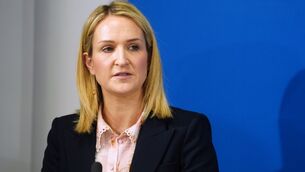
Ciarán O’Connor of the Institute for Strategic Dialogue, working in the Research and Policy unit 

Generally, when evidence of crimes can’t be ignored, we see Russia seek to pass culpability onto others instead, alleging another party was in fact responsible for the act of brutality that has captured the world’s attention. Or, most desperately, as we have also seen after Bucha, Russia reaches into the depths of delusion and produces claims that victims captured in the footage after an attack are actually alive, pretending to be dead for the sake of propaganda, operating as “crisis actors” in a “staged” set up.

As you might imagine, such claims are disorientating and contradictions among Russia’s own comments are common. In this respect, Bucha is no different. The same approach will be applied to future discoveries of atrocities. These tactics and narratives from Russia are recurring components of its disinformation apparatus and frequently feature in our monitoring at the Institute for Strategic Dialogue, a London-based non-profit that researches disinformation, hate and extremism online.

The goal

If this approach is common, then what is the goal here? Absurd denials and conspiracies used to dispute Russia’s culpability are opportunistically plucked from social media and, in most cases, aren’t even terribly convincing. But they aren’t supposed to be. Nor do they need to be consistent, whether they come from government figures, state-backed media or pro-Kremlin voices online. Like any disinformation narrative, the goal is to shift public opinion, but not towards a reality where everything neatly makes sense from a Russian perspective. Instead, the aim is mass confusion: to obscure and obfuscate the facts, to throw enough things at the wall in the hope that something sticks and people are sufficiently unsure and sceptical about the details around an incident, handing the Kremlin a veneer of deniability. At its core, it’s about making people throw up their hands and admit that maybe we just can’t know what the truth is at all.

We know all of this because we’ve been here before. The first week of April marked a set of sad anniversaries; five years since Khan Skeikoun and four years since Douma, two incidents in Syria in which the regime of Bashar al-Assad, aided and supported by Russian defence and intelligence, used chemical weapons against its own citizens. The response from Russia in both cases was the same: deny, dispute and deflect.

People walk among the debris at the crash site of flight MH17  near the village of Grabovo, Ukraine in 2014. Picture: AP Photo/Dmitry Lovetsky

Or, when flight MH17 was shot down with a Buk missile over pro-Russian separatist-controlled eastern Ukraine in July 2014, employees with Russia’s Internet Research Agency ‘troll farm’ spent three days posting over 100,000 tweets, first to claim pro-Russian rebels had successfully targeted an enemy Ukrainian jet before then shifting the blame to claim Ukraine had shot down the passenger plane. See also; Kremlin responses to disputing the facts surrounding the poisonings of Sergei and Yulia Skripal or Russian opposition leader Alexei Navalny. The playbook remains the same today.

Writing in April 1945, after having visited a recently-liberated Nazi concentration camp, US General Dwight D Eisenhower wrote that he “made the visit deliberately, in order to be in position to give first-hand evidence of these things if ever, in the future, there develops a tendency to charge these allegations merely to ‘propaganda’.”

Today, we have more first-hand evidence than ever before and how we bear witness to war is changing. If, or when, evidence of further atrocities emerges, it’s imperative that we recognise and counter disinformation efforts and challenge those who would label war crimes against civilians as propaganda.

  • Ciaran O’Connor is an analyst at the Institute for Strategic Dialogue, working in the Research and Policy unit

x

More in this section

Revoiced

Newsletter

Sign up to the best reads of the week from irishexaminer.com selected just for you.

Cookie Policy Privacy Policy Brand Safety FAQ Help Contact Us Terms and Conditions

© Examiner Echo Group Limited