Revealed: The world's most expensive climate disasters
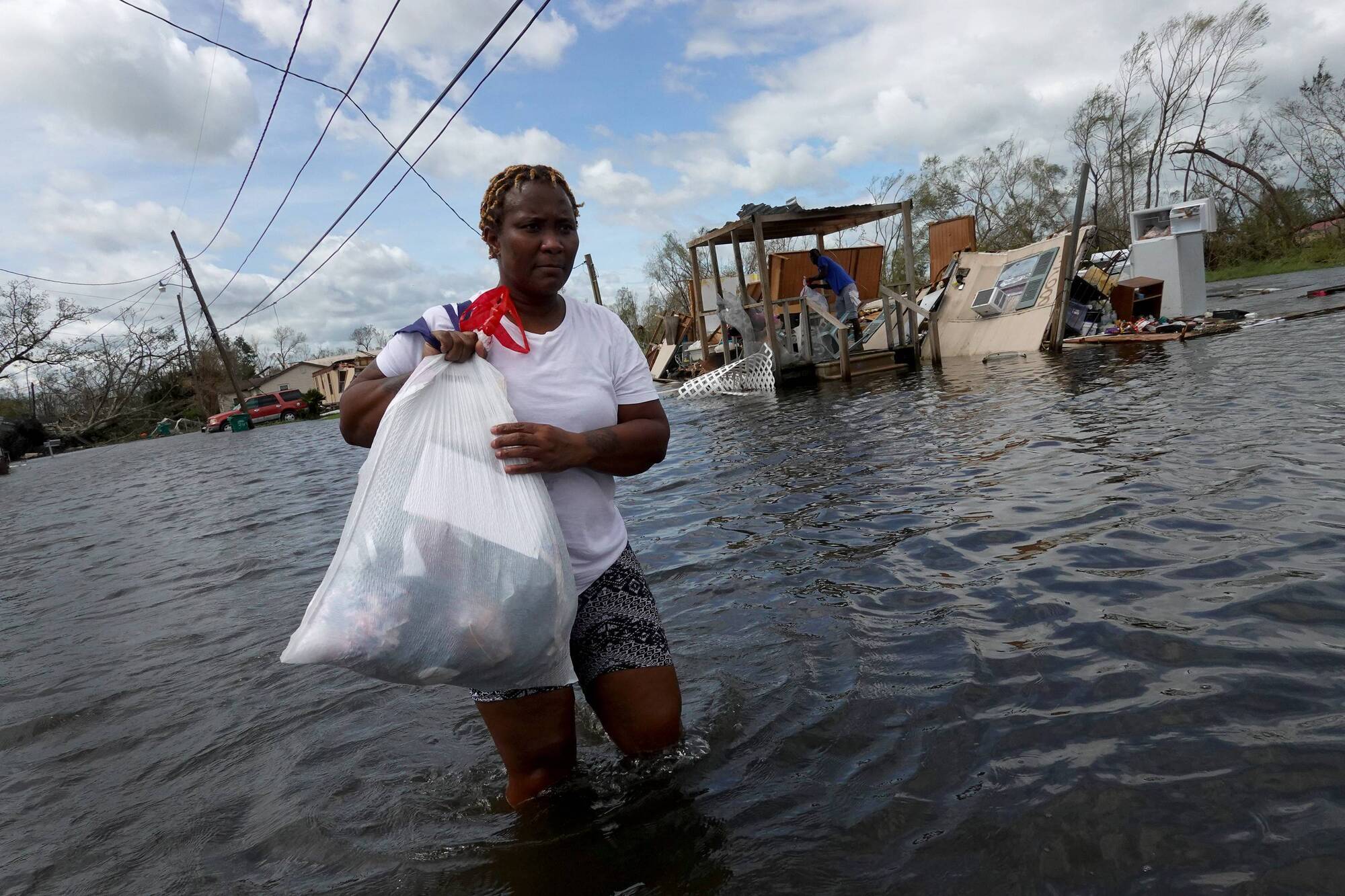
Dina Lewis rescues items from her home after it was destroyed by Hurricane Ida on August 30, in Laplace, Louisiana. Picture: Scott Olson/Getty Images
The devastating financial cost of natural disasters has been laid bare in a new research report, which reveals that hundreds of thousands of people were forced from their homes and millions were pushed to the brink of starvation.
This year was the sixth time in history that global natural catastrophes cost more than $100bn (€88bn) in insurance and the fourth in five years. All six have come in the last 10 years.
That is one of the stark facts in a report from development agency Christian Aid, which analysed the top-10 most-financially-devastating climate events of 2021, and which had an even greater impact in human terms.
Authors Dr Kat Kramer and Joe Ware said, in Christian Aid's Counting the Cost 2021: A Year of Climate Breakdown, that the top-10 most-expensive events financially all caused $1.5bn of damage, with Hurricane Ida, in the US, topping the list, at $65bn, and the floods in Europe $43bn.
Unless the world rapidly cuts emissions, these kinds of disasters are likely to worsen, the authors said.
"Worryingly, despite the pandemic, concentrations of greenhouse gases in the atmosphere reached a new all-time record, according to a study by the World Meteorological Organisation published in October. And the latest Emissions Gap Report published by the UN's Environment Programme, last month, showed that the national climate plans which make up the Paris Agreement were not currently on track to ensure global heating is kept below 1.5C," they said.
The UN's climate change summit in Glasgow, last month, Cop26, will be redundant if action is not taken as a matter of urgency, it said.
Cop26 saw world leaders and other stakeholders converge on Scotland for a range of agreements of climate action, but was criticised as lip service by many environmentalists.
Christian Aid said: "The Cop26 summit in Glasgow generated plenty of headlines, but without concrete emissions cuts and financial support, the world will continue to suffer. One glaring omission from the outcome in Glasgow was a fund to deal with the permanent loss and damage caused by climate change. This is one issue which will need to be addressed at Cop27 in Egypt in 2022."
The February cold snap in the US brought home the extreme impact of climate change, especially in Texas, the report said.
"During the storm, Texas suffered a massive power outage that led to shortages of basic supplies, leaving around five million people without electricity. While officially there were 215 deaths recorded in Texas, it has been estimated that the true number could be three times higher. While insured losses have been calculated at $23bn, the total economic impact could be as high as $200bn, according to some estimates."
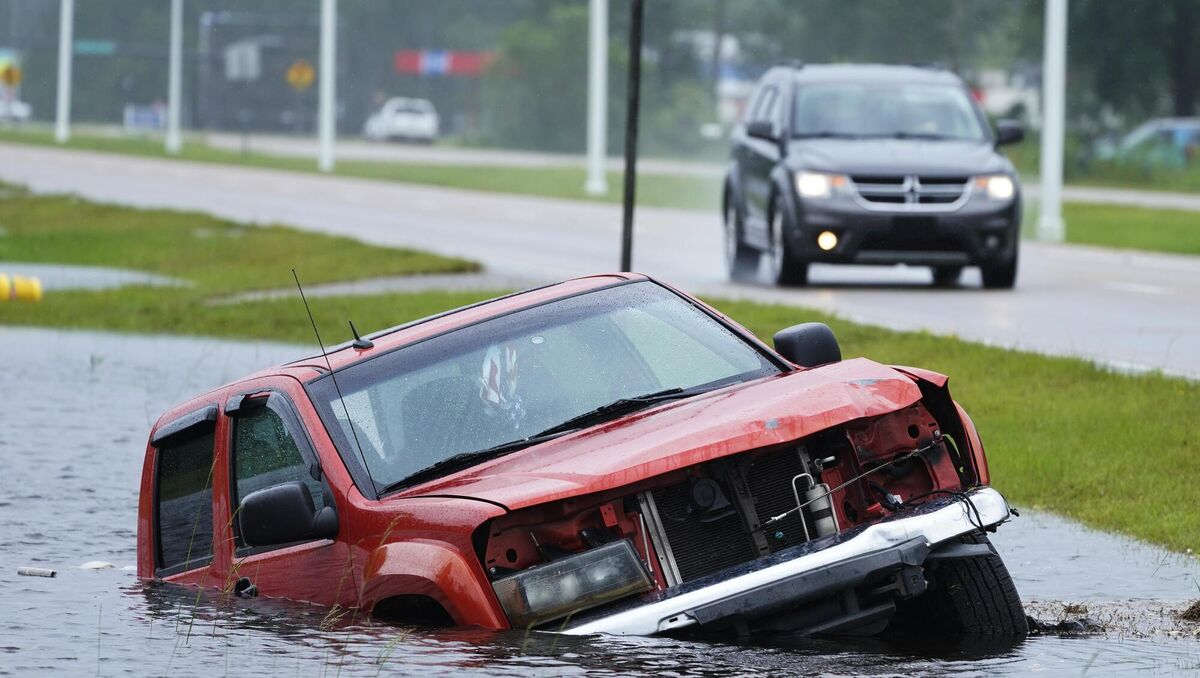
Largely under the radar to many Western people was the flood in South Sudan, described as the worst in decades by the UN.
Christian Aid said: "Over the last few months, intense flooding has affected more than 850,000 people in South Sudan, affecting 33 out of 78 counties. The floods are taking place around in areas along the Nile and Lol rivers and in the Sudd marshlands.
"The United Nations has described the situation as the worst flooding in decades. Many of the impacts faced today by the country are the result of cumulative damages, as this is the third consecutive year with intense flooding.
"A report released this year by the World Meteorological Organisation notes that climate change is contributing to food insecurity, poverty, and displacement in Africa, through changing precipitation patterns, rising temperatures, and more extreme weather.
Closer to home, the flooding in Western Europe during the summer shocked many observers, but not climate scientists, who have been bracing for such events as the planet warms.
"The resulting floods killed at least 240 people and caused widespread damage, with economic losses estimated at more than $43bn," Christian Aid said. "A study by World Weather Attribution concluded that climate change made extreme rainfall events, similar to those that led to the floods in Germany, Belgium, the Netherlands, and Luxembourg, between 1.2 and nine times more likely to happen, and that such downpours in the region are now 3-19% heavier because of human-caused warming.
"While the region has decreased its carbon emissions by 31% since 1990, Europe is still responsible for around 18% of all human-caused greenhouse gases in the atmosphere. Current plans to reduce carbon emissions include reducing them 'at least' 55% by 2030, compared to 1990 levels, and to become net-zero by 2050. However, the region's climate targets are still insufficient to meet the Paris Agreement, according to Climate Action Tracker," Christian Aid said.
CONNECT WITH US TODAY



Be the first to know the latest news and updates