'I still have nightmares' - 'Hooded man' Frank McGuigan on his 1971 internment in Northern Ireland
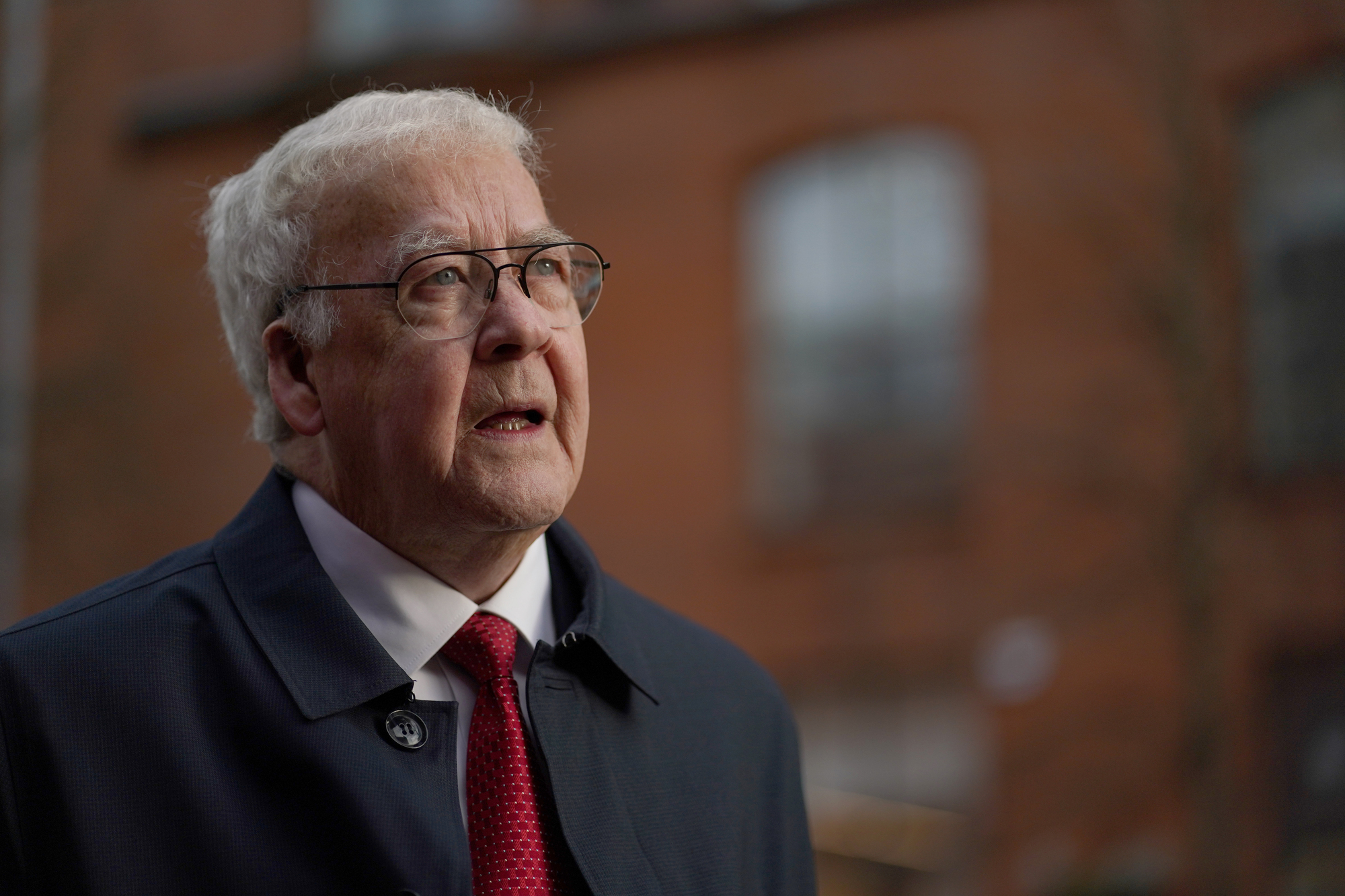
Francis McGuigan, one of the 14 ‘Hooded’ men, speaking in Belfast after the UK Supreme Court ruled that a Police Service of Northern Ireland decision in 2014 to discontinue an investigation into allegations of controversial interrogation techniques should be quashed. Picture: Brian Lawless/PA
One of the “hooded men” has told how he still suffers nightmares about the ordeal he suffered 50 years ago.
Francis McGuigan was one of 14 men who were subjected to a series of controversial interrogation techniques by the Army and police when they were interned without trial in Northern Ireland in 1971.
On Wednesday, the UK Supreme Court ruled that the PSNI was wrong not to investigate allegations of torture in the case after they were broadcast in a documentary in 2014.
Mr McGuigan said he was “delighted” with the verdict, but added that he did not believe the PSNI could carry out any new investigation into the case.
“I think the PSNI have to realise that with these judgments against them, they are not the people to investigate it," he said.
“I think the next step is that Jon Boucher (a detective who is in charge of a series of independent historical investigations) takes over the case. I have no faith in the PSNI doing it.
“The RUC were the people who did the torture, the interrogation.
“I don’t see how the PSNI can go in and investigate the RUC.”
Mr McGuigan said he was sad that some of the other hooded men were not alive today to hear the Supreme Court judgment.
“I think it is important that we carry on, not just for ourselves but for their families.
“For all the families I think it is important that this goes on and that the truth eventually gets out.”
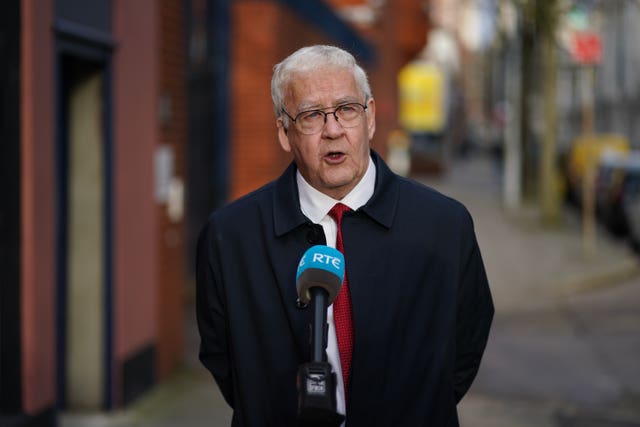
Mr McGuigan told how he still suffers with the trauma of what he experienced following internment in 1971.
The techniques used against the men included hooding and being put in stress positions, forced to listen to white noise and deprived of sleep, food and water.
They were also thrown from helicopters that were hovering close to the ground, having been told the aircraft were hundreds of feet in the air.
He said: “I was speaking to someone the other day and said I would loved to have lived a normal life.
“I haven’t lived a normal life, I have lived with this for the past 50 years.
“I still have nightmares, I still get afraid to go to bed at night because I am having a bad day.
“I have seen myself hiding in the roof space of my own home. I have been found hiding in wardrobes at home.
“I have been getting counselling on and off for 40 years.
“It is only in the past six or seven years that I have admitted to myself why I needed counselling.
“I have actually stopped going because there are times when I came out and I was worse than when I went in.”
Mr McGuigan said he wanted to see the British Government held responsible for torture and rejected proposals for an amnesty for Troubles offences, announced earlier this year by UK Secretary of State for Northern Ireland, Brandon Lewis.
“This was sanctioned by the British Government.
“Boris Johnson’s idea of an amnesty or drawing the line in the sand, it is not about the rank and file soldiers, it is not about what happened here in the north, it is about getting the British Government off the hook.
“The Government sanctioned torture against what are classified as its own citizens, it is a war crime.
“I spent seven days in a boiler suit. I was hooded for seven days.
“I finished up with three broken ribs. Everybody talks about the five techniques, there was a sixth one, which was sheer brutality.
“It was just a nightmare. There was this white noise.
“In the interrogation to ask you to spell your name. There was one occasion when I couldn’t spell it. I kept making a mistake, but I couldn’t spell my own name.
“That was the state they had put my mind in. I thought I was losing my mind.”
CONNECT WITH US TODAY



Be the first to know the latest news and updates