Ireland 'in better position now than after the financial crash'
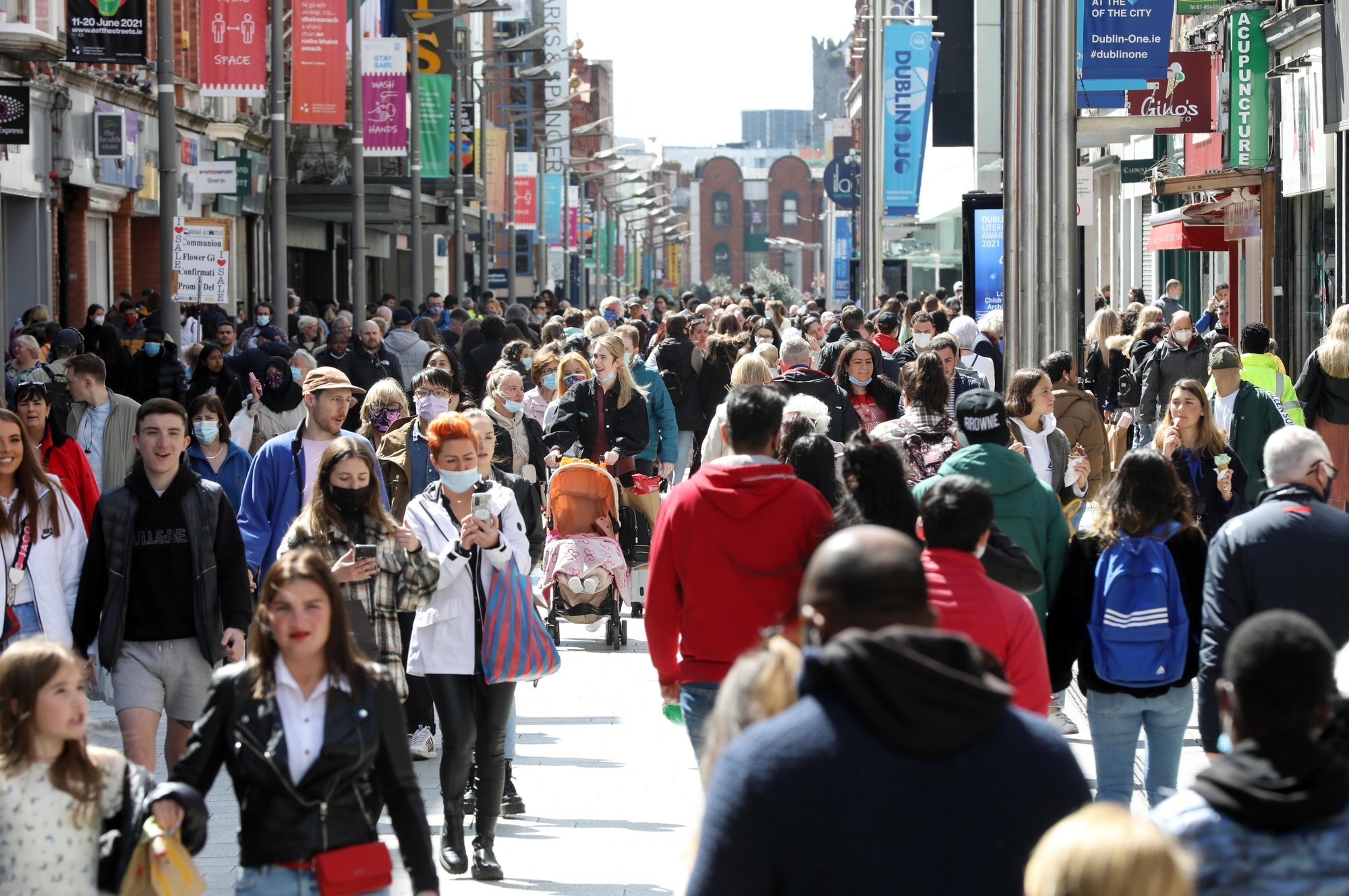
The country is in a much better position economically after the Covid-19 crisis than it was in the aftermath of the financial crash, an Oireachtas committee will hear. Picture: Leah Farrell/RollingNews.ie
Ireland is in a much better position economically as the country returns to normality after the Covid-19 crisis than it was in the aftermath of the financial crash, an Oireachtas committee will hear on Thursday.
Conor O’Kelly, the chief executive of the National Treasury Management Agency (NTMA), is expected to tell the Public Accounts Committee that the NTMA issued just under €36bn in debt since the beginning of the pandemic, at an average interest rate of 0.16%.
He will tell the committee that the impact of such massive borrowing is mitigated by the fact the European Central Bank (ECB) has been buying debt from European countries on an effective one-for-one basis.
This has led to a situation where Ireland’s outstanding interest bill has continued to fall despite the massive levels of borrowing during Covid, down by €4bn to €3.5bn over the last five years.
“To put that in perspective, today our interest bill is twice what it was in the 1980s, but our Government revenue is 10 times higher,” Mr O’Kelly will say.
“The ECB’s policy gives us something perhaps more valuable than low rates,” he is expected to say. “They give us time,” in reference to the leeway needed to restructure the public finances and wean off the supports in place from March 2020 onwards.
Mr O’Kelly will tell the committee that the main reason Ireland was able to respond in the way it did to the pandemic was that the country’s finances were in a “strong fiscal position”.
“Prior to the pandemic, households and corporates had been deleveraging for many years and balance sheets were in much better shape than in the previous crisis,” Mr O’Kelly will say.
However, he will also sound a note of caution.
“The question we ask ourselves in the NTMA is not whether Ireland will be hit by another economic shock but rather what sort of shape will we be in when it happens.
“When the crisis hit, we had fiscal room when we needed it most and, in the years ahead, we need to create that room again,” he will say.
In the context of the current energy crisis, Mr O’Kelly will tell the committee that the NTMA, via the Irish Strategic Investment Fund, is targeting sustainable investments of €1bn in the near future in wind generation, energy storage, and the better use of resources across utilities such as waste management.
He will also tell the committee that the State Claims Agency, the NTMA’s risk management arm, is currently managing 12,000 active claims against State bodies, with a potential outstanding liability of more than €4bn.
In terms of the Apple tax bill, the €13bn liability currently being argued over between the Government and the European Commission, Mr O’Kelly will state that the fund is being poured into “ultra-low-risk investments” in order to maintain its size in capital pending a final decision from the European courts, rather than to secure a return.
CONNECT WITH US TODAY



Be the first to know the latest news and updates