Extra resources needed for ‘tens of thousands’ of long-Covid patients – CUH medic
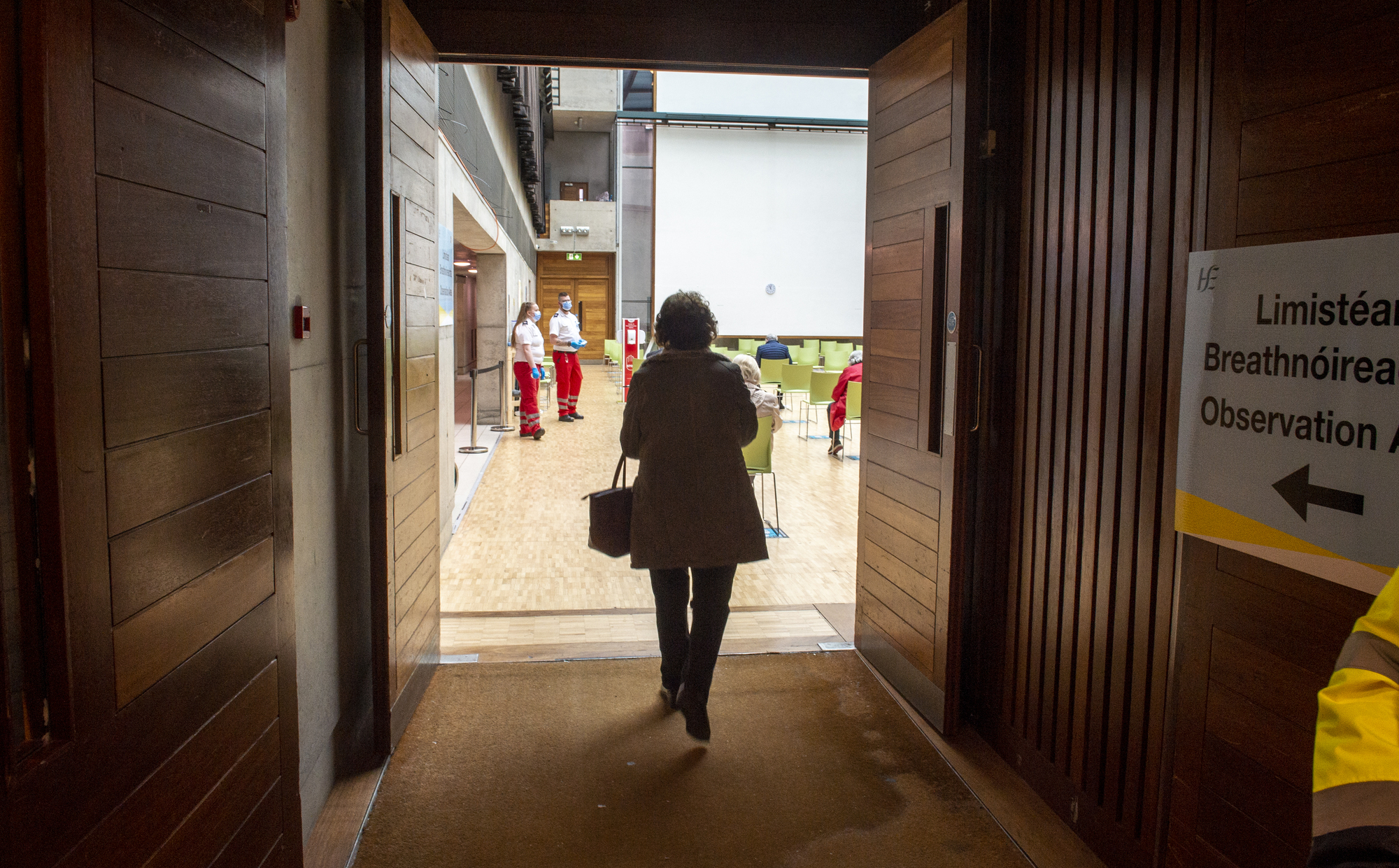
Long Covid is thought to affect as many as 10% of those infected by the virus. Picture: Dan Linehan
An infectious disease consultant at Cork University Hospital has warned that a national approach and investment in additional resources will be needed to deal with “tens of thousands” of patients across the country suffering from long Covid.
As the country begins to emerge from the pandemic, the health service will face fresh challenges, including managing an unknown number of long-Covid patients, as well as growing waiting lists for non-Covid care.
Dr Arthur Jackson, one of a team of CUH medics seeing patients referred with long-Covid symptoms, said the hospital is working through a “backlog” of patients but that additional resources would be needed in the longer term.
“We don’t have a dedicated long-Covid clinic in Cork and we see patients in our general infectious diseases clinics but the demand is currently outweighing availability for our clinics,” he added.
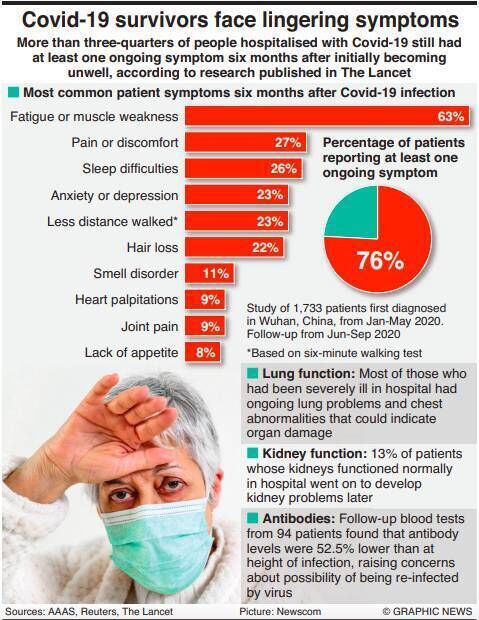
There is no internationally agreed definition of long Covid and symptoms range from fatigue and headaches to respiratory issues, or impacts on the heart, brain, nervous system, and other organs.
Many patients report ongoing and debilitating impacts on their health, weeks and months after initial infection, regardless of how mild or severe the initial infection was.
The scientific and medical community has yet to fully understand how the virus works and affects different organs in the body.
Long Covid is thought to affect as many as 10% of those infected by the virus.
Even if only 1% of people who contract the virus develop long Covid, it will present challenges for health services, epidemiologist Dr Andrew Kunzmann from Queen’s University in Belfast told a seminar hosted by the Independent Scientific Advocacy Group (ISAG) earlier this week.
Studies, he said, have shown Covid symptoms were evident 12 weeks after initial infection and impacted the social, home, and work life of those presenting with long-Covid. Those hospitalised with Covid-19 were also more likely to require hospital re-admission.
There is now growing evidence, Dr Kunzmann said, that long Covid is “real” and patients must be believed rather than “gaslighted”.
“We need to start believing people when they say that something is wrong,” he said.
The HSE said it was “extremely difficult” to quantify the scale of long Covid in Ireland but that it is looking at modelling numbers and adopting a “national approach” to managing the new condition.
“There is a lot of uncertainty in the international literature about how many people experience prolonged symptoms so it is extremely difficult to determine the scale as yet in Ireland. We are monitoring the situation very closely and looking at how we can best estimate the scale. This will take some time and will need continual review,” a HSE spokesperson said.
Dr Jackson said the numbers could be in the “tens of thousands”, given conservative estimates of one in 10 Covid-19 patients presenting with long-Covid symptoms.
To date, almost 250,000 people have tested positive for the virus in Ireland, suggesting there may be as many as 25,000 long-Covid patients here.
This may be an underestimate, given that official figures do not include individuals who had Covid but either tested negative or were not tested for the virus.
“With current resources already fully occupied with non-Covid work, there will not be the capacity to take on the tens of thousands of additional patients," Dr Jackson said. "It is something that will require investment.”
The need for investment was also highlighted this week by public health expert Dr Gabriel Scally, who noted the British government invested £10m (€11.5m) in 10 dedicated long-Covid clinics last year.
In the absence of treatment options for long-Covid patients, Dr Jackson said a multidisciplinary approach, involving specialists in infectious diseases, respiratory, and psychology or psychiatry, is required at present.
How patients are referred to specialists is also a “work in progress”, he said, adding that a national approach and referral pathway is needed.
At present, patients hospitalised by the virus are being seen more quickly than those who are not.
The HSE said patients experiencing long Covid can seek support from their GP or from their hospital team if they were admitted with Covid-19.
The health service said it was also engaging with long-Covid patients, as well as developing guidance “to align needs with care provision”.
“A national approach to long Covid is currently under consideration,” a HSE spokesperson said.
HSE information on recovering after Covid can be found here
Long-Covid patients are being left to their own devices and are not getting the support they need to cope with the new illness.
That’s according to Martin Flanagan, from Douglas in Cork, who is still living with the effects of Covid-19 almost four months after he was first infected.
The 59-year-old shop manager of a builder's providers is exasperated by the lack of support available for long-Covid patients, many of whom find themselves out of work due to the virus and struggling to carry out simple everyday tasks.
Mr Flanagan was not admitted to hospital when he contracted the virus in early January but has had difficulty breathing ever since, despite clear X-rays of his chest.
He now finds himself forking out privately for further medical tests and said the Government must provide “temporary” supports, such as medical cards and bus passes, for long-Covid patients until such time as they recover or treatments become available.
Businesses affected by Covid restrictions were being subsidised or financially supported by the Government but long-Covid patients were left to their own devices, he said.
Nobody seems to care. I have never heard Health Minister Stephen Donnelly talking about people living with long Covid or what he plans to do for these people. We didn’t ask for Covid but we got it unfortunately.”
The frontline worker remains anxious about the future and if, and when, he will make a full recovery and return to work:
“At the moment I can’t manage my life. It’s very difficult because I don’t see any light at the end of the tunnel right now."
Mr Flanagan is one of almost 150,000 people to avail of an enhanced Covid-19 illness benefit payment of €350 a week that was introduced by the Department of Social Protection last year in response to the pandemic.
It is unclear, however, how many people claiming the enhanced payment went on to develop long Covid. The department confirmed that those who remain ill beyond 10 weeks will be transferred to the standard illness benefit payment of €203 per week.
The highest number of Covid-19 illness benefit claims came from people working in the wholesale and retail, health and social work, and manufacturing sectors, official figures show.
CONNECT WITH US TODAY



Be the first to know the latest news and updates