Lifting restrictions too early risks a fourth Covid wave, warns Cork expert
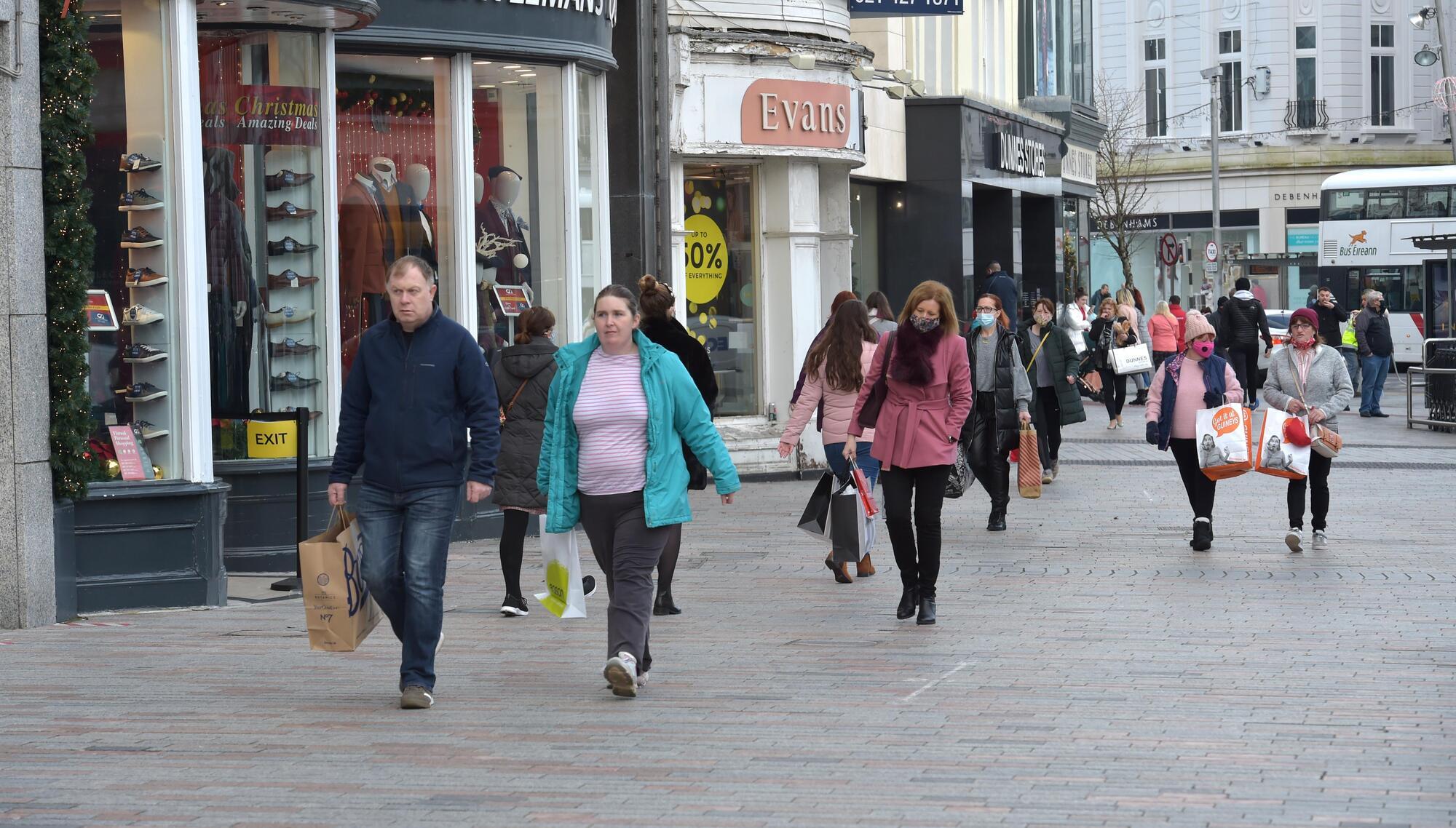
âThe mood is of pleasant optimism with a little bit of concern about what is going to happen. There is still a danger associated with lifting restrictions, there is a strong chance of another wave.â Picture: Dan Linehan
Lifting restrictions slowly is âappropriately cautiousâ, a Cork infectious diseases expert said, as he warned that reopening too quickly would put unvaccinated people at risk.
Arthur Jackson, a member of the Infectious Diseases Society and consultant working between Cork University Hospital and the Mercy in Cork, said medical staff are cautiously optimistic about the week ahead.
From Monday all students are back at school, people can travel within their county and two households can meet outdoors. Residential construction work also re-starts.
People in Cork were badly affected by the virus this year. On one day in January, there were 140 Covid-19 patients being treated in CUH and 39 patient the Mercy.
Dr Jackson said this picture has changed significantly in the past few weeks. He estimated there were no active Covid-patients in the Mercy on Friday, and less than 10 in CUH.
âThe mood is of pleasant optimism with a little bit of concern about what is going to happen. There is still a danger associated with lifting restrictions, there is a strong chance of another wave.âÂ
He added: âIt depends on how liberal they (government) are with opening up society and opening restrictions before the vaccines have gotten out to the younger groups.âÂ
At the moment it is planned to vaccinate everyone by late September, depending on supply.
âWe would still have a large group admitted to hospital, a lot of people even if they donât die would get seriously ill,â he said.
The risks of blood clotting and the Long Covid syndrome are high for people of all ages, he said.
And Dr Jackson pointed to the increased transmissibility of the B.117 or UK variant.
âAt Christmas, the B.117 was a new variant, now that is the normal circulating virus,â he said.
He said this has meant if one person is admitted to hospital from a household, then everybody in that house is also sick to varying levels.
Dr Jackson said innovations like antigen testing and structuring of shift-times, as is being done now in meat plants, should be applied in other workplaces too.
âAntigen testing is something we should embrace, we should use it appropriately. Itâs not the answer, but it is part of the answer,â he said.
He would like to see infections to continue decreasing, as hospitals are looking to treat non-Covid patients.
And he said there are growing numbers with Long Covid symptoms.
Working groups from different medical specialities are looking at a countrywide approach to this, he said, under the HSE national lead for acute hospitals Vida Hamilton.
The post-covid era should also be a time to fix infrastructural problems, he said.
Multi-bed wards and narrow corridors added to hospital infection numbers, and lack of digitalised records is slowing down the vaccine roll-out.
âIt would seem an appropriate time to take stock of everything,â he said.