Government's plan to reopen Ireland under renewed pressure
Government's plan to reopen Ireland under renewed pressure

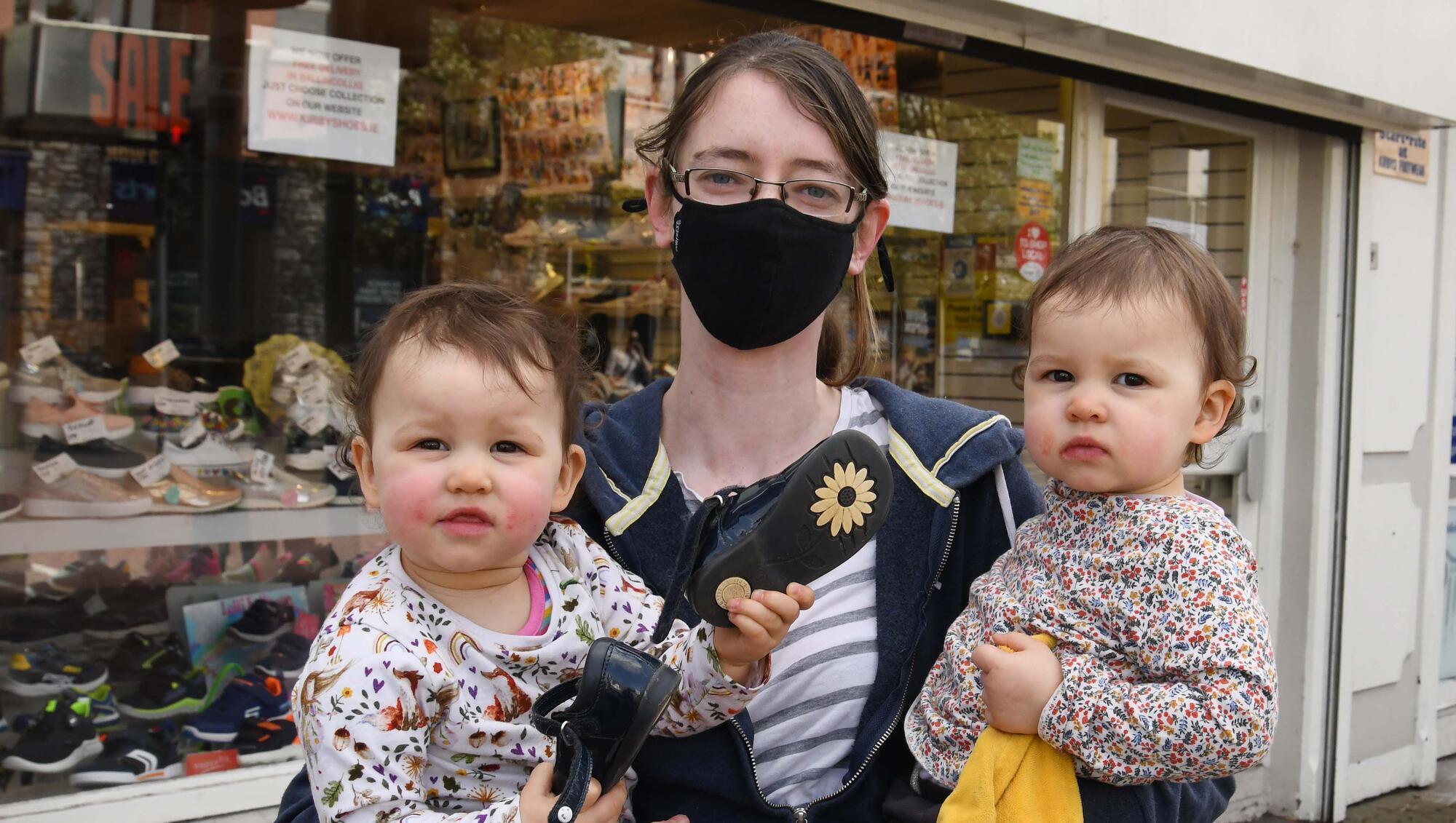
Grace Godfrey with her twin girls, who need new shoes, outside Kirby's Footwear in Ballincollig, Cork, where she hopes to be able to get the girls fitted for shoes soon. Picture: Denis Minihane

Several aspects of the Government’s plan to reopen the country are coming under greater scrutiny, with doubts emerging over quarantining plans and vaccination projections.

The scrutiny comes in the wake of the Government’s embarrassing U-turn on the sale of children’s shoes, and growing anger over continued restrictions imposed on maternity hospitals.

While the Government bowed to growing pressure to reopen shoe shops for children who need to be fitted in-store to get footwear of the correct size, a decision not to ease the restrictions on partners' visits to maternity hospitals was last night described as “incomprehensible”, and lacking compassion

The HSE confirmed that the current restrictions will remain in place beyond April 5.

Maternity ward restrictions

Hitting out at the decision, Social Democrats co-leader Catherine Murphy said the restrictions had been introduced to protect doctors, midwives, and other staff working in maternity hospitals — but that this group has now been vaccinated.

Ms Murphy said expectant mothers were being told that they had lost a child without the support of a partner.

Mandatory quarantine

There are now also further questions over the mandatory quarantine scheme, as plans to more than double the number of countries on the list are in doubt after the Attorney General flagged concerns with the health minister that the move could potentially be in breach of EU citizens’ rights.

It is understood that Paul Gallagher wrote to Stephen Donnelly on foot of a recommendation from the Travel Expert Advisory Group. Mr Gallagher is believed to have raised concerns over the legality of requiring EU citizens to pay for the 12-day quarantine.

Vaccine rollout

Meanwhile, last night the Taoiseach and the health minister told a meeting of Fianna Fáil’s parliamentary party that Ireland would not receive 1m doses of Covid-19 vaccines in April as had been expected. Instead, the country is to receive 860,000 doses, meaning it will not be possible to meet the target of 250,000 doses per week mapped out during Tuesday’s announcement of plans to reopen the country.

The vaccine plan was reviewed due to evidence that age is a determining factor for severe incidence of Covid-19, according to Prof Karina Butler, chair of the National Immunisation Advisory Committee. Picture: Colin Keegan

Senior figures have also been forced to defend changes to the vaccine sequencing order, with Tánaiste Leo Varadkar admitting that there should have been consultation ahead of changes to the vaccination priority list. After teachers, gardaí, and family carers voiced anger over changes to the rollout of the vaccine, Mr Varadkar said it could have been handled better.

However, speaking at a private meeting of his party last night, Mr Varadkar said those working in supermarkets deserve to be prioritised just as much as any teacher.

Revised priorities

Under the revised vaccine rollout list, people will be prioritised by age and not occupation after the current cohorts of over-70s, frontline healthcare workers, and extremely vulnerable people have been vaccinated.

Prof Karina Butler, chair of the National Immunisation Advisory Committee, said the vaccine programme had been reviewed in light of the evidence, which showed that age is the determining factor for severe incidence of the disease, hospitalisation and death.

She said that, if you compared a healthy 20- to 34-year-old with someone aged between 55 and 65, the older person is 70 times more likely to die due to Covid-19, more than 20 times more likely to be admitted to intensive care, and five times more likely to be hospitalised with the virus.

“The risk that goes along with each five-year or 10-year increment is much more differential ... than occupation,” she added.

Teachers not prioritised

Cohort nine of the programme refers to those “living or working in crowded settings”, which teaching unions had hoped would include them. However, both Prof Butler and Mr Donnelly said teachers would not be included in this category.

The public has been warned that any significant increase in social contacts over the next four to eight weeks was “highly likely” to result in a fourth wave of Covid-19.

Philip Nolan, chair of the Irish Epidemiological Modelling Advisory Group, warned that we could see 1,000 cases a day into May, June and early July, before the vaccination programme would begin to suppress the virus.

More in this section

Lunchtime News

Newsletter

Keep up with stories of the day with our lunchtime news wrap and important breaking news alerts.

Cookie Policy Privacy Policy Brand Safety FAQ Help Contact Us Terms and Conditions

© Examiner Echo Group Limited