Floating the idea – solar panels in the water could be key player in Irish energy market
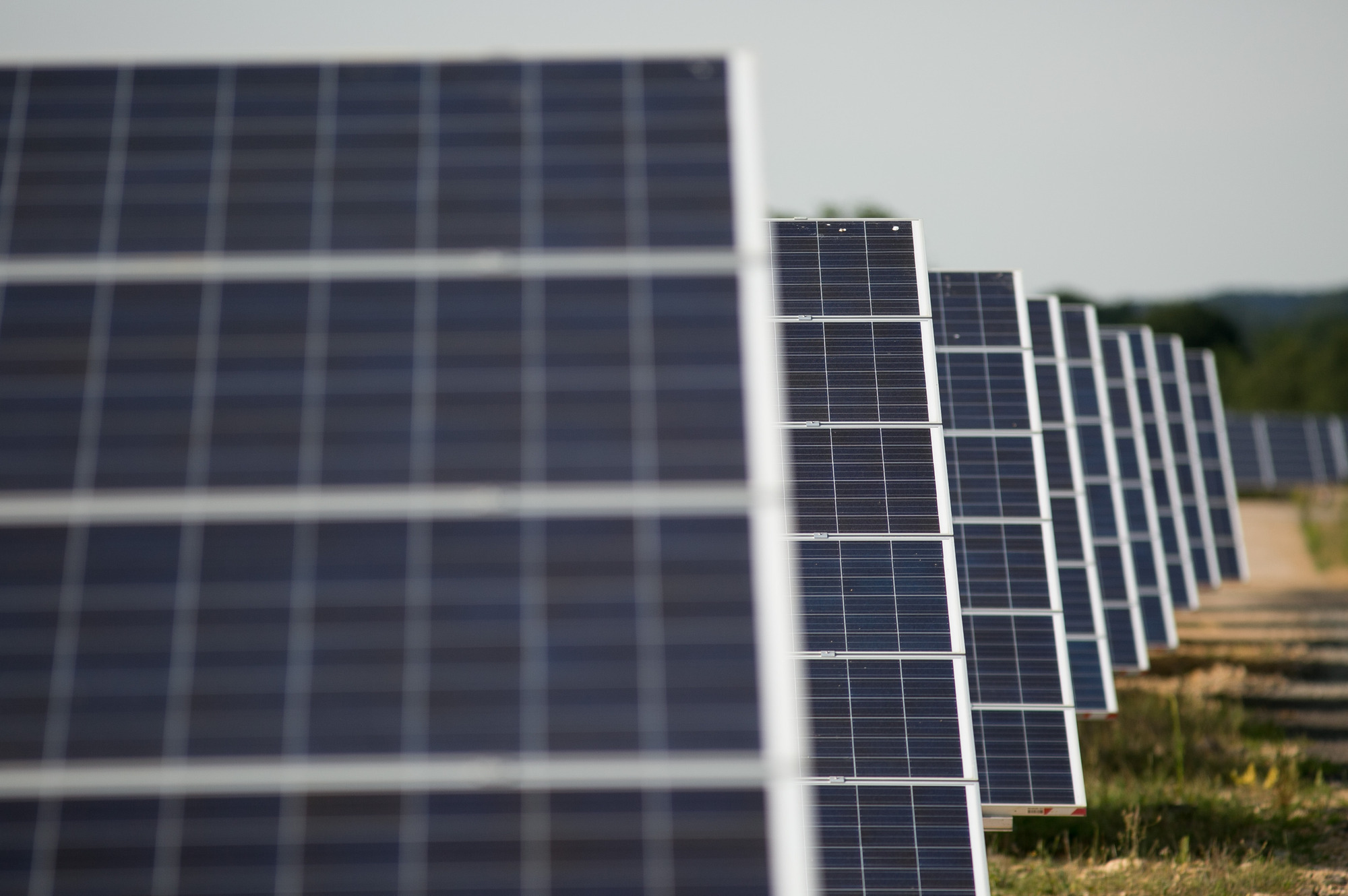
Floating solar energy envisions using solar panels to generate electricity on water. SolarMarine Energy says Ringaskiddy is the ideal place to test if it could work in Ireland. File Picture of solar panels: Daniel Leal-Olivas/PA Wire
The Cork coast could become the leading area for 'floating solar' energy, considered one of the most promising renewable concepts of recent years.
Mayo-based firm SolarMarine Energy said its floating hybrid renewable energy system could offer sustainable low-carbon solution for Irish coastal communities.
The concept of floating solar energy has grabbed the imagination of scientists and energy experts in recent times, becoming one of the fastest-growing concepts in the past decade.
At its most basic level, it uses solar panels to generate energy on water surfaces.
Proponents of the technology say it is encouraging because it does not use land, and can be easily constructed and dismantled, while some studies have shown it can also be more energy efficient than panels on land.
SolarMarine Energy Ltd, has designed an innovative floating #hybrid #renewable energy system, which could offer sustainable low carbon solution for #Irish #coastalcommunities.
— Marine Institute (@MarineInst) February 15, 2021
Funded by the Marine Institute's 2018 Industry-Led Awards scheme https://t.co/LeMs9l49ZX pic.twitter.com/kkSaN5s4rl
SolarMarine Energy's research and development project was funded by the Marine Institute's 2018 awards scheme, which saw €2.4m for research projects to 12 companies, working in collaboration with five higher-education institutions.
The firm designed a floating solar energy structure to produce green hydrogen, which is generated using excess renewable energy that can be used as a clean fuel for heating and transport or to store and transport energy.
Green hydrogen is described as producing energy through the electrolysis of water, while eliminating emissions by using renewable energy. Its supporters say it could completely revolutionise clean energy, while its detractors caution it is too cumbersome to achieve on a mass scale.
A major report from the International Renewable Energy Agency (IRENA) last month called for national hydrogen strategies to be adopted in various countries.
SolarMarine Energy said its research indicates that floating solar energy is ideal for island and coastal communities.
Chief executive Eamon Howlin said: "The floating solar industry is only emerging in Europe, having been established in Japan in 2014, and has a projected market value of over $1bn by 2023."
He added that with its collaborative study in partnership with the Marine Institute and University College Cork (UCC), SolarMarine Energy is "playing an important part in this developing industry".
Dr Paul Leahy, of Science Foundation Ireland MaREI Centre at UCC said its collaboration with SolarMarine Energy has been "very successful".
"We would like to continue working with the company on a follow-up demonstrator project. A floating solar array prototype located near UCC's Beaufort Building in Ringaskiddy would allow SolarMarine and UCC to capitalise on the design work undertaken under the Marine Institute-funded project, and bring the SolarMarine floating solar concept closer to market."
Director of policy, research and innovation at the Marine Institute Dr Niall McDonough, said supporting new marine renewable energy solutions was a "strategic priority for Ireland to meet the targets" of the Climate Action Plan 2019.
"Through our competitive funding programme, the Marine Institute provides grants to companies in Ireland to undertake research and to develop innovative concepts, prototypes, solutions and business models.
"This kind of support is essential to boost ocean business and to enable the transition to a climate-neutral blue economy," he said.


CONNECT WITH US TODAY



Be the first to know the latest news and updates