Public face 'difficult and expensive choices in tackling climate crisis
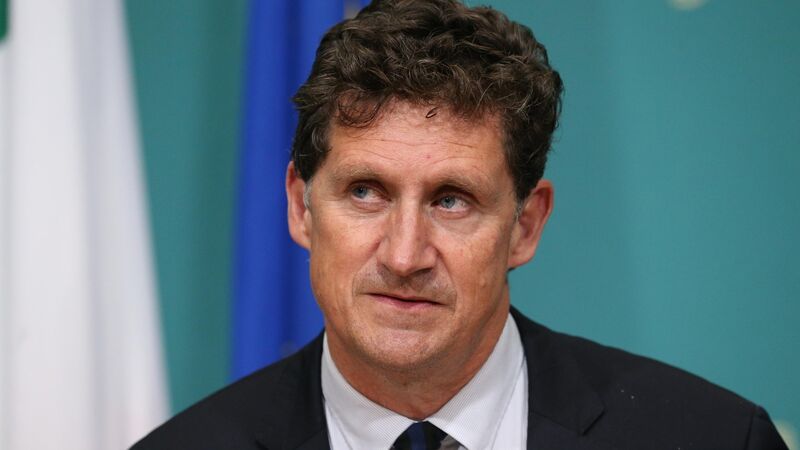
Minister for Climate and Transport Eamon Ryan said climate change has to be 'citizen-centred'. File Picture: Sasko Lazarov / RollingNews.ie
Politicians and energy firms need to substantially up the ante when it comes to getting the Irish population on board with the transformation required to tackle the climate crisis, leaders have conceded.
ESB chief executive Pat O'Doherty and climate minister Eamon Ryan told an Institute of International and European Affairs (IIEA) event on Irish energy policy and the transition to net-zero emissions that there needs to be a focus on communication and engagement.
Mr O'Doherty said it was crucial to have public buy-in because the transition would involve "difficult and expensive" choices for people.
He said: "People have difficult choices to make about how they live their lives, what car they drive, how they heat their homes — these are all difficult and expensive choices. There is a role for us in the energy sector to work with citizen groups, with customer and community groups, to do that.
"Ultimately it is developing products and services, and landing products and services, that customers and consumers find are useful for them in their everyday lives."
It will mean "convincing and engaging and selling the message" about quality of life and living, as opposed to just buying and selling kilowatt hours, Mr O'Doherty said.
Mr Ryan said there has been a series of climate gatherings where the concept of "storytelling so that it really inspires" people was crucial.
"It won't come from the top-down just," he said. "You do need top-down signals and supports to make it easier for people to do the right thing and not just putting it all on the consumer responsibility.
"Having said that, we know to change our agriculture that there are 120,000 farms, and that is not easy. We know that those 1.5m homes that we have to build better and retrofit and so on, every home is an individual home decision.
"You ask for help rather than tell people what to do. You admit some of the uncertainties around how technology evolves, you have to have the patience of those who built the cathedrals in Europe — it will take several decades for us to deliver."
Mr Ryan said it was about speaking to the home, rather than big planetary issues.
"Those 120,000 farmers have to know they are going to get paid better," he said. "All of them, particularly those who are paid so badly at the moment.
"Those 1.5m homes, we have to make sure that we do it under loan arrangements that the bills are paid for with the savings, and we make that real as a better economic investment.
"It has to be citizen-centred."