Policing Authority report: Actions of gardaí during Covid crisis have 'saved lives'
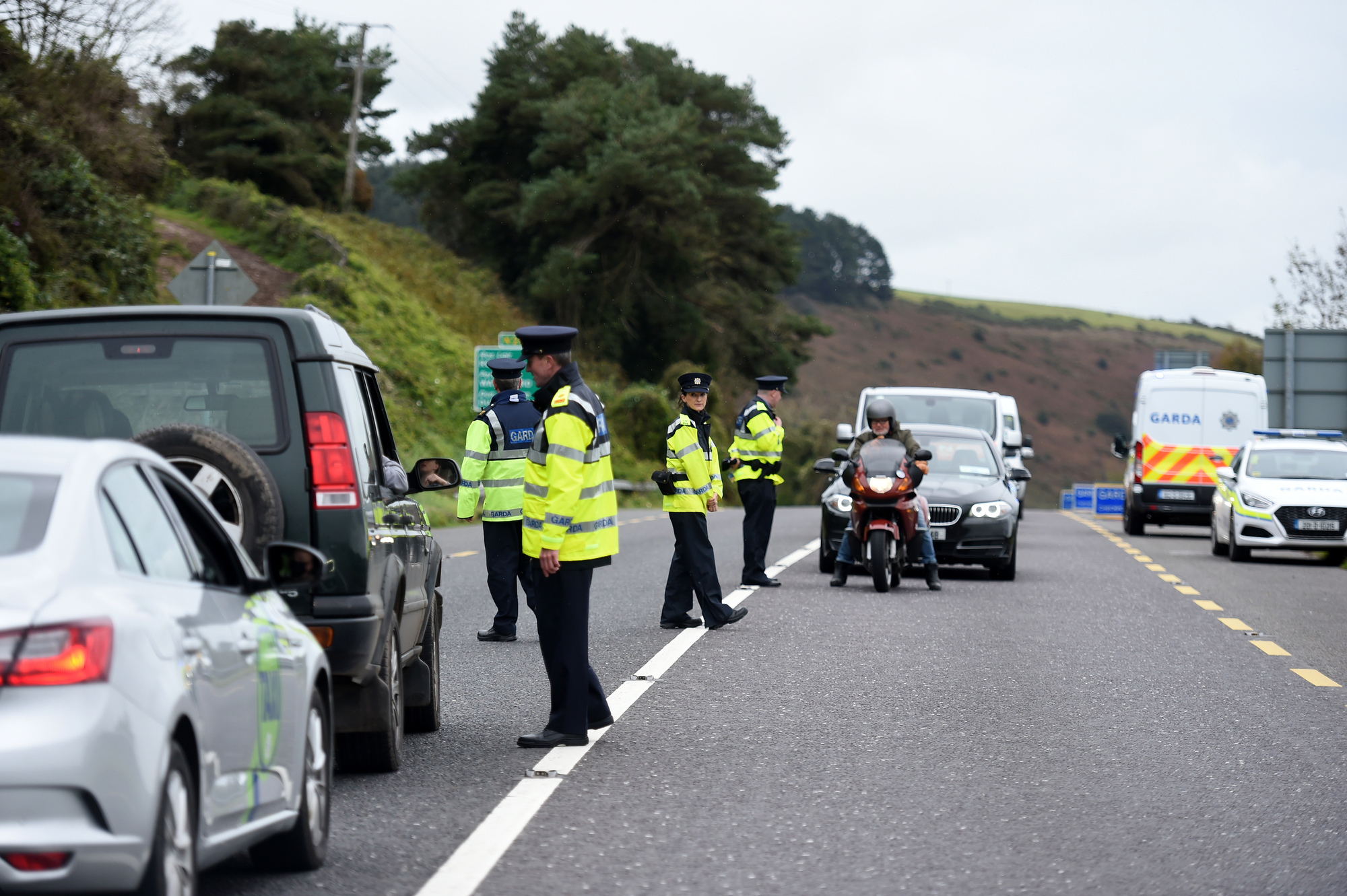
The Garda Commissioner has reaffirmed his view that added powers are “not required now” and preferred to rely on their policy of “Engagement, Explanation and Encouragement” and only then “Enforcement”. File pic: Larry Cummins
Community groups believe the actions of gardaí during the ongoing Covid-19 crisis have “saved lives”, according to the latest policing monitoring report.
The Policing Authority said that the level of compliance of the public in complying with regulations is “substantially high” and that the number of enforcements by gardaí is “modest”.
Publishing its eighth report on the performance of An Garda Síochána during the crisis, the authority said there have been 62 reported incidents where enforcement powers were used under the Health Act 2020 since their previous report to the Justice Minister on September 11.
It said these powers are primarily related to the outcomes of Operation Navigation and the inspection of licensed premises.
The authority welcomed the reduced usage of controversial ‘spit guards’ or ‘spit hoods’ – but remains deeply critical of their usage.
Authority chairman Bob Collins said that as the report was being prepared for the minister the course of the health emergency was changing yet again.
He said increasing numbers of cases of Covid-19 are prompting growing concern that, in turn, evoked an elevated level of caution and restriction.
“In all of these phases, the role of the Garda Síochána looms large,” he said.
Mr Collins said the period since their last report was one of “relative calm” with the focus of regulatory attention in relation to possibly re-opening society.
“As this report shows, the level of compliance is substantially high and the number of enforcements reported by the Garda Síochána correspondingly modest," he said.
He said the report highlights use of garda powers and the change in the trajectory of the virus.
“It indicates, also, the challenge and the complexity that will face the Commissioner and his colleagues in the period ahead,” the authority chairman said.
“Previous reports have identified the difficulties that confront the Garda Síochána when public expectations of what policing can achieve is not matched by any corresponding powers.”
He said that on October 8 the authority had a virtual meeting with representatives of the country’s joint policing committees.
That found:
- Wide and wholehearted appreciation of the work of the Garda Síochána throughout the period since early March;
- A certain concern that social solidarity “may be fraying a little” as the health emergency extends beyond most people’s initial expectations;
- A recognition that there are some in society who are not playing their part and who are putting personal preference ahead of the welfare of the entire community;
- A view by quite a number that greater enforcement powers are necessary.
Mr Collins said the authority has held the view that emergency powers for gardaí should be “at the minimum level possible”.
He said the commissioner has reaffirmed his view that added powers are “not required now” and preferred to rely on their policy of “Engagement, Explanation and Encouragement” and only then “Enforcement”.
This is in the context of the Cabinet agreeing to examine the introduction of a more extensive fines system for breaches of Covid regulations.
Mr Collins said: “There is a genuine and well‐founded concern that extensive new powers for gardaí, and their widespread use, might not be the panacea that is sometimes thought.
"And it is not difficult to envisage a situation where the very considerable support for the role played by the Garda Síochána might be affected as a consequence.
"Neighbouring jurisdictions have given added, and progressively more stringent, powers to police services but there is little evidence that, in and of itself, such a policy eradicates any undesirable behaviours.”
The report said that in recent weeks there has been much media and social media comment and reporting on inappropriate behaviour at house parties and outdoor gatherings.
“The Authority recognises the need for individual members of society to take personal responsibility for their actions particularly in light of the potential implications for public health,” the report said.
“There is nevertheless a need for an early and visible presence, and a graduated and consistent response by the Garda Síochána.”
It said that since the last report to the Minister on September 11, there have been 62 newly reported incidents where enforcement powers were used.
In addition, there have been eight additional instances where anti‐spit hoods have been deployed, approximately 6,400 additional checkpoints conducted, and in excess of 7,800 further visits to licensed premises.
In the period April 8 to September 26 there have been:
- 599 uses of emergency powers;
- 2,322 crime incidents;
- 69,715 checkpoints;
- 112 use of spit hoods
In relation to spit hoods, 50 have been in the Dublin Region, 22 have been in the Southern Region, 22 in the North Western Region and 18 in the Eastern Region.
Use of the hoods has dropped significantly over time: April (30); May (36); June (19); July (12); August (10) and September (5).
The report said: “While the Authority’s reservations remain, it is positive to see the declining use of anti‐spit hoods.”
Garda figures show that public order offences accounted for 51 of the 'spit hood' incidents while assault accounted for a further 32.
In 94 incidents the devices were used on males and 18 on females.
“To date anti‐spit hoods have been used 6 times on children under the age of 18 years,” the report said.
It said the authority has received more detailed reports for 99 of these incidents.
This shows:
- In 14 incidents the garda member perceived the detainee to have obvious signs of a mental health issue. This was not the case in 55 incidents and it was unspecified in a further 30 incidents;
- In one incident the garda member perceived the detainee to have obvious signs of a learning disability. This was not the case in 67 incidents and it was unspecified in a further 31 incidents.
- In 64 incidents the garda member perceived the detainee to demonstrate obvious signs of intoxication. This was not the case in 17 incidents and it was unspecified in a further 18 incidents.
The authority said it is “deeply disappointing and discouraging” to see ongoing verbal and physical assaults on gardaí by spitting or coughing at members.
It said there have been 14 additional incidents recorded since the last report, bringing the total to 206 since April 12.
These have fallen over time too: April (46); May (48); June (39); July (29); August (26) and September (18).
In relation to crime, one community reported to the authority that drug dealing in particular had re‐emerged with “renewed vigour” as the visibility of gardaí in the area reduced.
“The impact of the lockdown in terms of the opportunity it provided to gangs to attract young people into drugs related activity was raised,” it said.
“The absence of school or the availability of youth projects during this time is believed to have created the circumstances or conditions in which this was increasingly possible.” There were calls for youth work to be considered “an essential service”.
The report said that hate crime was also raised as an issue impacting communities as well as the victim, affecting people's sense of security in going to public areas.
Organisations working in the area of domestic abuse continued to report to the authority on the sustained efforts of the Garda Síochána and the positive impact of that work, including the actions of local garda protective services units.
Other figures in the report show that, since April 8, use of emergency powers, by garda division, was highest, by some distance, in Galway (54), with Dublin South (31) and Dublin North (30) recording the highest figures in Dublin.
The figures in the three Cork divisions were Cork City (17), Cork West (16) and Cork North (9).
Elsewhere in Munster, the figures were: Kerry (22); Limerick (22); Tipperary (25) and Waterford (23).