Gardaí applying movement restriction powers 'proportionately' - Policing Authority
The new emergency powers granted to gardaí to enforce movement restrictions during the Covid-19 are being applied "proportionately".
Gardaí applying movement restriction powers 'proportionately' - Policing Authority
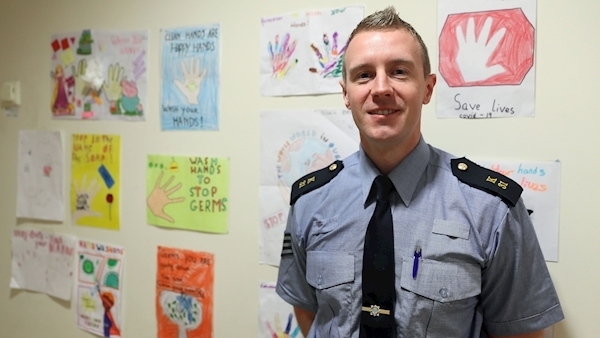
Sergeant John O'Reilly, of Community Policing in Finglas, in front of artwork by children of members of An Garda on the wall of Finglas Garda station in Dublin. Pics: Brian Lawless/PA Wire

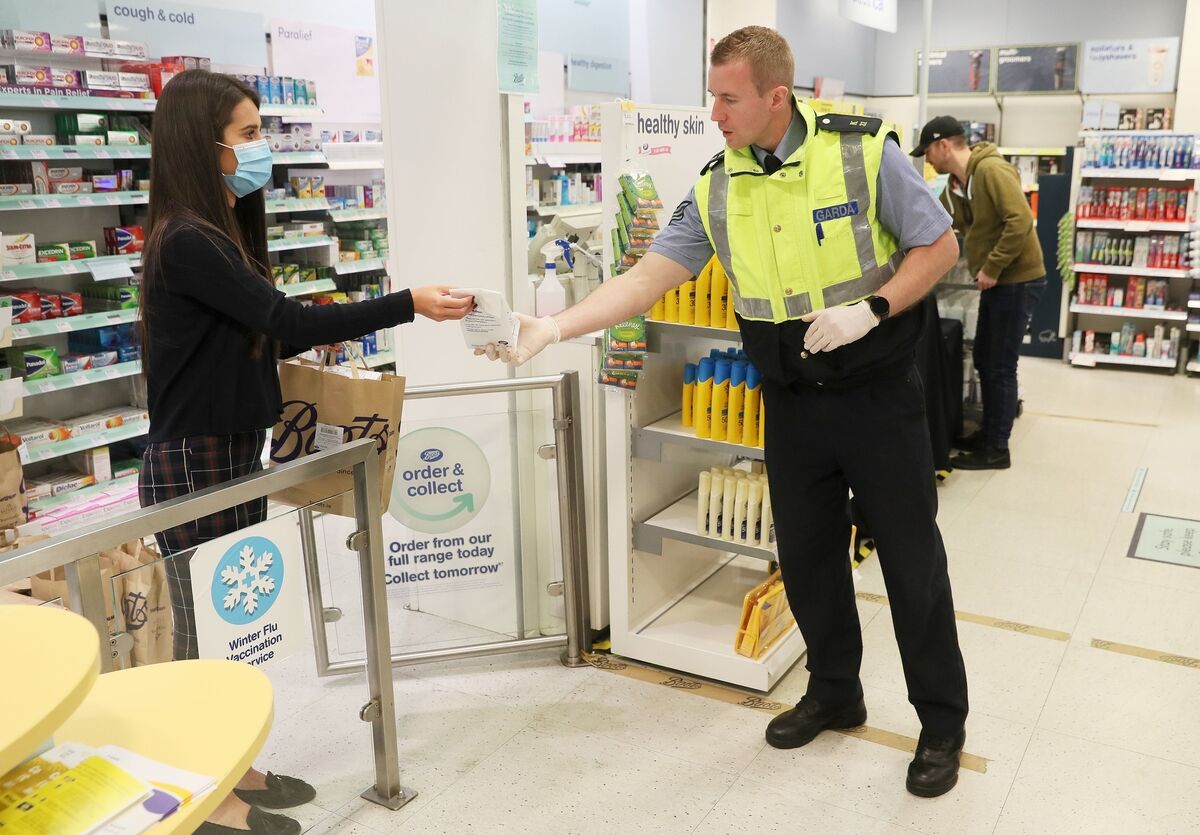
Sergeant John O'Reilly, of Community Policing in Finglas, collects prescriptions for members of the public from Aidene Browne, a pharmacist in Boots, Charlestown.

The report detailed that, for the week ending May 2, there were 47 incidents where gardaí exercised powers under the Health Act - bringing the total to 139. Two of these incidents were at the direction of a health professional.

From April 8 to May 2, there were 1,172 crime incidents which represented suspected offences disclosed or uncovered as a result of Covid-19 policing.

Gardaí carried out 13,302 checkpoints from April 20 to April 26, of which 38% were carried out in Dublin Metropolitan Region (DMR).

An examination of four sample checkpoints in each region of the country found that, of the 13,324 vehicles counted passing through these checkpoints, only 21 (0.16%) were turned back.

For the week ending May 2, anti-spit hoods were used in 13 incidents bringing the total uses to date to 293.

At a public meeting with the Policing Authority last week, Garda Commissioner Drew Harris said the new powers were being used on “very rare occasions” and that it had been stressed to gardaí to “use their discretion and common sense” when dealing with the public.

Meanwhile, the Garda response to coronavirus could change the face of community policing following an increased presence in local areas during the lockdown.

Units nationwide have been delivering medication, food and other services to the homes of vulnerable people and the elderly who are ’’cocooning’’.

Patrick McGowan, from Collins Avenue in Dublin, thanks Sergeant John O'Reilly, of Community Policing in Finglas, after receiving his prescription medicine.

Sergeant John O’Reilly, of community policing in Finglas in Dublin, said the frontline initiative has strengthened the relationship between gardaí and the public: "There is huge benefit to be gained from this, we’’re very much community-based and this is bringing us right back into the heart of the community to show that we are there to assist them.

"It doesn’t always have to involve a criminal nature. The feedback that we’re getting from the community and the people we’re visiting on a daily basis is extremely positive.

It’s vitally important that we maintain our links with the community, and this is without a doubt improving our relationships and strengthening our bonds with the community that we serve."

With the help of community representatives and Dublin City Council, gardaí in Finglas were able to identify the vulnerable and elderly people living locally.

Officers collect groceries, meals and prescriptions every day and deliver them to the homes of those who are isolated.

On some occasions, officers have also been taking elderly peoples' dogs for walks.

More in this section

Lunchtime News

Newsletter

Get a lunch briefing straight to your inbox at noon daily. Also be the first to know with our occasional Breaking News emails.

Cookie Policy Privacy Policy Brand Safety FAQ Help Contact Us Terms and Conditions

© Examiner Echo Group Limited