Donohoe: Review of Covid-19 support payments after 12 weeks with potential for 'tapering'
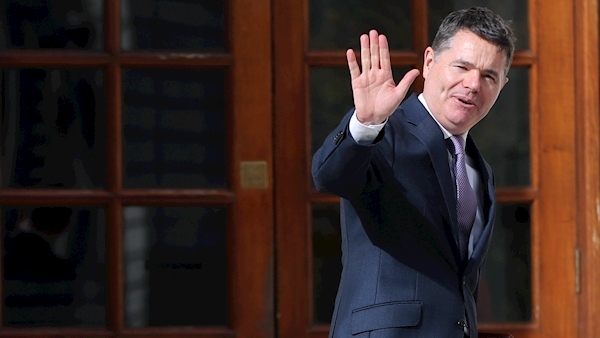
The Finance Minister has said it is “very likely” he will taper and change the Covid-19 welfare subsidies when they expire after 12 weeks.
Paschal Donohoe said the decision will depend on the state of the economy and how Ireland is tackling Covid-19.
He said many of the financial aid packages introduced last month are not sustainable, with more than 40,000 companies now relying on the wage subsidy scheme.
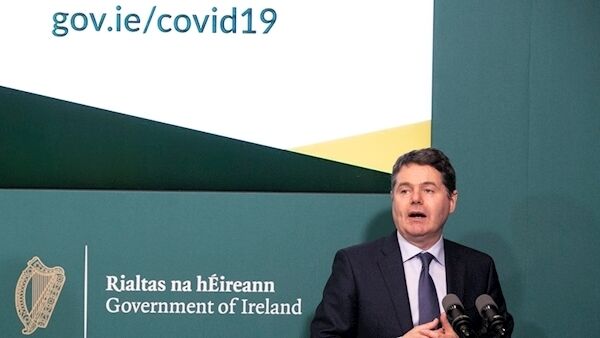
Speaking to RTÉ’s Morning Ireland, Mr Donohoe said: “Many of the measures that we have in place at the moment from an economic point of view, we cannot sustain them indefinitely, but we will be able to sustain them for long enough to allow incomes to continue to be protected, where possible, and to give over 40,000 companies that are currently on our income subsidy scheme a fighting chance of returning to economic and business health.”
Mr Donohoe said Ireland’s peak unemployment figure is likely to reach 22%, and then fall to around 14% by the end of the year.
However, if the coronavirus crisis worsens, the country’s deficit could go up by the end of the year.
The minister added: “It could go up because it takes longer for our unemployment rate to go down, and because we need to make further economic decisions.
“The second thing that would mean, if the reduction in unemployment that I believe we will achieve, that could take longer to happen if things turn out differently with our public health.
But what I would say in relation to that scenario is the foundation of where we want to get to with our economy is confidence in public health in the first place.
“If things do change in relation to the virus and our ability to combat it, because of many of the strengths that we still do have in our economy we will still be able to get to a place of employment and income growing again. But if the virus takes longer to contain, it could take longer to get there.”
Mr Donohoe described the 22% unemployment figure as “horrific”, but added that he is not applying any pressure to restart the economy.
“There are many different priorities and we have to look at what are the consequences of different choices that can be made,” he said.
“In those discussions I am very clear that I will be guided by our public health experts because, in order for us to have confidence about economic future, our country needs to have equal confidence about our public health.
“The way we will do that is by transparent and honest communication, led by our public health experts. We have been able to make progress in Covid-19 by having that approach, while regrettably we have seen many lives lost.
“That approach of recognising the importance of public health is the first step to economic recovery that I am determined we will realise again in Ireland.”
The Department of Health confirmed a further 44 Covid-19-related deaths on Tuesday, taking the total since the outbreak began to 730.
An additional 108 deaths are suspected to have links to coronavirus, the Department of Health also said.
Earlier: Donohoe: Review of Covid-19 support payments after 12 weeks
Minister for Finance Paschal Donohoe has said that he believes there will be an improvement in the economy in the second half of this year.
Speaking on RTÉ radio's Morning Ireland, Mr Donohoe also said that the government will be reviewing the Covid-19 support payments after 12 weeks, with the potential for “tapering.”
Economic measures introduced at the moment cannot continue indefinitely, he said. The country is facing “considerable economic challenges,” but he and the Taoiseach want to avoid cuts to social welfare rates.
The Minister predicted that peak unemployment will reduce to 14% by the end of the year.
“As we go into next year it should drop further.”
Mr Donohoe added that planning for public health will be fundamental to any economic recovery.
He also said that major capital projects, like the Metro in Dublin, could be deferred because of the virus.
The Irish economy will suffer a huge contraction in output and endure record job losses this year, before employment levels recover gradually as output rebounds in 2021, according to the yesterday's Government forecasts on the fallout from the Covid-19 crisis.
Mr Donohoe warned yesterday that 220,000 jobs will be lost before a recovery in 2021 when there will be a 5.5% increase in employment, but the economy will not return to where it was at the start of this year until 2022.
- Shop for essential food and household goods;
- Attend medical appointments, collect medicine or other health products;
- Care for children, older people or other vulnerable people - this excludes social family visits;
- Exercise outdoors - within 2kms of your home and only with members of your own household, keeping 2 metres distance between you and other people
- Travel to work if you provide an essential service - be sure to practice physical distancing
CONNECT WITH US TODAY



Be the first to know the latest news and updates