Legislators need to define 'harmful communication', Justice Committee told
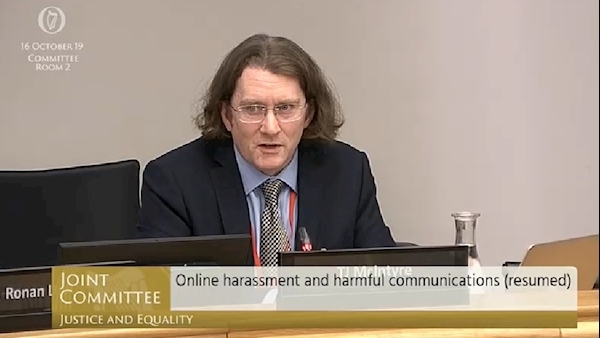
Legislators need to define what “harmful communication” is before they try and address the problem in laws, a legal expert has said.

Legislators need to define 'harmful communication', Justice Committee told

Legislators need to define what “harmful communication” is before they try and address the problem in laws, a legal expert has said.

Dr TJ McIntyre said once this was done, the State could set up a Digital Safety Commissioner, one circumscribed by due process and an appeal system, to regulate the industry. But he told the Oireachtas Justice Committee that previous laws criminalising offences online had not been implemented due, in most part, to lack of Garda resources.

The associate professor of Law in UCD told the committee, which is conducting hearings on online harmful communication, that the offence of what is harmful needs to be defined in law.

He said the Law Reform Commission (LRC) report of September 2016 did not do so and left it open-ended – saying this would breach the European Convention of Human Rights.

He said the Digital Safety Commissioner recommended by the LRC also breached the convention as it did not give the person affected by takedown requests the right to respond or appeal.

Mr McIntyre, who is also chair of Digital Rights Ireland, said that if these issues were dealt with, the DSC could provide a “half way house” for individuals who are victims of harmful behaviour to seek the material taken down without having to undergo the cost or delay of the courts.

He said criminalising conduct, even if the intent was not necessarily to prosecute, would make social media companies “take the matter seriously”.

Mr McIntyre said gardaí have consistently not been properly resourced in the cyber-crime and investigation area and that delays of up to six years dealing with examining devices for child abuse imagery continued. He said the Garda Cyber Crime Bureau had around 30 staff and was itself looking for around 120 staff.

Barrister and lecturer in UCD, Ronan Lupton said he favoured a statutory “one stop shop”, like the DSC, saying this would “go a long way” in dealing with a “duty of care” on internet providers. He said criminal laws did need updating, in terms of language, offences and sanction.

But he repeatedly warned deputies and senators against recommending that social media companies should be considered as publishers, with all the legal responsibilities that come with that, saying that would be “immediately incompatible” with EU law.

x

More in this section

Lunchtime News

Newsletter

Keep up with stories of the day with our lunchtime news wrap and important breaking news alerts.

Cookie Policy Privacy Policy Brand Safety FAQ Help Contact Us Terms and Conditions

© Examiner Echo Group Limited