RTÉ journalist says Callinan told him McCabe had done 'the most horrific kind of things', tribunal hears
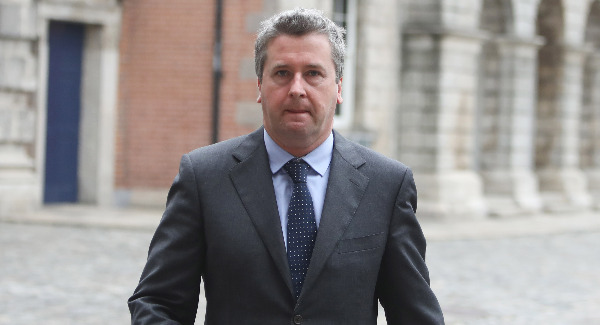
RTÉ journalist Philip Boucher-Hayes has said the Charleton Tribunal can contact three people he told of a conversation where former garda Commissioner Martin Callinan told him that Sgt Maurice McCabe had psychological issues and had done "the most horrific kind of things”.
The tribunal is examining allegations of a smear campaign against whistleblower Sgt McCabe.
Mr Boucher-Hayes said that he wanted to speak to Mr Callinan before an appearance on a 17 December 2013 Crimecall programme about what questions he would be asked.
Earlier that day, Andrew McLindon, the civilian director of communications for the gardai, presented to programme producers a list of questions to ask the commissioner.
Mr Boucher-Hayes told Patrick Marrinan SC, for the Tribunal, that this was "frankly completely unheard of", and that the commissioner should be asked about issues such as the penalty points controversy, rural stations closures and the Smithwick tribunal report.
Instead, the garda commissioner's team instead wanted to talk about issues that were "so far removed from public interest it was comical", such as a new garda roster, Mr Boucher-Hayes said.
Mr Boucher-Hayes said negotiations continued throughout the day and he later met Garda press officer Supt David Taylor, who told him: "You can forget about the boss answering questions about the penalty points, it's not going to happen."
He was also told during the day by Garda HQ that "hell would freeze over before Callinan would answer questions on Crimecall on penalty points."
Mr Boucher-Hayes said that he took Mr Callinan aside to speak to him "man to man" about the planned interview, and Mr Callinan spoke about whistleblowers. Mr Callinan first mentioned Garda John Wilson in passing and then spoke about Sgt McCabe.
The commissioner said Sgt McCabe had well-known issues, had psychological and psychiatric issues, and there were "worse things I could tell you" and "the most horrific kind of things”.
"I did not believe what I was being told right from the very start," Mr Boucher-Hayes said.
"I didn't believe what I was hearing. I felt it was a smokescreen that was being erected to deflect from the penalty point issue which he clearly didn't want to answer questions about."
Mr Boucher-Hayes said he knew "there was no suggestion of either murder or genocide, so my imagination went to child sexual abuse or rape."
"My estimation was that it was a reluctant interviewee trying to wriggle out of being held to account on an issue that was causing him personal discomfort," Mr Boucher-Hayes said.
Mr Boucher-Hayes said that afterwards, Supt Taylor said to him: "Now do you understand the issue with McCabe and penalty points?" Mr Boucher-Hayes said that Supt Taylor could not have overheard what Mr Callinan said, and was referring to the penalty point issue which had been contentious throughout the day, but did mention Sgt McCabe by name.
"Did he [Taylor] know at the time I had been given all this poisonous toxic information about Maurice McCabe, I don't know," Mr Boucher-Hayes said.
Mr Boucher-Hayes said he later spoke to his co-presenter Grainne Seoige about what Mr Callinan had said and she was "shocked and appalled about it". He also spoke to commissioning editor Niamh O'Connor, and to RTE radio producer, Tom Donnelly.
He said this took place in the days following the Crimecall programme, or when he returned from a Christmas break in January 2014.
Mr Boucher-Hayes said he had no difficulty if the tribunal contacted these people, although he could not say how they would respond. He said that he had not mentioned earlier that he had these conversations because they would be hearsay, not direct evidence.
Mr Boucher-Hayes said in the summer of 2014, he went to see Sgt McCabe, and put the allegations to him. The sergeant rejected the allegations, and Mr Boucher-Hayes said his gut instinct was to believe Sgt McCabe.
After this, Mr Boucher-Hayes tried to again contact Mr Callinan, who had since retired. He "made strenuous efforts to reopen the conversation", and wrote to the Garda Press Office, Garda HQ and the Chief State Solicitor's office asking them to forward a message, but got no response.
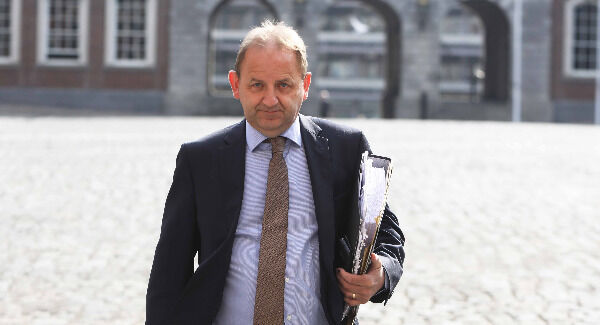
Noel Whelan SC, representing An Garda Síochána, said that Mr Boucher-Hayes could have broadcast the story of the garda commissioner smearing a garda whistleblower.
Mr Boucher-Hayes said the story could never have been broadcast because it would have a devastating effect on Sgt McCabe and his family.
"I sat on this information because it was of such an highly sensitive and damaging nature there was nothing I could do with it," Mr Boucher-Hayes said.
Mr Boucher-Hayes agreed with RTE barrister Sean Gillane SC that a broadcast of the story would have bought him the biggest defamation case in history, or destroyed Sgt McCabe's family, or both.
Mr Boucher-Hayes said he "wrestled briefly" with whether there was an issue of privilege attaching to what Mr Callinan told him.
"I decided Martin Callinan on the night of December 17 had not been a source, he had been a reluctant interviewee who did not want to be held to account, and under those circumstances, journalistic privilege did not apply," Mr Boucher-Hayes said.
Earlier, journalist and academic Colum Kenny told the tribunal that two security correspondents had told him that Sgt McCabe was "under investigation for alleged child abuse" when he met them at a public accounts committee hearing in January 2014.
The DCU journalism professor said that one of the journalists he spoke to was a broadcaster.
"I felt I was being told to cop myself on and this was a person who shouldn't be taken at face value."
Mr Kenny said he got the impression a garda investigation was ongoing.
Asked by tribunal barrister Kathleen Leader BL if he would name the journalist involved, Mr Kenny said he would rather if they named themselves.
"I don't want to embarrass anybody. I don't see why they wouldn't tell you themselves, to be quite honest," Mr Kenny said.
Mr Kenny agreed to pass on the names of the journalists to the tribunal which would then write to them. The chairman said that tribunal investigators would take a statement from Mr Kenny, and then contact the journalists.
"What they said had the effect of rubbishing his character, but I don't think they set out to rubbish his character in any general sense," Mr Kenny said.
Mr Kenny said that he later investigated the allegation, and discovered the DPP had directed no prosecution.
Mr Kenny said that if journalists were getting negative briefings about McCabe from gardaí, it "would help to explain some of the slowness at taking up aspects" of the story of penalty points abuses.
CONNECT WITH US TODAY



Be the first to know the latest news and updates