Rapist has sentence reduced
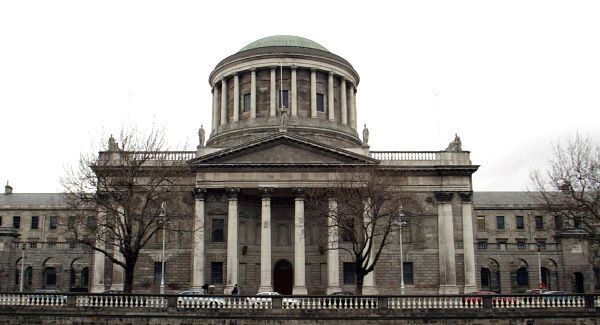
A notorious rapist has failed in an appeal against his conviction for the rape of an 85-year-old woman suffering with Alzheimer’s disease but has succeeded in having the last two years of his 21-year sentence suspended.
The Court of Criminal Appeal today found that there had been an error in principle in the sentence imposed on Simon McGinley (aged 37), who was jailed for 21 years by Mr Justice George Birmingham in July 2009 after he was convicted of rape by a Central Criminal Court jury.
McGinley, of Latlorcan Court, Monaghan, had pleaded not guilty to raping the then 85-year-old woman at her Co Monaghan home on June 16, 2008.
The Court heard that McGinley subjected the woman to a rape lasting several hours, having knocked at her door at midnight and grabbing her by the arm when she answered the door.
He was previously sentenced to 12 years in prison in 1998 for raping a 13-year-old girl who was at the centre of the Supreme Court action on abortion known as the “C case”.
Counsel for the applicant, Ms Aileen Donnelly SC, argued that Mr Justice Birmingham had placed no emphasis on rehabilitation when imposing sentence, despite the fact that it was clear drink had been an issue in the case and that it was in the public interest to deal with the impact alcohol has on such offences.
Mr Justice Liam McKechnie, sitting with Mr Justice Declan Budd and Mr Justice Michael Moriarty, said that the court found that the trial judge had not offered sufficient scope for rehabilitation in the imposition of a 21-year sentence.
He said that although there was no doubt this was a “horrific” offence, the appeal court had to be conscious of the opportunity for rehabilitation in every case, “no matter how bad”.
Mr Justice Liam McKechnie said that, “with a great deal of misgiving”, the court had come to the conclusion that the last two years of the 21-year sentence imposed should be suspended in the hope McGinley would reintegrate himself in to society and reform his criminal behaviour to the advantage of both himself and society.
Earlier in the day, the three-judge court determined that an appeal brought by McGinley against his conviction for rape was without substance.
Ms Donnelly had submitted that the trial judge erred in principle by failing to convey the “very essence” of the defence case to the jury and by ignoring a request from lawyers for McGinley to do so.
She told the court that Mr Justice Birmingham made a “huge error” in failing to accede to a requisition by the defence to highlight inconsistencies between a deposition given by the victim and other evidence before the court, in particular evidence concerning the identity of the attacker and the timescale of the attack.
Ms Donnelly submitted that Mr Justice Birmingham should have told the jury that if they felt it possible the victim was accurate in her timing and her description of the attacker, McGinley could not be the rapist and they must acquit him.
Counsel for the State, Mr Tom O’Connell SC, told the court that the trial judge “scrupulously and fairly” set out before the jury the factual conflicts in the case, and a request from the defence to set out the charge in a different manner was “besides the point”.
He said that although Mr Justice Birmingham did not explicitly tell the jury that if they believed the victim was correct in her evidence, McGinley could not be the rapist, this was the “self –evident” central issue in the case and the jury knew they had to find the victim incorrect in her testimony to find McGinley guilty.
Mr Justice Liam McKechnie said the court was “quite satisfied” that the jury were not “in any way” confused and were left in no state of uncertainty as to what the factual conflict in the case was and in what manner they should deal with it.
He said it was clear Mr Justice Birmingham repeated on a number of occasions that the onus was on the prosecution to prove beyond a reasonable doubt that the victim was inaccurate in her testimony.
Mr Justice McKechnie said the court had considered the entirety of the judge’s charge and would dismiss the appeal, having found that the applicant’s contention that the jury were inadequately charged was not a “sustained” point.
CONNECT WITH US TODAY



Be the first to know the latest news and updates