Air India bombing: Judget to deliver spring verdict
Lawyers have made their final arguments in the murder trial of two Sikhs charged over the 1985 bombing of an Air India jumbo jet, ending one of the most exhaustive and expensive trials in Canadian history.
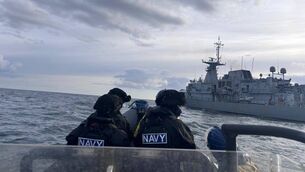
The plane exploded off the Irish coast on June 23, 1985, killing 329 people.
The trial against a millionaire and a mill worker charged with multiple counts of conspiracy and first-degree murder hinges on the testimony of three star witnesses and contradicting bombing experts.
In Vancouver, British Columbia Supreme Court Justice Ian Josephson announced yesterday that he would deliver a decision on March 16.
The case has called 115 witnesses since it began in April 2003. With a specially built courtroom, the trial cost more than €79.8m.
Ripudaman Singh Malik, a 57-year-old millionaire, and Ajaib Singh Bagri, 55, are accused of planting bombs aboard Flight 182 and another that exploded 53 minutes earlier at Tokyo’s Narita Airport, killing two baggage handlers.
Alleged bombmaker Inderjit Singh Reyat has already pleaded guilty to manslaughter and is in prison.
The prosecution says the motive was revenge against the Indian government’s 1984 attack against separatists who had taken refuge in the Golden Temple of Amritsar, Sikhism’s holiest shrine.
The attack also led to the 1984 assassination of Indian prime minister Indira Gandhi by her Sikh bodyguards.
The prosecution said the accused were zealots driven by a desire to create an independent Sikh state of Khalistan in the Punjab region of northern India and wanted to teach the Indian government a lesson.
The defence argues there is no evidence Malik was interested in Indian politics, but Bagri’s political motivation appeared more concrete.
A month after the temple raid, thousands of Sikhs gathered at Madison Square Garden in New York City where Bagri reportedly told The World Sikh Organisation: “Until we kill 50,000 Hindus we will not rest.”
The prosecution said Malik and Bagri were members of the Babbar Khalsa Sikh terrorist group led by Talwinder Singh Parmar, the alleged mastermind of the bombing.
Parmar died in a shootout with Indian police in 1992.
A prosecution witness who said she had a close personal relationship with Malik, wrote in her diary that he had said: “We had Air India crash. Nobody, nobody can do anything.”
The defence has tried to discredit the testimony, saying she was a disgruntled former employee motivated by revenge.
Crown spokesman Geoffrey Gaul said the trial lasted 202 days and included 113 witnesses. In all, 178 family members attended, many coming from around the world.
Perviz Madon, who lost her husband Sam on Flight 182, has attended the trial regularly with her son, Eddie.
“I think the waiting is going to be hard,” she said of the case going to the judge. “Let’s just hope the wait will be worth it.”

CONNECT WITH US TODAY



Be the first to know the latest news and updates