Redress move for women who worked in Magdalene Laundries ‘utterly scandalous’
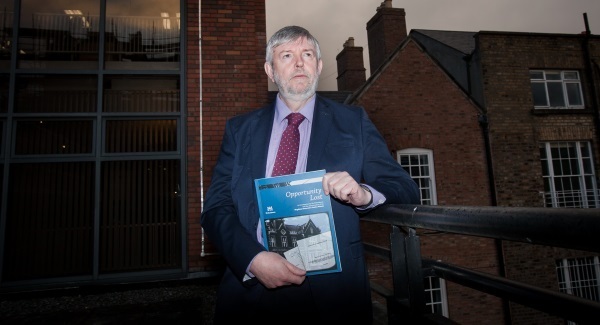
The comments were made at an Oireachtas committee hearing to discuss the Ombudsman’s report into the administration of the Magdalene Redress Scheme, published last November.
Ombudsman Peter Tyndall said he had yet to receive a formal commitment from the Government that all recommendations from the report would be implemented and was scathing in his criticism of how the scheme had been administered.
Mr Tyndall said the scheme operated based on an “overly narrow” interpretation whereby only women who could demonstrate that they had been officially recorded as “admitted to and worked in” one of 12 named institutions were eligible for redress.
It meant some women, who as young girls worked in the laundries but were recorded as living in a training centre or industrial school attached to the laundries, have been refused admission to the scheme.
“We are talking about women who went down the stairs, the same stairs, as women who had access to the scheme and who worked in the laundries that were part of the scheme,” he said.
Mr Tyndall said that in his 10 years as an Ombudsman, he had never come across such an intransigent attitude from a government department or state agency.
He said the Department of Justice had “absolutely, categorically refused to engage” with the process around accepting and implementing its recommendations.
“Women continue to die without access to the redress to which they are undeniably entitled. There is no doubt about that,” he said.
Department of Justice assistant secretary Jimmy Martin said the scheme was intended only to cover the 12 listed institutions. Industrial schools and training centres located on the same site were regarded in law as separate institutions and some were covered by the Residential Institutions Redress Scheme, thereby raising the issue of double compensation.
He said the use of the word “and” instead of “or” in the phrase “admitted to and worked in” meant that both criteria had to be met.
The issue was not whether or not women had worked in the laundry, but rather had they been admitted to one of the 12 listed Magdalene institutions.
Mr Martin said any extension of the scheme beyond the 12 institutions would require a decision of Government — that suggestion has previously been disputed by the Ombudsman.
Mr Tyndall also raised the issue of 17 vulnerable women, who lack capacity, who have yet to receive payment despite being admitted to the scheme in 2013.
The department said the delay in making the payments was due to delays on the enactment of the Assisted Decision-Making (Capacity) Act.
Mr Tyndall said this problem was well known to the department when the scheme was set up and the delay was “inexcusable”.
He said: “Women continue to die without access to the redress to which they are undeniably entitled. There is no doubt about that.”
Independent TD Clare Daly said the level of disagreement between the department and the Ombudsman on the issue was “unprecedented”.
She said she was “sickened” by the attitude of the department and labelled its treatment of the women as “utterly scandalous”.
CONNECT WITH US TODAY



Be the first to know the latest news and updates