Ministers tell Church leave debate on HPV vaccine to the experts
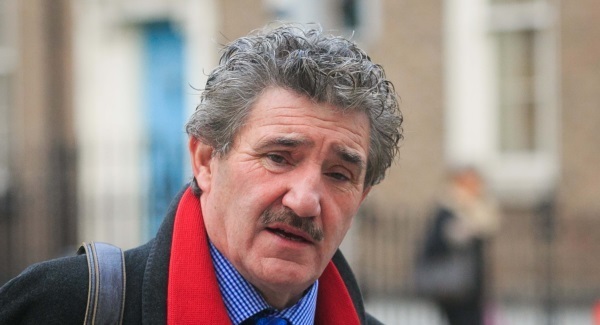
Independent Alliance Minister of State John Halligan has followed Health Minister Simon Harris who has previously warned that unless people are medically qualified to give advice, they should “butt out”.
Mr Halligan said he finds it “incredible” that the Bishop of Waterford and Lismore, Phonsie Cullinan, had attempted to conflate the clinical value of the vaccine with the Church’s views on the need to “help young people stay chaste”.
Mr Harris said yesterday: “I don’t want to get into a spat with anybody, bishop or no bishop, but at the end of the day the people qualified to give medical advice on vaccinations are doctors and, funnily enough, not bishops.”
The HSE recently launched a campaign to encourage parents to get their teenage daughters HPV vaccinated after levels of uptake dropped.
While Mr Halligan described the bishop as a “man of great integrity”, he said his comments on the vaccine are “fundamentally wrong”.
“His attempts to weigh in on a medical argument are ill-advised, to say the least. Religion has no place in medical debate and the Catholic Church’s track record on the medical welfare of Irish women speaks for itself. Our health and health education policies need to be evidence-based, with faith and morals left firmly at the door. I would urge Bishop Phonsie to leave the clinical debates to the clinical experts.” .
Meanwhile the National Cervical Screening Programme has recorded its most successful year in 2016 since the programme began in 2008. Each year in Ireland, almost 300 women are diagnosed with invasive cervical cancer and almost 90 women die from the disease. Some 79.7% of the target population of almost 1.2m eligible women, aged 25 to 60, have now been screened in the last five years.
Professor Gráinne Flannelly, clinical director of CervicalCheck, said in the course of its first eight years, CervicalCheck has identified and treated more than 50,000 women with precancerous abnormalities which has significantly reduced their risk of developing cervical cancer.
The programme’s latest report shows that 90% of the 263,481 women with a satisfactory screening test received a normal result. Within the same period, 17,909 attended a colposcopy for the first time — an increase of 1,360 in comparison to the previous year — and 7,131 treatments were carried out to reduce the risk of cancer .