It’s full-steam ahead for students’ art project
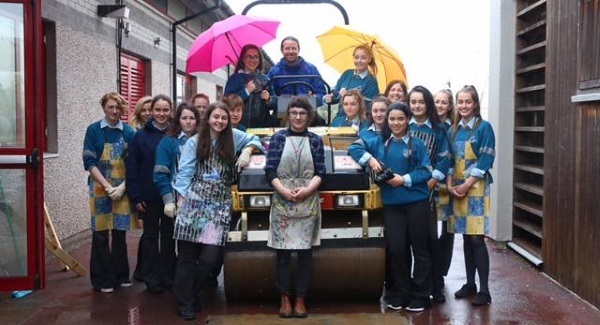
The transition-year art students at Coláiste Choilm and Gaelcholáiste Choilm in Ballincollig, Co Cork, were given clearance to hire an industrial steamroller to help them complete a large-scale printmaking project.
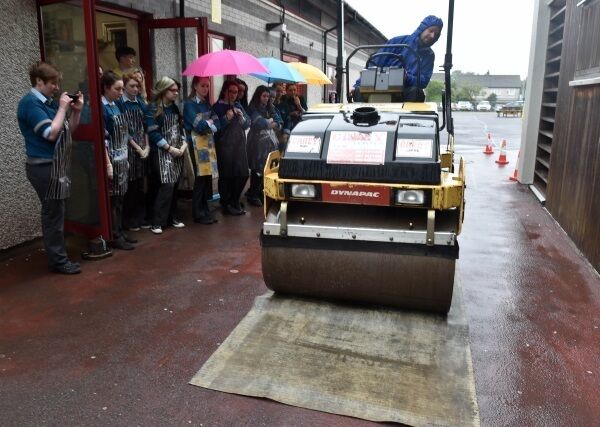
Art teacher Mary O’Mahony described it as a unique experience for all involved when the steamroller trundled into the school yard to put the finishing touches to their unique pieces of art.
“I have never taken the easy road — I endeavour to set challenges for the students, to have them delve into current art practices and find their own opinion as an individual and as artists,” she said.
The project started in the classrooms in January when Ms O’Mahony enlisted the help of practising contemporary artist, Fiona Kelly, who took part in Ireland’s inaugural road-roller printmaking event run by Cork Printmakers in 2010, to work with the students on the school project.
The students, drawn from both Coláiste Choilm and its Irish-language sister-school, Gaelcholáiste Choilm, agreed to combine their talents and work collaboratively on the project.
Following a number of workshops and brain-storming sessions, they chose relief printmaking, with its bold graphic qualities, as the medium to create two large pieces — one representing each school.
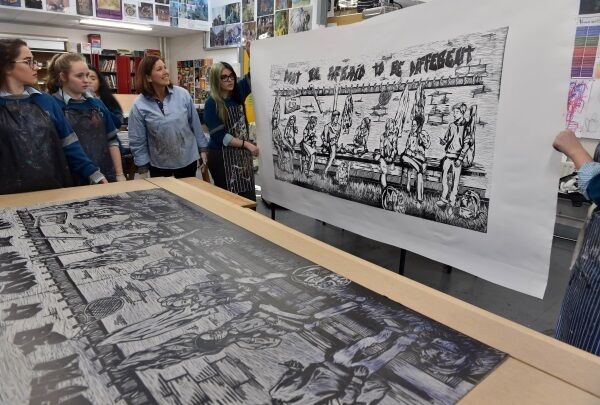
They wanted each piece to celebrate the value of diversity in the hope that the works would open a dialogue on the benefits that diversity brings to schools and society at large.
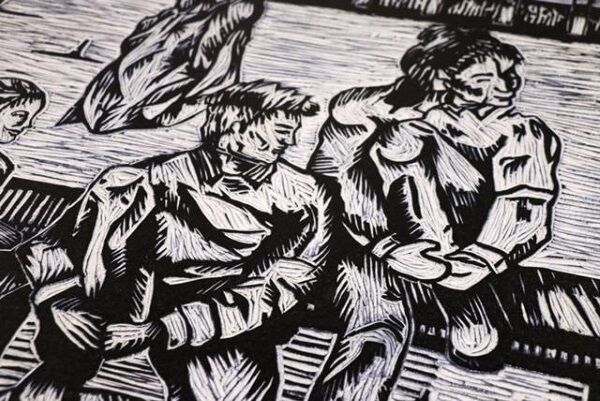
The students sketched each other in various poses around the school and agreed on designs which were then sketched and transferred via tracing paper and permanent marker to large, six foot by three foot pieces of specialist lino.
They then spent weeks with Ms O’Mahony and Ms Kelly mastering the specialist techniques required to carve the designs into the lino.
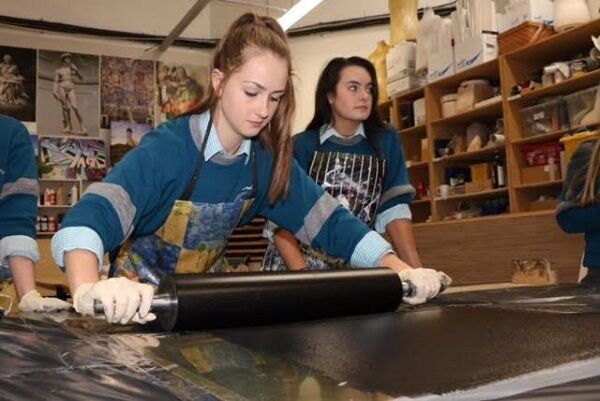
They rolled the lino with ink and placed the large paper sheets on top, before Johnny Bugler, from Cork Printmakers, arrived at the school this week and drove a steamroller over the paper and lino, which had been placed on the ground in the schoolyard, to complete the works of art.

CONNECT WITH US TODAY



Be the first to know the latest news and updates