State criticised over poor level of support for elderly living at home
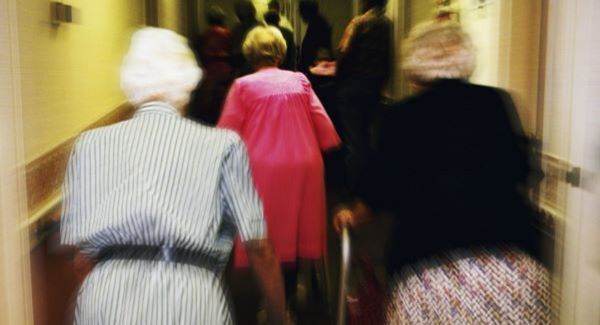
The claim was made at the Irish Nurses and Midwives Organisation (INMO) annual delegate conference by Dundalk-based public health nurse Anita Roddy.
Ms Roddy, who assesses home care needs, said that while she might determine that a person needs a visit from a carer twice a day to assist with going to the toilet, or to change incontinence pads to avoid pressure sores, the HSE could overrule that recommendation.
“The HSE doesn’t give what you are asking for because they don’t have the budget,” she said. “Instead of two visits, they’ll fund one. Or they’ll fund half an hour because they can’t afford an hour. The attitude is ‘a little bit of something is better than nothing’. We identify the problems but the support coming in is only half solving it.”
Ms Roddy, a public health nurse for 20 years, said there was a time when nurses visited old people at home not just to deliver care, but to forge social connections.
“It didn’t matter if you stayed for a chat and a cup of tea,” she said. “But now it’s all about ‘task and time’ — maybe 20 minutes to help with showering, or 40, depending on mobility. Everything is measured.”
Ms Roddy said clients were being put on “waiting lists” for carer visits and needs were not being met.
“It’s a form of elder abuse,” she said. “If a child was neglected in that way, it would fall under the banner of abuse.”
Skibbereen-based public health nurse Colette O’Sullivan said: “We see the needs and we send them to our line manager. But someone in an office decides what supports the person gets. We are at the coalface and we are the ones having to make excuses.”
INMO industrial relations chief Phil Ní Sheaghdha said clinical concerns were “overridden by financial imperatives”.
Both Ms Roddy and Ms O’Sullivan were speaking to a motion calling on the HSE to “address the unfairness and inequities” that exist within the HSE’s home support service. The motion was passed.
The problems encountered by public health nurses and community and general nurses in dealing with different divisions of the HSE also arose at the conference with competing demands from the social care division, the health and wellbeing division, and primary care.
While community-based nurses were tasked with delivering childhood immunisations as part of health and wellbeing, they were tasked with assessing the elderly for home care by the social division. This was in addition to their duties in primary care.
Ms Ní Sheaghdha said each division was behaving as though the full complement of public health nurses and community and general nurses was at its disposal.
“The different divisions are not talking to each other,” she said.
After repeated requests to the HSE to address the issue, an independently-chaired process has been set up “to look at allocation of work and the prioritisation of that work because we have a finite resource”, she said.