Census 2016: More people, but living in limited housing
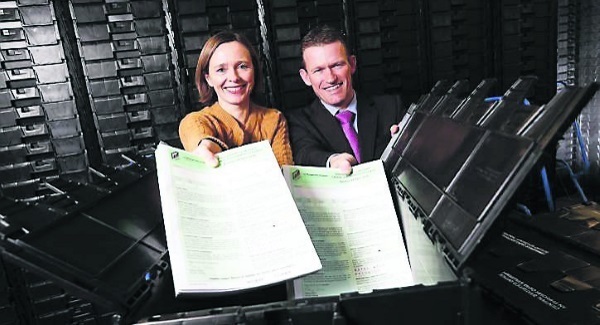
The average Irish household now consists of 2.75 persons, compared with 2.73 in 2011. That’s an increase of 3.7% in the number of people living in a private household.
This is a reversal of a long-term decline in average household size, which has fallen steadily, from 3.15 persons per private household in 1996 to 2.73 in 2011.
“This means that household formation is now falling behind population increase,” said Declan Smyth, a Central Statistics Office (CSO) statistician, yesterday.
Ireland’s population grew by 3.8%, to 4,761,865, from April 2011 to April 2016.
However, economist John Fitzgerald, of the Economic and Social Research Institute (ESRI), said the combination of population growth with a housing crisis means we are squeezing people into a limited housing supply.
“Now, we are back into an era where the population is rising, but we haven’t built any more houses, so we’ve got to squeeze the population into the same number of houses, so households have got to rise,” he said.
“So the effect? Is it a lot of people remaining to an older age with their parents, or is it people sharing accommodation who wouldn’t have previously shared accommodation, in rental accommodation?”
An analysis of dwellings will be published later this month by the CSO.

Meanwhile, yesterday’s census report showed that while housing increase had slowed, there was still an increase in the number of units between 2011 and 2016.
“There were 1,697,665 permanent housing units occupied at the time of the census — an increase of 48,257 units (2.9%) on 2011.
“While some of this increase has come about as a result of new-builds, other dwellings, which were formerly vacant, have now become occupied,” said the report.
Detached homes are still the most common type, with 42% of households living in them. There has also been a continued decline in the use of bedsits.
However, Mr Fitzgerald queried whether this was a positive trend.
“That’s been driven by the regulations,” he said. “So you have reduced significantly the number of bedsits. They’re not ideal, but you have a lot of people who are homeless. If you have homeless single people, it’s better than nothing.”
“There may be people who are homeless today who could have had a bedsit, if the regulations hadn’t been introduced at this time.”
Other key figures from yesterday’s census report relate to religion, migration, gender, and age.
- The average age of the population is now 37.4, up from 36.1 in 2011;
- Places with the youngest populations include Laois, Meath, Kildare, south Dublin, and Cork City. Mayo and Kerry have the oldest populations;
- There were 53,009 more females than males in Ireland in April, 2016, resulting in an overall sex ratio of 97.8 males for every 100 females;
- There were 63,687 fewers persons aged 25-29, as a result of emigration. “This is primarily as a result of recent, high net outward migration among this group,” states the report;
- The number of people who do not have a religion rose from 269,800 to 468,400. This signifies a 73.6% increase of people with no religion;
- Furthermore, just 78.3% of the population list themselves as Catholic. This is compared with 84.2% in 2011.
Brian Whiteside, of the Humanist Association of Ireland (HAI), said their campaign before the census was a “success”.
“In the lead-up to the filling-in of Census 2016, we ran a very focused campaign, urging people that ‘if they did not practise a religion, mark ‘no religion’ on the census form,” said Mr Whiteside.
“Another interesting statistic is the fact that 125,300 people declined to answer the religion question at all, so the increase in those with ‘no religion’ may be even higher.”
Senior statistician with the CSO Deirdre Cullen said 12 more reports based on the census findings would published in 2017.
Losing our religion
There has been a sharp rise in the number of people identifying as having no religion in the latest Census survey.
Some 468,400 people identified as having no religion, a 73.6% rise from 269,800 in 2011. A further 125,300 people did not avail of any option on their census form.
People aged between 20 and 39 account for 45% of those with no religion, despite making up 28% of the general population.
The statistics also show a corresponding decline in the number of Catholics in the country.
The percentage of the population who identified as Catholic on the census has fallen from 84.2% in 2011 to 78.3% in 2016.
The number of Catholics has reduced by 132,200 from 3,861,300 in 2011 to 3,729,100 in 2016. Of these, the number of Irish Catholics reduced by 105,800 while non-Irish Catholics fell by 26,500.
126,400 people (nearly 2.7%) identified as Church of Ireland members, while 1.3% of the population are Muslim.
The number of people identifying as Orthodox in the country increased by 37.5%, making it the fastest growing religion in Ireland.
The number of Hindus grew by 34%, while the rate of growth in Muslims was 29%.
The figures identified three areas where more than a third of the population identified themselves as non-Catholic; Dublin City, Dún Laoghaire and Galway City.
Tipperary was noted as the county with the lowest percentage of non-Catholics (12.9%).
Equate, a family rights campaign group, said the rise in those stating they have no religion is indicative of a need for a change in the education system, where 96% of primary schools are maintained by religious groups.
“Today’s results show that anything other than a complete end to the ‘baptism barrier’ will have an unfair impact on the large percentage of young families with no religion and the increasing number of minority religion families,” said Michael Barron, executive director of Equate.
Living longer and average age is 37.4
Irish people are living longer with the number of people aged over 65 increasing by more than 19% since 2011.
This is especially evident in the male population which rose by 53,523 (22%) to 296,837 compared with an increase of 48,651 (16.7%) to 340,730 for females.
For the population aged over 85, the number of men increased by 24.8% to 23,062 while the female population increased by 11.4% to 44,493.
There were 53,009 more females than males in the State in April 2016 resulting in an overall sex ratio of 97.8 males for every 100 females — a slight drop on 2011. However, this ratio differs by age grouping.
The average age of the population continues to increase and stood at 37.4 in April 2016 compared with 36.1 five years earlier.
The average age has increased by 3.3 years over the 20 years since 1996 when it was 34.1 years.
Fingal continues to have the youngest population followed by Kildare.
Kerry and Mayo have the oldest population followed closely by Leitrim.
Leitrim had the highest dependency ratio (number of people aged under 15 and over 65) of any county at 62.6%, closely followed by counties Mayo (61.0%), Roscommon (60.8%) and Donegal (60.5%).
The lowest dependency ratios were in Galway city at 39%, followed by Cork city (42.8%), Fingal (50.7%) and Kildare (51.4%).
Population growing slowly at it passes 4.7 million
Ireland’s population has increased by almost 4% to 4,761,865 between 2011 and 2016.
According to the Central Statistics Office (CSO) census summary, this is the slowest rate of increase recorded since the 1991-1996 census period.
The main driver of the growth in population was natural increase — where births outnumber deaths.
Mayo and Donegal were the only two counties in the country to experience a decline in population.
However, the geographic difference in population is widening with growth most pronounced in Dublin.
Fingal grew by 8% over the five years, more than twice that of the State overall.
Dublin city (5.1%), Dun Laoghaire/Rathdown (5.7%) and South Dublin (5.1%) all grew by more than 5%, as did the commuter belt counties of Laois (5.1%) and Meath (5.9%).
Galway city (4.2%) grew faster than the surrounding county (2.4%), as did Cork city (5.4%) compared with Cork county (4.4%).

The population of all provinces grew but Leinster grew faster that the State overall — increasing by 5.2% in the five years since the last census in 2011.
Leinster accounted for 55.3% of the population in 2016 compared with 54.6% in 2011.
Ireland is increasingly a country of large towns — as more and more people move from a rural to urban setting.
The census summary reveals that the total number of urban centres increased from 197 in 2011 to 200 in 2016.
Small towns with populations between 3,000 and 4,999 people were the fastest growing category, increasing by 11% since 2011 and by 22.4% since 2006.
Two towns, Longford and Skerries, joined the category of large towns by increasing their population to 10,000 or more since the last census. This brings the total number of large towns in the country to 41.
10% of marriages have broken down
One in 10 marriages are breaking down as the number of divorced people continues to rise.
The CSO census breakdown reveals that more than 37% of the population is married. However, the number of divorced people has increased from 87,770 in 2011 to 103,895 in 2016 — an increase of 16,125. This is less than the previous inter-censal increase of 28,236 persons.
However, the marital breakdown rate has gone from 9.7% in 2011 to 10% in 2016. The highest rates were in the cities, topped by Cork city with a rate of 11.9%, while Galway county had the lowest rate at 8.1%.
There were 4,226 people in same-sex civil partnerships in 2016, while a further 706 people identified as being a same-sex couple were married. There has also been a reversal of the long-term decline in average household size, resulting in an increase in average household size from 2.73 persons to 2.75 persons
The long-running decline in the number of children per family has also levelled off. The average number of children in each family was 1.38 — the same as in 2011. In 2006 it was 1.41.
Meath has the highest number of children per family in the country, with an average of 1.51 per family followed by Monaghan with 1.50 and Laois with 1.49.
At the other end of the scale in Dublin city there was an average of 1.17 children per family, while in Cork city the average was 1.18, and 1.24 in Galway city.
17% of population not born in Ireland
Foreign-born people now make up just more than 17% of the population, at 810,406 people. This is an increase of 43,636 on the 2011 figure but a far smaller increase that that of the 2006 to 2011 period when the number of foreign-born people rose by 154,141. The groups which showed the largest increase are those already well-established in Ireland.
The fastest-growing groups were Romanians (up 10,707); Brazilians (up 6,498); and Spanish (up 4,806). The number of people from Britain living here between 2011 and 2016 fell by 11,421; while those born in Nigeria and living here fell by 3,211 and people born in Lithuania and living here by 1,503.
A total of 82,346 people moved to Ireland in the year to April 2016. Of these, 28,143 were Irish nationals.
Britain was the most popular country of origin for returning Irish immigrants, followed by Australia (5,327) and the US (2,566). Canada, New Zealand, Spain, France and the United Arab Emirates were the next five most popular countries. In terms of non-Irish immigrants, Britain was the top country of origin with 7,506 arrivals, followed by Brazil with 4,848 and Poland with 3,689.
The number of people holding dual-nationality almost doubled from 55,905 in 2011 to 104,784 in 2016
A total of 612,018 Irish residents speak a foreign language at home — up 19% on 2011. Polish is by far the most common language, followed by French, Romanian and Lithuanian.
Irish Travellers
More than eight in ten Irish Travellers now live in permanent accommodation, while their population has also increased.
The number of people identifying as Travellers in the census last year increased by 5.1%, from 29,495 to 30,987.
While Irish Traveller numbers increased in most counties, there was a decline in some, with Leitrim showing the largest percentage decline of 23.1%, or 61 people.
The biggest percentage increases were recorded in Longford, where Traveller numbers rose by 40.8%, and Roscommon, where numbers increased by 3%.
Longford had the highest absolute increase in Traveller numbers of any county, up by 303. It also had the highest number of Travellers per head of population, with 25.7 Travellers for every thousand people. South Dublin had the lowest number per head of population with 1.9 Travellers per thousand people. There were 6,006 Travellers in Dublin, the largest number in any county.
Almost a quarter of Travellers aged between 15 and 24 are married (22.6%), compared with 1.2% of the general population.
The number of Travellers living in temporary accommodation stood at over 12% in 2016. More than 83% of the Traveller population lived in permanent housing last year.
A total of 82% of people identified themselves as white Irish, while there was a 17% rise in the population who identified themselves as Chinese or ‘other Asian’.
1.7m people claim to speak Irish
While 1.76 million people told the Census that they can speak Irish, fewer than 74,000 said they do so on a daily basis outside of the education system.
More than one in four (421,274) people said they never speak Irish.
Of the 73,803 daily Irish speakers, 20,586 (27.9%) live in Gaeltacht areas.
The total population of all Gaeltacht areas in April 2016 was 96,090, down 0.6% from 96,628 in 2011.
Two-thirds of people living in these regions indicated they can speak Irish.
The Galway Gaeltacht has the highest numbers of daily Irish speakers (9,445).
Conradh na Gaeilge, the forum for the Irish-speaking community, said the figures for the numbers of daily Irish speakers is disappointing in light of targets to raise the number of daily speakers of Irish to 250,000 by 2030.
“It is clear that the implementation of the Government’s 20-Year Strategy for the Irish Language is not succeeding and that the main reason for this failure is the Irish Government’s lack of investment in the Strategy since 2010.
“The result of this lack of investment is a crisis in the Gaeltacht,” said Niall Comer, president of Conradh na Gaeilge.
“Conradh na Gaeilge is asking the Government to face up to the challenge reflected in the census figures by funding the investment plan agreed by 80 Irish language and Gaeltacht groups,” Mr Comer said.
Extra 150,000 homes have broadband
Nearly 150,000 more households had a broadband connection in 2016 compared to five years earlier, according to the Census.
However, while 148,125 more households have a broadband connection, there remains an urban rural divide in the rates of connection.
More than three quarters (76.2%) of urban households had broadband compared with 61.1% those in rural areas.
Nearly a third (31.2%) of rural homes have no internet connection compared with 22.8% of urban households.
Labour Communications spokesman Seán Sherlock said the Census figures highlight the “gulf” that exists between urban and rural broadband services.
He said the number of households with broadband rose by 7% points in the five years since the last census, and described the increase as ‘not good enough’.
“Yet just this week, the Minister for Communications said that in another two years, every household in the country would have high-speed access.
“If we couldn’t bridge the gap in five years, what hope do we have in two, when the tender process continues to change?” Mr Sherlock said.
The Dún Laoghaire-Rathdown area has the highest rate of connected homes in the country (86%), compared to just 58% in Leitrim, the lowest in the country.