Cork to receive rare Terence MacSwiney medal
A rare Spanish language silver medal which was struck in Argentina almost a century ago in honour of republican Lord Mayor of Cork, Terence MacSwiney, is to be donated to the people of Cork.

Cork to receive rare Terence MacSwiney medal

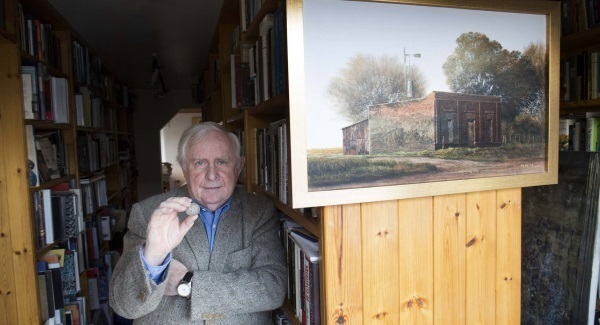
Professor Dermot Keogh, an emeritus professor of history at UCC, came across the medal while researching his latest book, Argentina and the Irish Revolution, which was published in Buenos Aires in September, and which will appear in an English edition next year.

The medal, struck in 1920, was presented to Prof Keogh by Eduardo Clancy, an architect from San Antonio de Areco, who was left the medal by his father.

“Dr Clancy generously felt that the people of Cork should have it as a reminder of the strong historical ties which bound Argentina to Ireland during the struggle for Independence,” Prof Keogh said.

He plans to present the medal, on behalf of Dr Clancy, to the city in the coming weeks, and he said he is looking forward to it going on display in the city’s public museum.

Following the murder of his friend, Lord Mayor Tomás MacCurtain in March 1920, Terence MacSwiney was elected Sinn Féin lord mayor.

He was arrested in Cork on August 12, 1920, for possession of “seditious articles and documents”.

He was tried by court martial four days later, and was sentenced to two years imprisonment in Brixton Prison.

He died in jail on October 25, 1920, after a 74-day hunger strike, and was buried in the republican plot in the city’s St Finbarr’s Cemetery on November 1. His protracted hunger strike and death sparked global outrage and focused world attention on Ireland’s struggle for independence.

Dr Keogh said no single event during the War of Independence caused greater outrage among the Irish in Argentina — and among Argentinians in general — than MacSwiney’s lengthy hunger strike.

MacSwiney’s death provoked widespread demonstrations and the holding of funeral masses in Buenos Aires and in the Irish towns in the pampas, which drew very large congregations.

Dr Clancy comes from an Irish Argentine family which had been very active during the Irish revolutionary period in their home town in the pampas about 100km from Buenos Aires.

His great grandparents, grand aunts and uncles, helped organise the civic reception in autumn 1921 for the Irish envoy to Argentina, Laurence Ginnell, which attracted large crowds from neighbouring towns.

The solidarity group, Argentine Committee Supporting the Liberty of Ireland (El comité Argentino Pro Libertad de Irlanda), which was active at the time, commissioned the well-known Buenos Aires jewellery firm, Gottuzzo y Piana, to design the commemorative medal in 1920.

It is inscribed in Spanish on the back with the famous words attributed to MacSwiney: “It is not those who can inflict the most, but those that can suffer the most who will prevail.”

The medal is even more unique given the fact that the jewellers misspelled the name, omitting the ‘a’ in MacSwiney.

On the edge of the medal, on the front, is written is Spanish: “Democracy legitimises the republic in Ireland.”

Dr Keogh believes this is almost certainly a reference to the Sinn Féin victory in the general election of 1918. Another inscription in Spanish reads “Hear the sound of broken chains” — a line taken from the Argentine national anthem.

The relief on the front shows a woman seated on the sea shore, a mermaid harp in her left hand and a sword in her right.

In a letter to Mr Ginnell at the time, the solidarity group explained the symbolism and said the female figure represents Ireland, on the shores of her island, abandoning the harp of peace to take up the sword of war to “defend her dignity, her territory invaded by the enemy and her rights trampled”.

She is looking towards the “free shores of the Americas, where the brilliant sun of liberty” shines.

x

More in this section

Lunchtime News

Newsletter

Keep up with stories of the day with our lunchtime news wrap and important breaking news alerts.

Cookie Policy Privacy Policy Brand Safety FAQ Help Contact Us Terms and Conditions

© Examiner Echo Group Limited