Swedish survey won’t use HSE stats
Instead they have used figures provided by patients groups and from interviews they carried out with healthcare officials in the public and private sector.
As a result Ireland’s healthcare ranked 21 out of 35 in a detailed annual survey carried out by the Swedish Health Consumer Powerhouse now in its ninth year.
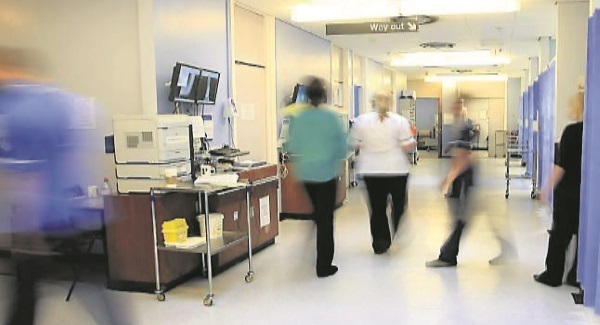
The country’s ranking dropped from 14th place because of the waiting time, not just for surgery and medical appointments but also because patients report having to wait at least three hours to be seen at accident and emergency — the longest of any country surveyed.
The report, from the independent Sweden-based Health Consumer Powerhouse, said that; “Ireland has detailed official statistics on waiting times all over healthcare, and that data was been allowed to prevail up until European Health Consumer Index 2013.
“However, for several European Health Consumer Index years, Irish patient organisations have been radically more pessimistic in their responses to the survey conducted as part of European Health Consumer Index research.
“As the same pessimistic results reoccurred in 2015 — Ireland, the UK and Sweden had the worst patient organisation feedback on accessibility among the 35 countries — doubts must be raised on the validity of official statistics”.
The author of the report, Professor Arne Bjornberg, said that after seven years of being told by patients and bodies that the figures they used from the HSE were untrue, they used data from an independent survey they commissioned.
“For those seven years, we got a lot of free-text comments to the survey saying the HSE numbers were untrue. Most used language somewhat stronger,” said Dr Bjornberg.
As a result they decided to use the patient organisation feedback and as a result, the country’s ranking fell from 14th to 22nd in 2014, with a slight recovery in 2015, but scoring 100 out of 225.
They noted that long waiting times are despite Ireland having the highest percentage of its population, up to 40%, paying for healthcare insurance.
“This raises the issue of whether this is a reflection of extreme dissatisfaction with the public system, or simply a technical solution for progressive tax,” the report notes.
Professor Bjornberg, said there was no relationship between accessibility to healthcare and the money spent.
“It is inherently cheaper to run a healthcare system without waiting lists than having waiting lists. Contrary to popular belief, not least among healthcare politicians, waiting lists do not save money — they cost money.”
On the positive side Ireland was among the top five countries when it came to costs of pharmaceuticals scoring 86 out of 100.
This is a major turnaround for the Irish health system where up to recently cheaper generics were seldom prescribed.
CONNECT WITH US TODAY



Be the first to know the latest news and updates