Coalition backs Attorney General over IBRC probe impasse
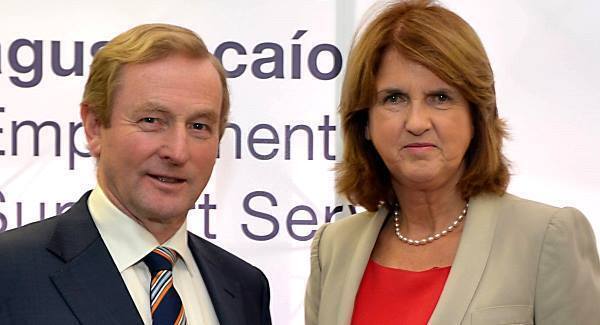
Both Taoiseach Enda Kenny and Tánaiste Joan Burton said they are “determined” to ensure problems with the commission of investigation are resolved “transparently” and it completes its work in the public interest.
Emergency legislation will be among measures considered by Cabinet today as the attorney general outlines what options the Coalition has to sort out the legal mess so the probe can continue.
The delay in the inquiry probing the sale of Siteserv to businessman Denis O’Brien among other deals comes just weeks ahead of when its chairman Judge Brian Cregan was expected to submit his report.
Instead, Judge Cregan has told Mr Kenny that problems over confidentiality and privilege mean he is “not in a position to proceed” with the inquiry into write-offs by the former Anglo Irish Bank.
The inquiry is examining 37 deals done by IBRC, involving write-downs of €10m or more, including the sale of Siteserv to Mr O’Brien which saw the taxpayer lose some €119m.
The Coalition previously said the inquiry would be published before the election but the legal obstacles over accessing documents are sure to set back its completion by months.
Mr Kenny said yesterday he was determined that the impasse would be addressed clearly, transparently and in an absolutely accountable fashion. Ahead of today’s Cabinet meeting, he added: “The judge has identified what he considered are a deficiency in his powers. I need to know what that means because I intend to address it.”

Joan Burton stressed the issue of public interest — a chief tenet of the legislation governing the commission of investigations — was more important than concerns around protecting companies.
“The basic issue [is] the public interest and its relationship to private and corporate confidentiality in relation to some of the matters being examined.
“In relation to the issues [concerns raised by the judge] involved, they are very significant and important, but at the same time in any democracy, the requirement of the public interest — particularly something which is an inquiry such as this — is of paramount importance and I want to see that that is pursued and we get answers to all of the issues raised.”
Both Mr Kenny and Ms Burton said they have confidence in Ms Whelan, who originally advised the Government on the terms of the IBRC inquiry before it was set up in June.
Opposition leaders last night warned the IBRC probe was running into the sand.
Renua Ireland called on IBRC special liquidators KPMG to publicly clarify why they had reportedly refused to waive confidentiality over releasing documents to the inquiry.
Q&A:
Inquiry chairman Judge Brian Cregan wrote to the Government last week saying it was “not in a position to proceed” due to confidentiality and privilege issues around accessing documents. The judge says he can’t do his job. The Government must now decide what emergency legislation may be needed to keep the inquiry going. Confidentiality generally applies to personal documents, such as banking affairs, while privileged ones relate to legal advice given to those involved in the IBRC deals. The latter will be harder to overcome as a right to privilege is protected by the Constitution as well as the European convention on human rights.
The Department of the Taoiseach - which oversees funding the inquiry - said yesterday it had been first made aware of Judge Cregan’s concerns last week. Enda Kenny’s office said his officials had been phoned by the inquiry on Thursday and, after a request, were then sent a letter on Friday. But Mr Kenny’s office is refusing to release the full letter from Judge Cregan. But questions will be raised as to how long the Coalition was aware the inquiry was in trouble amid claims by opposition TDs that the “dog on the street” knew. The legal advice given to the Government when it set up the IBRC probe before the summer, especially from Attorney General Maire Whelan, will also be questioned by critical TDS.
This is the key point. How much more power can the Coalition give the IBRC inquiry? Would any extra powers then be applied to future commissions of investigation going forward? Furthermore, will they be enough to overcome claims of privilege being used by some to block the release of important documents? It is doubtful that the Coalition would go down the road of having a referendum to empower inquiries, but it also is questionable as to whether the probe’s terms to investigate in the “public interest” will empower Judge Cregan enough to get the documents he needs. It could all come crashing down to a fight in the courts if the inquiry is challenged.
The delay in the IBRC inquiry reporting, particularly on whether the Siteserv deal was conducted properly, could suit the Coalition. While both Taoiseach Enda Kenny and Tánaiste Joan Burton stress they are determined to act so it can do its work, the delay of a report being issued until at least after the spring general election is probably a welcome development for Coalition TDs and senators. Juno McEnroe