Mary Robinson: UN climate talks ‘did not go far enough’
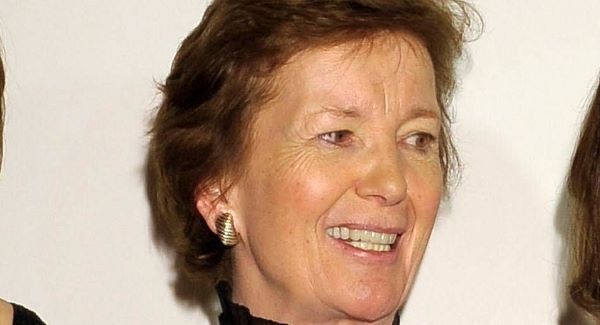
Former president Mary Robinson said not enough was done by countries who can afford to wait
“The leaders of countries whose people are suffering now, who are most at risk and have least resources to mobilise for protection compromised the most,” said Mrs Robonson. “Because they can’t afford to wait — they are negotiating for lives.
“Governments leave COP 20 in Lima having made just enough progress to keep the multilateral process alive, but not enough progress to give confidence that the world is ready to adopt an equitable and ambitious, legally binding climate agreement in Paris next year.
“We must wake up to the fact that we now have less than a year to galvanise global public support for climate solutions that are not only possible but desirable.”
Mrs Robinson said that any climate solution must create a pathway to sustainable development for poor and vulnerable people, who are the majority of the world’s population and who are most at risk from climate impacts.
“Let us be clear — even in a 1.5C or 2C warmer world, the impacts of climate change on vulnerable people will be significant,” she said. “That is why the governments of vulnerable countries call for adaptation and loss and damage to be addressed alongside mitigation in global decision making. This is not an unreasonable position.
“The generations that came before us didn’t know that their actions were causing climate change. The generations who come after us risk inheriting an unsolvable problem. We are the generation that can make the difference. We took small steps in Lima. We need to take big steps in 2015.”
Stop Climate Chaos said the outcome of the talks does nothing to support the poorest people around the world who are on the frontline of the climate crisis, a crisis they did not create.
“For the past two weeks, developed countries have been trying to undermine the negotiations by eroding core principles related to their historic responsibility for the climate change,” said spokeswoman Ciara Kirrane.
“They have succeeded in this regard and have pulled back on providing support to developing countries. The process was supposed to build momentum towards an equitable agreement next year in Paris but unfortunately the foundations for this have not been laid in Lima.
“As well as failing to ensure developed countries contribute the necessary financial and technological resources to developing countries to help them cope with climate impacts, the agreement also fails us all given the scale of the crisis.
“The science on climate change is irrefutable but the Lima Accord does not put us on a pathway to keep global temperatures below 2C, a threshold beyond which dangerous climate impacts are expected.”
Environment Minister Alan Kelly welcomed the agreement.
“This decision marks a significant step on the road to Paris at the end of 2015,” said Mr Kelly. “Next year will require further efforts by all parties to reach agreement on a negotiating text.
“It will be a difficult year, but one that will see a new global and ambitious agreement on climate change applicable to all parties — the Lima decision sends a signal to all that Parties are serious about delivering in Paris in December 2015.”