Justice ‘blocked’ to victims of flaws in health service
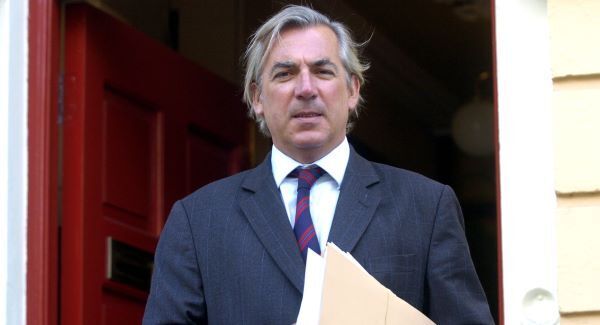
Solicitor Ernest Cantillon made the claim during a conference on medico-legal issues affecting patients and doctors, warning the current system was “constitutionally suspect”.
Speaking at the patient-organised event, Mr Cantillon said that, despite 19,459 medical accidents last year involving negligence, just 544 — or 2.7% — led to court cases. Of this 544, less than 10% received legal aid.
Mr Cantillon said the situation meant genuinely wronged patients were often priced out of justice, while the lengthy delay in being awarded compensation for the cases meant solicitors often shy away from more complex incidents.
Even when claims do make it to court, Mr Cantillon said the “inequality” between this scenario and the State’s “enormous clout and deep pockets” leaves victims of medical negligence “unsurprisingly intimidated”.
Calling for a change in approach from Government officials, Mr Cantillon said a rebalancing of the situation must occur to allow real cases, including the death of Dhara Kivlehan which concluded late last month, to be fairly concluded.
Suggesting the current system was “constitutionally suspect”, he added the State Claims Agency’s stated goal of reducing pay-outs to the “lowest achievable level” was the equivalent of taking money “from the pockets” of dead or injured people.
“At best, 10% of people taking cases are getting legal aid,” said Mr Cantillon. “This is not to say hospitals are only injuring rich people. Saving money is a coded way of saying ‘let’s take it from the victim’s pocket’.
“At High Court trials, I am regularly struck by the number of highly paid professionals present and guaranteed to be paid by the State out of taxpayers’ money, regardless of their actions and regardless of the outcome of the litigation.
“Having faced this gauntlet, if the plaintiff wins their case, their legitimate legal costs are forensically disputed by another array of State Claims Agency paid professionals.
“There is a lack of fair access to a hearing, and I question this from a constitutional point of view.”
The State Claims Agency has paid out more than €400m for medical errors since the recession began.
However, the often confrontational manner of the cases involved has repeatedly been highlighted by patient groups and legal experts, with a Kerry court last year raising concerns over how the
State can afford expensive solicitors while pleading it is unable to pay out legitimate compensation.
Expectant parents could soon be told if their baby has Down Syndrome through a simple blood test that will become common practice “within five years”.
Mark Denow, foetal medicine consultant at University Hospital Bristol, made the claim at a major medico-legal conference on neo-natal care yesterday.
He said the test is based on existing techniques to check a pregnant woman’s blood, which is “crawling with DNA” from the foetus.
While this 20-24 weeks check is currently used to clarify a child’s sex due to the presence of the Y chromosome in the plasma, Dr Denow said it could also confirm the risk of Down Syndrome — acting as a diagnosis.
Although controversial, he said the examination would be “standard practice” within five years as it will replace more invasive alternatives.
However, adding a note of caution, Dr Denow said the check must also involve “informed consent”, stressing doctors have no right to “just go marching in” to give details parents may not want.
CONNECT WITH US TODAY



Be the first to know the latest news and updates