Ebola: ‘We never had outbreaks in capital cities before’
The atmosphere in Sierra Leone where the deadly ebola virus has so far claimed almost 300 lives is not so much one of panic as one of grave concern, according to Clare native and Concern worker, Fiona McLysaght.

Ebola: ‘We never had outbreaks in capital cities before’

Ms McLysaght, who is Concern Worldwide’s head of operations in the stricken country, said while the news reports filtering out tended towards a doomsday scenario, the good news was there were survivors too.

“Since the first case was confirmed on May 26, we are now at 591 confirmed cases. Of that figure, 214 people have died [as of last Wednesday] but there are also patients who have recovered.

“In fact to date, 161 patients have recovered from a disease for which there is no vaccine, no treatment, and no cure,” Ms McLysaght said. Those who recover are followed up for three months afterwards to make sure the virus is gone.

Those with the best chance of recovery were patients who sought treatment early, she said.

“Sometimes they respond to symptomatic treatments, in other words they respond to treatment given to them for symptoms such as high temperature, fever, vomiting, diarrhoea, and if they have a healthy immune system. So people do survive,” she said.

However, those who left treatment late were facing the likelihood of organ failure. She described the ebola outbreak as “a frightening experience” for the people of Sierra Leone, especially given the nature of the disease which meant victims had to be isolated from families. The most alarming aspect was that “cases were still jumping on a day-to-day basis”.

“We still haven’t got to the stage where it’s levelling off,” she said.

This ongoing increase in the numbers infected distinguished the outbreak from others that preceded it, Ms McLysaght said.

“We’ve had outbreaks of ebola in Africa since 1976 in places such as the Democratic Republic of Congo. But the difference is they usually burnt themselves out. They were localised. This outbreak is not. We have never had outbreaks in capital cities before but this time we have.”

She said there were a number of challenges that had to be overcome in Sierra Leone before spread of the disease could be tackled effectively. Efforts were initially hindered by a culture of denial and claims and/or fears that the government was responsible for the outbreak, or that the disease was being spread by non government agencies. Cultural practices were also spreading the disease.

“The bush meat eaten here — chimpanzee, fruit bat, rats — carries high risk of infection, especially where people eat an infected animal. Then you have the practice of families washing the body by hand when somebody dies. At that stage the body is highly infectious. But we can prevent the spread of infection and we are trying to educate people how to do that.”

The incubation period for the disease ranges from two to 20 days. It is not an airborne disease — in other words you will not contract it by breathing in the air of an infected person — but it is transmitted through bodily fluids such as vomit, diarrhoea, wounds, sweat.

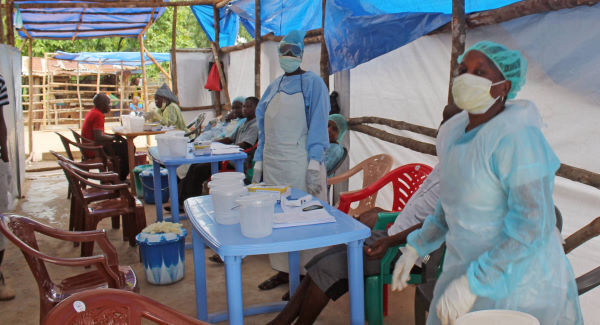
Ms McLysaght said Concern Worldwide was focusing on educating community health workers in prevention methods through training workshops. Concern Worldwide was not on the frontline, or in healthcare centres, nor were its people working at the two main treatment centres where those infected are supposed to be kept in isolation. Ms McLysaght said she was at no risk of contracting the disease.

“We are providing basic protective equipment such as disposable gloves, aprons, masks, soap, chlorine. It really mitigates the risk to wear protective clothing. We’re also working on educating people about the disease and on changing cultural practices, and we’re educating them about contact tracing [tracing all those who may have come in contact with the infected person].”

The training centres were controlled environments with no shaking of hands or touching but that was more “to set an example” of good practice rather than fear of infection, she said.

They were also working with traditional healers, educating them about how the disease was spread. In addition, Concern Worldwide was supporting the ministry of health with logistics. “It could be as simple as sending out text messages and running radio advertisements,” Ms McLysaght said.

And the organisation is working with hundreds of community workers through its Child Survivor programme, advising on best practice and how to minimise/prevent risk of infection.

Their main concern was that Sierra Leone’s health service was “completely overwhelmed” by the demands being placed on it by the ebola outbreak. It had nowhere near the required number of isolation units needed to keep a lid on the disease.

“Their health structure is so weak, it’s not set up to cope with something like this,” Ms McLysaght said.

“In some centres, they don’t even have disposable gloves. Part of our work is helping to equip 110 health centres with basic protective equipment,” she said.

The organisation was also extremely concerned about the long-term effects of the current outbreak.

“It will have significant, long-term effects, not just the health system, but food security — people are not harvesting. It’s also affecting education — schools are closed. And then if you consider that the outbreak is in a country where health indicators are already so poor, where they have one of the highest rates of maternal and child morality — and pregnant women are now afraid to visit healthcare centres for maternal care,” Ms McLysaght said.

Children taking part in Concern’s Child Survivor programme were also not attending healthcare centres for treatment of illnesses because of family fear of infection. “I can understand why they are afraid, but it is really worrying in the long term,” Ms McLysaght said.

People were very worried because the number of confirmed cases of ebola continued to grow, but “at least we’ve got over the denial stage and there is recognition now that it needs to be brought under control”, Ms McLysaght said, adding that the president had declared a state of emergency.

She said the country needed a “regional and international response” which included huge medical resources in a country smaller than Ireland with a population of 6m.

www.concern.net

For information on ebola, see http://exa.mn/7l4

x

More in this section

Lunchtime News

Newsletter

Get a lunch briefing straight to your inbox at noon daily. Also be the first to know with our occasional Breaking News emails.

Cookie Policy Privacy Policy Brand Safety FAQ Help Contact Us Terms and Conditions

© Examiner Echo Group Limited