Brussels to back Fine Gael’s policy of continuing austerity and €2bn budget cuts
Despite state spending being lower than forecast and income expected to be up for the year, the Government is making a case for no let-up in its drive to cut a further €2bn out of the budget for 2015.
They are confident they will reach — and exceed — the EU requirement to cut the budget deficit to no more than 3% of GDP next year, the Government said in its report to the European Commission.

Then the next phase will kick in with the drive to reach a balanced budget where public spending is no more than income by 2018.
But government income will need to be more than outgoings, the report acknowledges, in order to cut the massive debt of 120% — amongst the highest in the EU.
The Government warns that all the plans for careful budgets could be knocked off course if people increase saving money rather than spending it; if the global economy does not improve as expected and if interest rates increase much.
A major row under way in the European Commission will come to a head today between those who demand that the austerity policies continue and others who say they do not generate the growth needed to turn economies around.
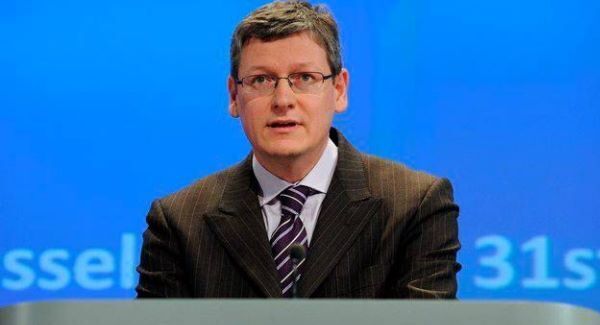
Led by employment commissioner László Andor they point to the increasing inequalities — at their worst in almost a century according to the latest studies — and to the growing anger across Europe against the EU seen in the European Parliament elections. The commission will include recommendations to countries on poverty, inequality, household income, employment rates and youth joblessness today, but unlike the economic recommendations, they will not be binding on countries.
Some believe there should be more emphasis on the quality of jobs created to discourage the growth in part-time, temporary and cheap labour seen in many countries, including Ireland and Germany.
Ireland’s poor state provision for pre-school children of working parents, its high levels of at-risk of and actual poverty, especially among single parents, and one of the highest percentages of young people neither in work or training were pointed out last year. In-work poverty has also grown.
The Government admits in its report to the Commission that the austerity measures have hit poorer families most — though it says a slightly higher percentage was taken off the wealthiest 10% in the country.