Students ‘memorising answers’ for English exam
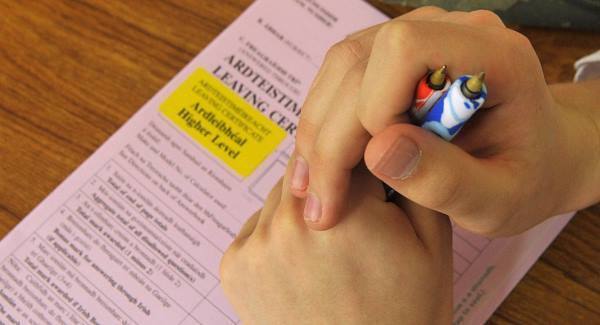
Leaving Certificate students continue to rely quite heavily on predicting which poets will be examined and memorising prepared answers, reports suggest.

Students ‘memorising answers’ for English exam

The question of predictability in exams and how this affects student learning is the subject of research being carried out for the State Examinations Commission as part of a wider examination of transitions from second-level to higher education, and the impact of the points system on how students and schools prepare for the Leaving Certificate.

In the chief examiner of English’s report on the 2013 Leaving Certificate, a number of instances point to prepared answers being presented by students, or focus on certain poets expected to be the subject of exam questions.

The poet most favoured from those examined in the higher level paper was Sylvia Plath, followed by Elizabeth Bishop, Derek Mahon and Gerard Manley Hopkins.

“Candidates were most successful when they avoided a formulaic approach and demonstrated the ability to link and cross-reference the work of their chosen poet in the course of an answer,” says the report, published on the SEC website today along with those for Leaving Certificate chemistry, religious studies and physics.

The English chief examiner highlights syllabus requirements that higher-level students study a representative selection from the work of eight poets, and that the study of at least six poems by each would normally be expected.

“Candidates who had taken the time to engage fully with the work of a poet were better placed to select judiciously, comment intelligently and respond constructively to questions posed,” the report read.

In the single text section, students chose to reference Jennifer Johnston’s novel How Many Miles to Babylon?, John B Keane’s play Sive and Shakespeare’s Macbeth in their answers more than the other six prescribed titles. T tension was the aspect of story most commonly chosen, and many students were reported to have clearly demonstrated “banks of knowledge” in answering.

“However, in order to score well in the examination, candidates were required to demonstrate an ability to manage this knowledge in answer to the specific questions asked. This latter requirement proved challenging for some candidates,” it read.

Elsewhere, examiners found answers in the single text section of higher level Paper 2 were undermined by careless use of quotation in a significant number of responses. And like in previous years, it said, a significant minority of students were hampered by a rigid and formulaic approach to comparative studies questions, although many examiners reported genuine engagement and a fluid comparative approach.

Higher-level students received much praise for well-crafted writing that gave voice to original work in their compositions, one examiner reporting “great examples of aesthetic writing, poetic flourishes, and well-observed situations”.

More in this section

Lunchtime News

Newsletter

Keep up with stories of the day with our lunchtime news wrap and important breaking news alerts.

Cookie Policy Privacy Policy Brand Safety FAQ Help Contact Us Terms and Conditions

© Examiner Echo Group Limited