Questions for Shatter to answer
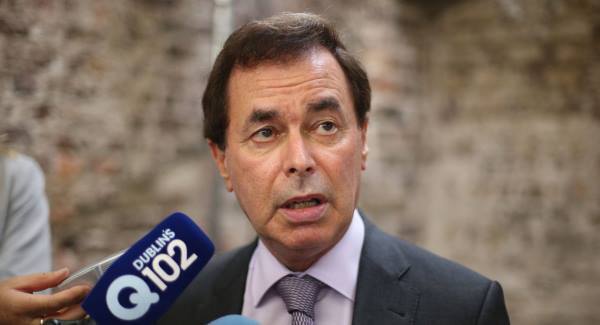
What information had he when he said there was “no specific concern” that prompted a sweep of the Garda Services Ombudsman Commission’s office, and that the Garda Síochána had been the subject of “completely baseless innuendo”?
And how much of what he knew was communicated to Enda Kenny before he said GSOC “indicated that it found no evidence of electronic bugging and that the gardaí was not involved in misconduct in any way”?
These are two important public interest questions upon which we can judge the Government’s handling of the controversy. The answers might be contained in a document provided to Mr Shatter on Monday from GSOC.
There are three issues of divergence between what GSOC said at the Oireachtas Oversight Committee on Wednesday and what Mr Shatter had told the Dáil.
1: When the Commissioner’s phone was tested, it rang immediately. Given that this was 1am, the possibilities are either that, by bizarre coincidence, someone rang at that moment, or that the phone was bugged. GSOC’s position is that the chances of the phone not being bugged were “remote to zero”.
Was this communicated in the verbal and written statement to Shatter on Monday before he said: “There is no evidence... of any phone call made or received being compromised.”
2: The external security company said the technology used in one of the three threats — a mobile phone scanner — was, according to GSOC chairman Simon O’Brien on Wednesday “only available to government agencies”.
Was it stated in the report to Shatter that this technology was only available to government agencies?
What was Shatter told before he stated “there was no suggestion that there was any risk of unauthorised access to the GSOC databases and the documentation”.
3: Mr O’Brien said that, on October 8, GSOC invoked section 102 (4) of the Garda Síochána Act to commence a public interest investigation, permitting it — without a complaint — to “investigate any matter that appears to it to indicate that a member of the Garda Síochána may have committed an offence or behaved in a manner that would justify disciplinary proceedings”.
Was Shatter told that the section of the act that a member of the force “may” have committed an offence was invoked before he told the Dáil the force suffered “baseless innuendo”?
Mr O’Brien told the committee that he was.
Shatter said on Prime Time last night: “I was told the story I told the Dáil. I set out to the Dáil the information furnished to me.”
What was said in the meeting with Mr O’Brien might now come down to interpretation. More specific evidence might be contained in the document given to Shatter.
The committee has much to ask him on Wednesday.
CONNECT WITH US TODAY



Be the first to know the latest news and updates