Commissioner: Tribunals should decide on FoI appeals
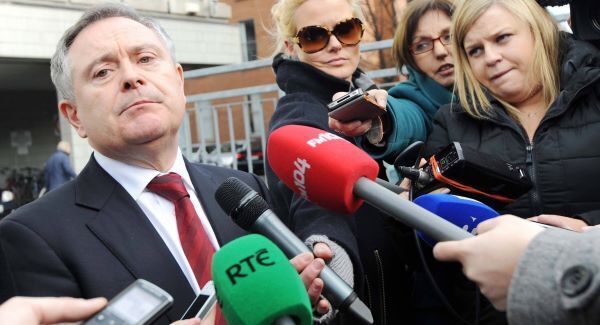
Peter Tyndall also said he would “have to talk very hard” about resources for his office with Brendan Howlin, the public expenditure minister.
This includes an “urgent” discussion about mounting legal costs from court challenges to his office’s decisions.
Mr Tyndall told the Irish Examiner he would ask for more resources ahead of dozens of extra State bodies becoming subject to information requests under new legislation.
“You have large uncontrolled areas of cost because you have to defend actions. In the end, they can also end up in the Supreme Court.
“I absolutely want to have an urgent discussion with the department about whether that is the appropriate way of appealing against decisions of this office because at the moment it is hugely costly to the state.”
Legal fees for FoI court cases for his office have cost over €500,000 since 2011. The commissioner reviews decisions of public bodies in relation to FoI requests and ensures they comply with the law.
The office is already facing a huge backlog in handling FoI appeals. A 2012 report shows nearly a quarter took more than a year to finish while 22% took more than two years.
FoI laws allow journalists and members of the public access data held by the Government, departments, state agencies, and other public bodies.
Under new legislation, FoI rules will for the first time apply to an extra 75 bodies including Nama, the Central Bank, and An Garda Síochána.
Changes are expected to result in a rise in appeals. But already, they have mounted up and hundreds of thousands of euro a year is spent on court challenges to decisions.
Disputes over access to information with bodies could instead be dealt with by tribunals or a panel of experts, Mr Tyndall suggested.
“It has a major impact on the capacity of the office [to get things done]. If you’ve got several simultaneous High Court cases going on, you’ve got a small team of people. You have to concentrate on it. The alternative elsewhere tends to be a tribunal system but then you have to be very cautious that if you design something of that kind that it doesn’t end up being [a gravy train].
“I would certainly like to see tribunals deciding cases on papers rather than represented hearings. In person. They need to be independent.”
The commissioner, who also acts as the ombudsman, said tribunals decided on information appeals in Britain.
“A panel of independent experts, a grouping of whom would consider cases. Perhaps three from the panel would consider cases that had been appealed. It seems to me that it [the court] is not a sensible use of public money for the purposes of the state.
“It’s consuming an awful lot of resources and I want my people to be concentrating on producing decisions and on requests, not spending all of their time preparing to defend decisions in court.”
Despite Mr Howlin recently agreeing to employ four extra staff at the commissioner’s office, Mr Tyndall said this was unlikely to meet the demand under the new legislation.
“My concern is that those four bodies will only help us to consider dealing with the existing backlog. We’re going to have to talk very hard indeed about resources.”