Weisz career profile: Troubled start to strong business
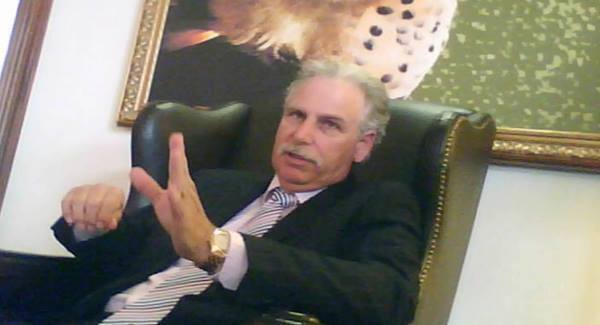
From a troubled start in the late 1970s, Ronald Weisz has built a strong business here that, despite concerns raised in the Dáil, was vetted and licensed by the Central Bank in 2009.

Weisz career profile: Troubled start to strong business

He came here via England but always kept in contact with his roots on Long Island.

Weisz’s first subprime lending company, the Wise Finance Company, began life in the late 1980s in the control of a firm in Panama.

Records from the Central American country show that it was set up by associates of Weisz’s father, Stanley. They had worked together during a controversial New York land deal in the early 1980s.

The key man in this land transaction was the developer Leo Chizner. He took up a lucrative land lease from the local council and passed it on to Stanley Weisz and to those who are listed as running the company in Panama. They called themselves “Leo’s Partners”.

Controversy ensued when it emerged the council’s legal adviser, who handled the deal, was also working for Chizner and had a secret 25% stake in the project.

This man, Jack Libert, went on trial for tax evasion in relation to the deal but he was acquitted after a key witnesses (Charles Mattingly and Stanley Weisz) could not give evidence.

Two months before Libert’s trial Mattingly, one of the directors of the Panama company, was found guilty of stealing more than $100,000 from a client’s fund. He was later struck off the solicitors roll.

The English operation was Weisz’s grounding on this side of the Atlantic.

Weisz was also involved in separate projects such as the bid to introduce American Football to Britain.

At this time Weisz had been evading the fraud charges in New York. But as these were resolved he registered in Ireland. He moved to Wicklow and set up business with his partner, now his wife, Fiona McLoughlin.

His lending was small scale at first and was done through a tight network of brokers.

Weisz has previously said the most successful of all his contacts was Ted Cunningham, who then branched out to set up Chesterton Finance.

Cunningham was later convicted of laundering cash relating to the Northern Bank robbery, but this was quashed.

Around the same time, Weisz set up a second company in Ireland, the Home Funding Corporation. He had been asked to do this by investors to replicate a successful lending model that was attracting interest from funds in Manhattan.

The man who asked him to set it up was Ian Leaf, who subsequently changed his name to Ian Andrews.

In 2007 Andrews was convicted of orchestrating a complicated fraud against the British Revenue Commissioners which saw him profit to the tune of £76m (€91.7m).

Part of this involved washing money through the Home Funding Corporation. Weisz had set up HFC, and sold him €2.8m worth of loans, but the American was not connected to the illegal activities of Leaf.

He did not know the money was tainted.

Generally, Weisz was involved in small lending, particularly where the loan was secured against farm land.

However, he also provided more substantial investment to specific projects. One of his largest loans was provided to a friend of his, Michael Hehle, who had ambitious tourism plans for Leitrim.

But, unknown to anybody, Hehle was actually running a con, targeting a network of German and Austrian investors. They paid £10,000 each to buy worthless share certificates in his Leitrim forestry project.

This was routed through companies in Uruguay and Delaware. When it was time to cash in the investment, neither entity existed.

Hehle had enjoyed an increasingly high profile. Irish Nationwide Building Society loaned him £230,000 on top of Bord Failte grants.

The other big lender to Hehle was Weisz’s Secured Property Loans Ltd.

When Hehle’s investment concept collapsed, the American took possession of the portions of the Ballinamore ranch he had charges over.

SPLL also paid the receiver €38,000 to buy the fittings at Ballinamore. It also acquired 38 acres, which was valued at more than €723,000. This became Weisz’s current home and place of business.

Altogether Hehle’s property, worth €2m, came into the control of Weisz’s SPLL.

Hehle’s daughter still works with Weisz at the Drumcoura City ranch in Ballinamore.

Despite setbacks, Weisz continued to be ambitious and at various stages sought business partners and investment. He worked to develop tourism possibilities in Ballinamore.

Particularly in the last 15 years, he has grown in stature by attracting support from a small but growing network of respectable people.

These were attracted by his prospects and his aim to operate as part of a properly regulated subprime lending sector in Ireland.

The subprime sector is much smaller than the banks, so funding is not sought from international money markets.

Weisz has said, at the height of his business, he lent out as long as he could raise the capital to release.

Weisz was able to realise the investments he made in developing holiday chalets around his ranch in Leitrim which he sold just before the property crash.

Crucially, he said he was also able to tap support from family and friends, who provided arms-length loans. They were never involved with the running of his business and had no connection with any of his other deals.

He was given €1m by one of the country’s other notable subprime lenders, Carlisle Mortgages, as short-term finance for fresh lending.

Larger support came from the pension fund set up by his father, the Stanley Weisz PC Retirement fund, and another family company on Long Island.

His company was also loaned money by his brother, Jay Weisz, and his sister-in-law Grainne McLoughlin.

McLoughlin is a Fine Gael councillor in Wicklow. She was co-opted into the seat vacated when Simon Harris was elected to the Dáil

On July 15, 2009, she lent Secured Property Loans €124,000. This was repaid in 2011. In a statement Ms McLoughlin explained the money came from the sale of a house following a separation.

She said she had approached Weisz seeking to invest it because at the time there was so much uncertainty surrounding the Irish banking system.

Weisz has repaid the loans to his relations but is still owed a substantial amount himself, having invested the funds drawn from the pension fund of which he and his father are co-trustees.

He registered a loan company in the North last year, but said he has no intention of taking it further as he is retiring.

The decision to retire has come after a 30-year transformation in fortunes that has seen him run from creditors from a failed business in New York to now chasing debtors in 15 counties across Ireland.

x

More in this section

Lunchtime News

Newsletter

Keep up with stories of the day with our lunchtime news wrap and important breaking news alerts.

Cookie Policy Privacy Policy Brand Safety FAQ Help Contact Us Terms and Conditions

© Examiner Echo Group Limited