Plaque recalls Famine-era visit by former slave
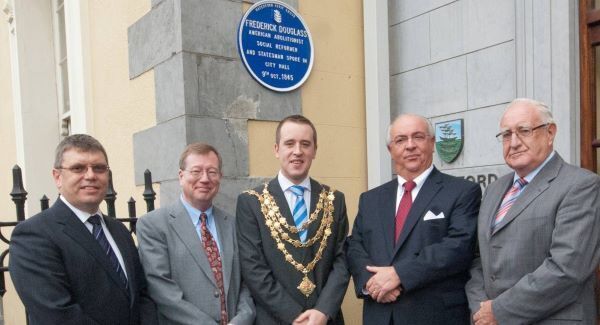
A plaque commemorating the visit to Ireland of a former slave and influential anti-slavery campaigner during the Famine was unveiled yesterday.

Plaque  recalls Famine-era visit by former slave

Frederick Douglass came to Ireland in the 1840s to drum up backing for the abolitionist cause, and wrote about how his visit here was the first time he felt treated “as a human being and not as a colour”.

Among his public appearances was a speech given at City Hall in Waterford on Oct 9, 1845, and 168 years later that occasion has been permanently marked with a plaque at that location.

The commemoration was a joint effort by Waterford City Council, Waterford Civic Trustand the Irish Studies department at St John Fisher College in Waterford’s sister city, Rochester in New York State. Frederick Douglass is buried in Rochester and lived there for 25 years.

A number of Rochester residents made the journey across the Atlantic for yesterday’s event, including Timothy Madigan, the head of the college’s Irish Studies section.

“His [Frederick Douglass] visit to Ireland had a profound impact on him,” Mr Madigan said yesterday, “and he was one of the first to report on the Famine. He saw the beginnings of the Famine and wrote letters back to the US.

“He thought he had known what suffering was as a slave but then saw the suffering people went through in Ireland because of the Famine.”

City archivist in Waterford, Donal Moore, said there were “very few places” Frederick Douglass didn’t visit during his eight months or so in Ireland.

Mr Douglass was actually a slave at the time but his freedom was “bought” by a group of British benefactors before his return to the United States, allowing him to continue his campaign for abolition.

University College Cork academic Anne Coughlan, a PhD student in the School of English and expert on Douglass, said his appearances had a major effect on Irish audiences, largely in Cork and Dublin, where he became well-known but also in the likes of Waterford and Wexford.

“People were genuinely very moved by his speeches. He was one of the finest 19th century orators, in a century of oratory. People couldn’t fail to be moved by him.

“He told the story of his time in slavery and how he was treated and challenged people to think about slavery and how slaves were treated.

“He also told people how they should be telling people that what the [pro-slavery] Americans were doing was wrong. People really took his message to heart.”

x

More in this section

Lunchtime News

Newsletter

Keep up with stories of the day with our lunchtime news wrap and important breaking news alerts.

Cookie Policy Privacy Policy Brand Safety FAQ Help Contact Us Terms and Conditions

© Examiner Echo Group Limited