Island commemorates Britain’s handover of country’s last ‘treaty port’ 75 years on
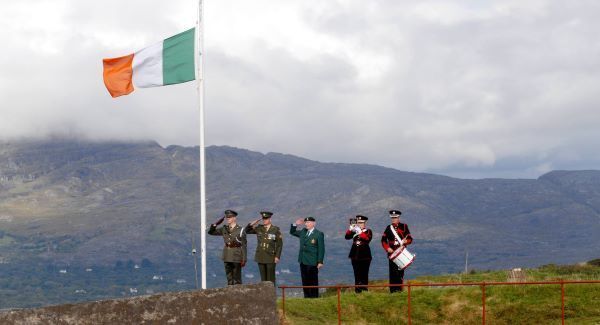
Fort Berehaven was the last of three British ‘treaty ports’ vacated by the British in 1938, after the residents of Bere Island had experienced 141 continual years of a garrison presence.
Three gun batteries were constructed on the island to protect a British naval fleet patrolling the Atlantic in the 1800s and World War One.
According to island-born Barry Hanley, British prime minister Winston Churchill was “hopping mad” with his predecessor Neville Chamberlain over the decision to vacate Bere Island.
He told locals and pupils yesterday Bere “could have been a dangerous place during World War Two as the British, in 1941, decided to look at the possibility of taking it back... [but] Churchill’s government decided there would be no cooperation from the Irish authorities and [was] also afraid of a backlash from the Americans.”
During the summer, the Taoiseach and other senior politicians were present to commemorate similar handover events in Spike Island in Cork Harbour and Lough Swilly in Donegal.
Members of the Defence Forces’ 1st Southern Command, Cork, were present yesterday.
Tom O’Neill, manager of the now Cork County Council-controlled Spike Island, yesterday displayed many items of coastal defence artillery associated with the British presence on Bere.
The 22 children from the local national school, along with island-born secondary school pupils from Castletownbere Community College joined the 200-plus islanders in an afternoon of commemoration.
Mr Hanley, a retired teacher, reminded locals the British presence was not all bad news.
Bere Island, the local historian said, had electricity years before the rest of the country. And locals could acquire items such as curry powder in a local shop due to the tastes of British troops returning from India.
Mr Hanley said local labour was engaged in construction of watch towers, a military hospital and military school, along with providing recreational amenities such as a cricket ground and a small golf course. “Some local girls married into the military in what may have been complex relationships in some cases,” he said. “During the Second World War, we had a unique situation where the British controlled part of the island and people had to pass sentry boxes.”