Service faces ‘challenge’ for blood donations
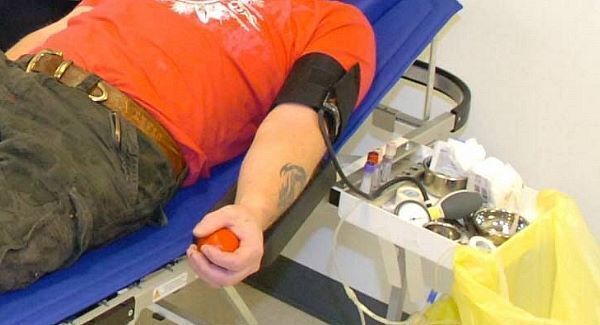
New figures released by the IBTS yesterday show that more than 5,000 fewer donations were collected in 2012 than during the previous year.
This was largely down to temporary changes in the management of blood haemoglobin levels which saw up to 25% of potential donors excluded at certain times of the year.
In order to give blood, a certain haemoglobin rate must be present in the donor’s blood.
The IBTS is not currently in full compliance with these requirements after being given a 12-month deviation permit by the Irish Medicines Board, which will expire at the end of this month.
From the beginning of October these changes will again be implemented, meaning that 1,200 extra donations per month will be needed to make up for the shortfall likely to stem from the increased exclusion rates.
“It’s a significant challenge to increase donations to that level,” said Mr Kelly.
“We will have a new TV ad — our first in three years — a new radio ad and increased social media presence, as well as writing to people who we know have previously donated, but not in the last two years.”
It is also hoped a new partnership with the GAA will help increase donations in the coming months.
At the moment there is no shortage of blood, with a six to seven day supply available in all clinics nationwide.
The figures released yesterday also show that a 21% cost reduction and 10% decrease in staff was achieved since 2008.
Further cuts are also expected in the coming years, but Mr Kelly warns that there’s not much more room for funding reductions.
“I don’t think there’s an awful lot of room in terms of our staff. There is probably some scope [for cost reductions] in our back office, but it is a very quality-driven service...and we cannot compromise on quality,” said Mr Kelly.
Details of where to give blood can be found at www.giveblood.ie
3,000 units of blood need to be collected by the IBTS every week.
85,762 donors gave 141,350 donations in 2012.
48,662 donors were men and 37,100 were women.
More than 15,000 donors gave blood for the first time in 2012 — more than 50% of whom were aged between 18 and 24 years.

CONNECT WITH US TODAY



Be the first to know the latest news and updates