Aftershocks expected after earthquakes strike in the Irish Sea
Aftershocks from two earthquakes that struck in the Irish Sea may be felt for days to come, it has been claimed.

Aftershocks expected after earthquakes strike in the Irish Sea

The Irish National Seismic Network said the quakes which occurred yesterday morning off the north west coast of England were probably caused by stresses built up from the weight of glaciers covering land during the Ice Age.

INSN director Tom Blake said it was unusual that the earthquakes — measuring 2.4 and then a stronger 3.3 on the Richter scale — happened in the Irish Sea.

“It is impossible to tell if stronger earthquakes will occur in the coming days and weeks, but aftershocks can be expected even if most, if not all, will be too weak to be felt,” he said.

Social media users took to Twitter saying they felt the ground move beneath them, particularly in the north west of England.

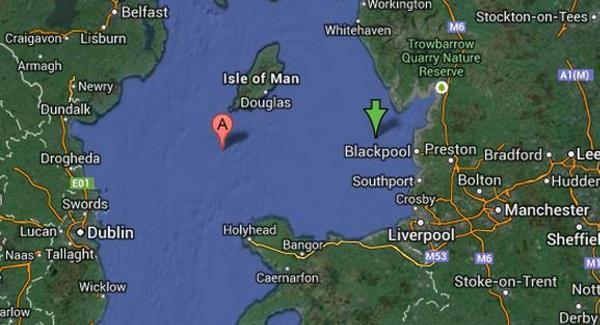
The strongest quake, at a depth of 5km, was recorded by the British Geological Survey shortly before 10am. The earlier and smaller quake was recorded at around 5.30am. Its epicentre was about 25km west of Fleetwood in Lancashire at a depth of 3km.

The larger earthquake was also recorded by INSN seismometers in Donegal and Wexford.

Mr Blake, from the School of Cosmic Physics in the Dublin Institute for Advanced Studies, said their cause was probably no different from other earthquakes in Britain and Ireland.

“Although Britain and Ireland are far from any plate boundaries, much of the region is still experiencing quakes due to the removal of the weight of ice sheets that once covered the land,” he said.

“Occasionally, this post-glacial isostatic rebound — the phenomenon of the land surface gradually returning to its pre- glacial contours — results in earthquakes of this magnitude, particularly in the northern half of the islands.”

A slightly larger earthquake was recorded in the Irish Sea back in May, which was felt in parts of Ireland and North Wales.

The 3.8 magnitude tremor occurred 15km away from Abersoch in Gwynedd, Wales. People in Dublin, Wexford, Wicklow, and Kildare claimed they felt it at the time.

x

More in this section

Lunchtime News

Newsletter

Keep up with stories of the day with our lunchtime news wrap and important breaking news alerts.

Cookie Policy Privacy Policy Brand Safety FAQ Help Contact Us Terms and Conditions

© Examiner Echo Group Limited