‘Life sentence’ for victims’ families
A survey of families conducted by Advocates for Victims of Homicide Ireland (AdVic) has, for the first time, given a glimpse into the damage inflicted on loved ones of victims:
* 35% of families surveyed said they suffered intimidation following the homicide;
* 75% said their personal relationships suffered;
* 18% of couples said they broke up as a result of the homicide, while 62% said they had stayed together;
* 21% had to move home, 27% did not, while 52% said the issue was not applicable to them;
* 13% said they never returned to work as a result of the bereavement and that a further 10% only did so after a year.
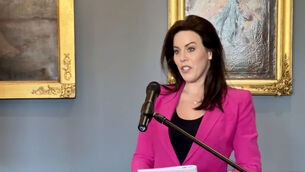
Research author Cathriona Nash said 31% of families did not undergo counselling and said they were not offered the service as an automatic entitlement by the State.
She said what came up “again and again” in the study was that families felt they were the “ones serving a life sentence”.
In contrast, she said families did not understand what a life sentence meant for perpetrators and two thirds felt sentences given for unlawful killings were “excessively lenient”.
Families and AdVic are calling for scaled minimum prison terms for those convicted of murder and manslaughter.
AdVic advisor John O’Keeffe said the tariffs would be “minimum starting points” and judges would still have discretion.
He said such tariffs in England and Wales ranged from 10 to 35 years and even to whole-life terms
He pointed out that, in February, Clive Sharp received a minimum term of 37 years for the murder of Irishwoman Catherine Gowing in Wales.
AdVic also wants those charged with homicide to be refused bail and for concurrent sentencing — where multiple sentences are served together rather than consecutively — to be abolished.
“The scales of justice are all in favour of the offender at the moment, so what we are calling for would only be bringing us back to the middle ground,” said Mr O’Keeffe.
Three quarters of families said they believed the State pursued charges of manslaughter over murder in order to secure a conviction.
Anna Mulveany, whose son Brian, 19, was murdered by Brian Willoughby in 2000, said such decisions makes it “very distressing” for families.
The AdVic research follows a report by the Law Reform Commission last week which recommended the introduction of tariffs for murder.
See: www.advic.ie or phone 086 1272 156.
CONNECT WITH US TODAY



Be the first to know the latest news and updates