Debtor house rules
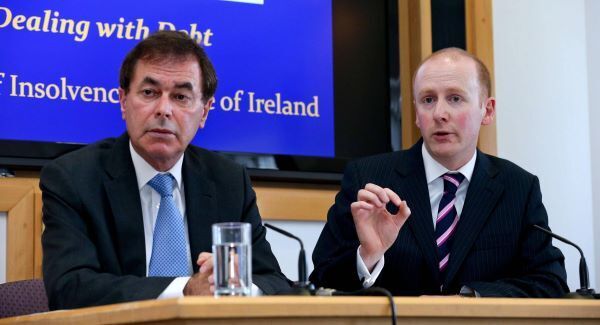
Debtors may be asked to move to cheaper accommodation, give up their cars and health insurance, and prove the economic rationale for childcare arrangements under the guidelines for personal insolvency arrangements.
They were given a cautious welcome by advocacy groups, who hoped the rules would re-balance the current one- sided approach of banks’ dealings with customers in arrears.
However, there remained some concern that they leave too much power in the hands of the banks — who will not be compelled to enter arrangements and will have a final veto on any deals.
Anybody entering the arrangements will be subject to strict spending guidelines which the Insolvency Service of Ireland said will be fair, and not draconian.
They will allow:
- €278 a month for food for an adult and €72 for a pre-school child;
- €33 a month for personal hygiene and grooming including hairdressers;
- €35 per month on clothing and footwear and €22 for a pre-school child;
- €48 a month for electricity and €57 for heating.
Under the new arrangements, a family will only be allowed to keep its car if it is necessary to get to work and no public transport is available.
The personal insolvency practitioners (PIPs) — or government- appointed mediators — can dictate what type of car is needed, based on a family’s needs, which will be cheaper than €2,000.
They will also decide the hours, location, and type of childcare that working parents can pay for.
A controversial clause in the initial draft guidelines which allowed banks to force parents to give up work if childcare cost more than they earned has been removed.
However, the final version still states that “the reasonableness” of childcare can be considered, and parents will have to prove an economic rationale for paying for it.
Private health insurance will not be allowed, unless the debtor has a particular health condition which would result in spending that costs more than insurance.
It will also be allowed for people with medical conditions that “would make it difficult or impossible to regain insurance cover” when they emerge from the insolvency arrangement.
However — in another last- minute tweaking of the guidelines — people will be allowed to keep their Sky Sports subscriptions.
Sinn Féin said the guidelines “condemn people to live for years hand to mouth because the banks have been so irresponsible with lending”.
Fianna Fáil described them as a bankers’ charter that will “provide little comfort to families crippled by debt”.
But the Justice Minister Alan Shatter said he would keep a “watchful eye” on the banks and would “swiftly intervene” if the process was not working.
“We expect them to do what they have said they are going to do and to properly and fully and constructively engage with people who are in debt difficulties,” he said.
The Free Legal Advice Centre, Flac, said that up to now, banks have been pressing people beyond acceptable limits: “This legislation is badly needed for those who are insolvent and need a proper process to resolve their indebtedness.”
CONNECT WITH US TODAY



Be the first to know the latest news and updates