UCC tech centre for medics to be first in Europe
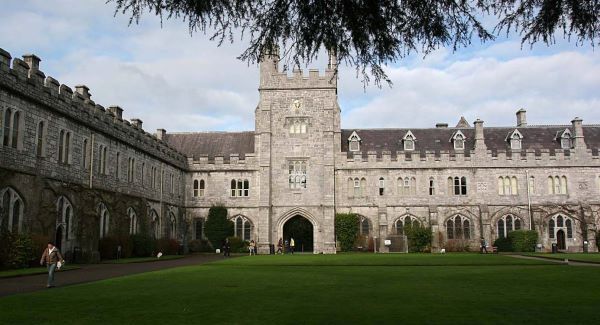
An Irish university has unveiled plans to build a multi-million-euro world- class research centre to develop cutting-edge technology for training 21st-century medics.

UCC tech centre for medics to be first in Europe

The four-storey 2,200 square metre centre, which is being developed by University College Cork (UCC), is modelled on similar centres at Stanford University and MIT in the US, but will be the only one of its kind in Europe.

“The intent is that the outputs of this centre will benefit patients locally and nationally through enhanced training of health professionals,” said Professor George Shorten, dean of the UCC School of Medicine.

“But it will also place UCC and its partners at the forefront of technology-enhanced learning in Europe by 2016.”

The centre has been earmarked for a site on the university’s Brookfield Health Sciences Complex on College Rd.

It is hoped that planning will be lodged before the end of this year, and that building work will take about two years.

Several world-renowned academics have been interviewed to head up the centre.

And once appointed, the successful candidate will become the first professor of technology enhanced learning (TEL) for health in Ireland or Britain.

The ASSERT (application of science to simulation, education and research on training) for Health centre will unite over 60 researchers working as part of UCC’s TEL for Health research group.

The TEL researchers, drawn from medical, technology and engineering disciplines, are working to develop simulation, mobile and e-learning applications for undergraduate and postgraduate healthcare education.

As well as improving the training of medical professionals, the projects will ultimately improve patient safety in the “real world”.

But academics overseeing the ASSERT centre are also in talks with up to 12 industry partners in the hope that the research projects can be commercialised, and rolled out nationally and internationally.

The SmartNeedle is among several exciting research projects under way.

Dr Eric Moore and Walter Messina from the Tyndall Institute, and Brian O’Donnell from Cork University Hospital are developing a needle integrated with a sensor that can detect nerves, allowing surgeons to better guide needles and improve the delivery of anaesthetics.

TEL has brought medical and engineering students together to solve real clinical problems in areas such as radiology, surgery, anaesthesia and orthopaedics.

TEL is also using medical “reality gaming” to place junior doctors in a virtual hospital to deal with situations they will face in real-life, and a smart-phone app that helps medical students and doctors improve the quality and content of hospital discharge letters.

More in this section

Lunchtime News

Newsletter

Get a lunch briefing straight to your inbox at noon daily. Also be the first to know with our occasional Breaking News emails.

Cookie Policy Privacy Policy Brand Safety FAQ Help Contact Us Terms and Conditions

© Examiner Echo Group Limited