Cancer expert fought parents in court over children’s treatment
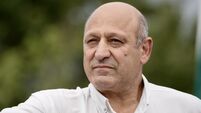
Dr Fin Breatnach — who established and developed the National Children’s Cancer Centre at Our Lady’s Children’s Hospital, Crumlin — said that he has sought adjudication from the courts in instances where the parents did not want their child to receive cancer treatment, where Dr Breatnach believed the possibility for cure was significant.
The consultant paediatric oncologist said the number of instances where parents did not want their children to receive chemotherapy and radiotherapy “is very small” — four in all over 36 years.
Dr Breatnach said in the few instances he could recall where the High Court judge issued a care order to ensure treatment took place, the children are today long-term survivors.
Now retired from his post — he declined to give details of the cases as it may lead to the identification of the people concerned.
The issue of parents refusing to have very ill children receive cancer treatment has again come to the fore following a court in Britain last month ruling that a 7-year-old boy, Neon Roberts can be given radiotherapy against his mother’s wishes.
Doctors told the High Court in London that Neon could die without further treatment, and the survival rate for children with radiotherapy was between 80% and 86%.
Between 100 and 150 children living in Ireland today will be diagnosed with various forms of cancer this year.
Dr Breatnach said the lives of parents are thrown completely upside down on hearing a cancer diagnosis for their child: “It is absolutely horrendous for parents and from that moment on their lives will never be the same again.”
The doctor, who gave evidence in the recent Paschal Carmody trial in Ennis, said chemotherapy and radiotherapy can have severe, immediate and long-term, side-effects for children: “It is a very difficult decision for parents as they reflect on the quality of life of their children and the potential side effects that may create problems further down the road.
“The severity of side effects, for exactly the same treatment, can vary enormously between one child and the next and unfortunately there is no way of predicting this. But obviously, if no treatment is administered, the child will not survive.”
Despite the success of current treatments for the majority of childhood cancers, there are a small number of cancers for which no curative treatment is available.
He added: “The hope for the future is that we will be able to move away from chemotherapy and radiation therapy and move to treatments which target the cancer with few effects on normal tissues.
“Such treatments are currently being developed, with some already in everyday use for specific cancers and showing great promise.”
CONNECT WITH US TODAY



Be the first to know the latest news and updates