Former judge fails to overturn his conviction for sexually abusing six young men
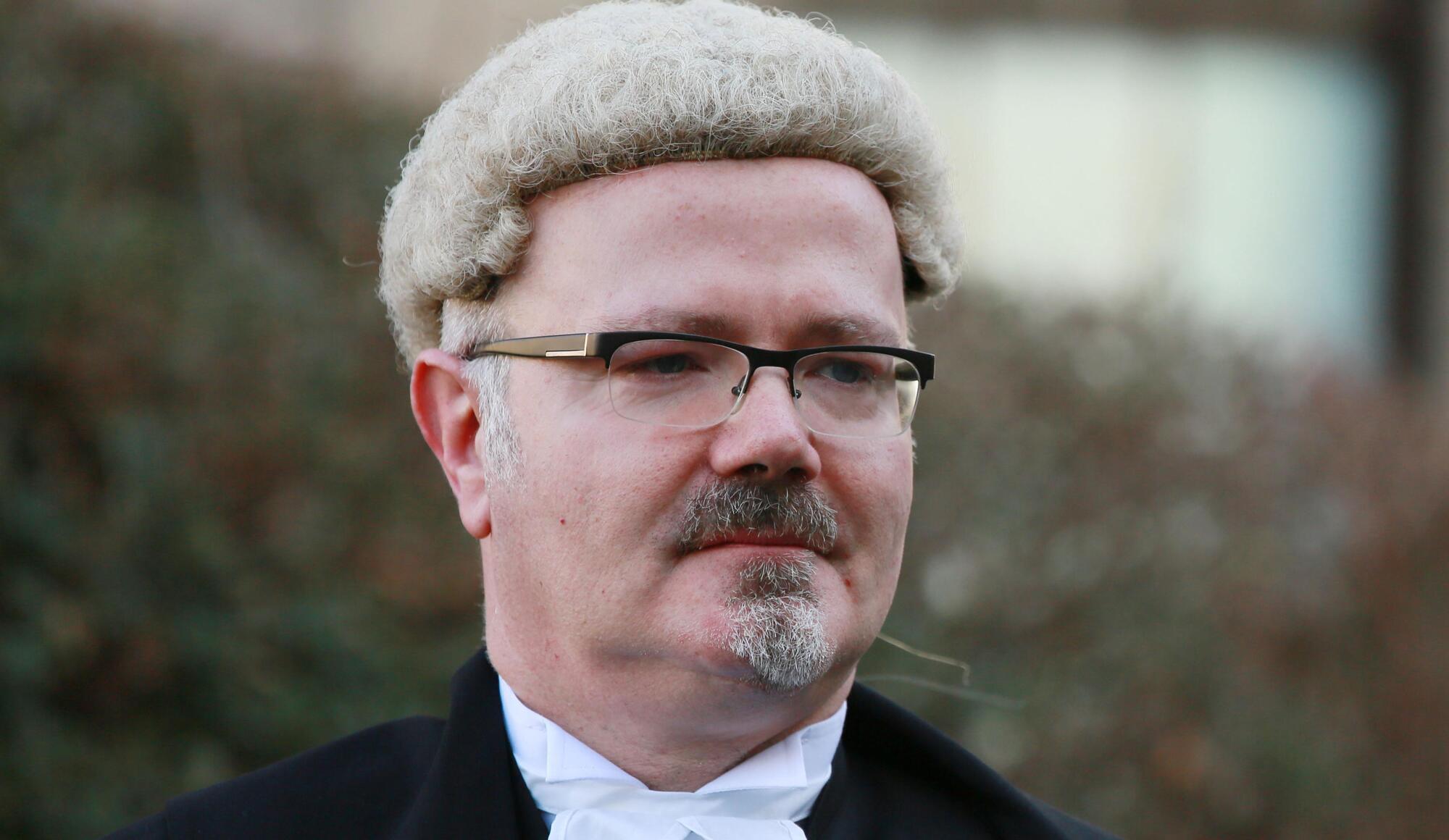
Gerard O Brien: Convicted by a Central Criminal Court jury of one count of attempted anal rape and eight counts of sexual assault in relation to six victims. File picture: IrishPhotoDesk.ie
A former circuit court judge has failed in a bid to overturn his conviction for attempted rape and the sexual abuse of six young men when he was a teacher 30 years ago.
In December 2023, Gerard O’Brien, aged 61, of Old School House, Slievenamon Road, Thurles, Co Tipperary, was convicted by a Central Criminal Court jury of one count of attempted anal rape and eight counts of sexual assault in relation to six victims.
The Court of Appeal heard that when O’Brien was interviewed on a voluntary basis by investigating gardaí, he initially denied the allegations.
However, he subsequently provided pre-prepared statements in which he acknowledged sexual activity with two of the complainants but asserted that this was consensual.
He also accepted that he had performed oral sex on another of the complainants, but said he had a mistaken belief with respect to the young man's consent to this. He denied that he attempted to perform anal sex on this victim.
In his direct evidence to the trial, O'Brien said he had “lied” to gardaí initially because of “shame”.
“The idea of being charged with a sexual assault frightened me beyond reason. I went into a sort of blind panic about it all,” he said.
O’Brien acknowledged that having students at his home and in his bed was “inappropriate” and “should not have happened”.
O’Brien had appealed against his conviction, arguing that the trial judge’s instructions were “confusing” and “weighted against the defence”.
His senior counsel Hugh Hartnett told the Court of Appeal that the tone of the charge “strayed into conveying the impression” that the judge held a view in respect of the charges.
However, Anne-Marie Lawlor SC, for the Director of Public Prosecutions, said the suggestion that there were personal views expressed in the trial judge’s charge was “misconceived”.
Presiding judge Ms Justice Tara Burns on Friday said the appeal court rejected the suggestion that the portion of the charge referred to was “imbalanced” or legally incorrect.
“The trial judge made it clear, as he did on several occasions throughout his charge, that decisions on all factual matters, together with the outcome of the trial, fell within the remit of the jury and that he had no role whatsoever in this regard,” she said.
She said the court was of the view that the jury were “clearly instructed” and that no error of law or misdirection arose.
In his submissions, Mr Hartnett had also suggested that a comment made to the jury — that it was important they not “enter into a parallel universe of make-belief in relation to matters” — had the effect of discrediting O’Brien’s evidence.
He noted that the trial judge told the panel that no jury is obliged to accept testimony or accounts given to gardaí which they consider “incredible” or “outlandish”.
Ms Justice Burns said it was clear that the judge’s comments were not limited to the appellant’s evidence.
“Rather, the trial judge was referring to evidence from all witnesses, including that of the appellant,” she said.
She said that when the charge was considered as a whole, the trial judge made it “abundantly clear” that the ultimate question was whether the jury were satisfied beyond reasonable doubt of the appellant’s guilt on the basis of the evidence which they accepted as reliable.
Mr Hartnett also suggested that the judge invited the jury to give less weight to O’Brien’s interviews and statements when he asked them to consider his legal knowledge as a judge when assessing what he had said to gardaí.
Ms Justice Burns said the fact that O’Brien was a member of the legal profession clearly may have had an impact on the jury’s assessment of his “untruthful memorandum of interview” with gardaí and his “revisiting of that untruthfulness in his pre-prepared statements”.
She said this was a matter of “common sense”.
She rejected a further argument that the trial judge erred in refusing an application for separate trials.
The mere fact that six complainants were joined on the indictment did not prejudice O’Brien or embarrass him in his defence, she said, and that the trial judge did not err in refusing to sever the indictment.
Ms Justice Burns also dismissed an argument that the judge gave a “confusing” warning to the jury regarding the legal principle that lies told by a defendant do not automatically indicate guilt.
The judge said in circumstances where none of the grounds advanced were being upheld, O’Brien’s appeal against his conviction was dismissed.
The offences occurred at locations in Dublin between March 1991 and November 1997 when O’Brien was aged between 27 and 33 and working as a teacher at CBC Monkstown. The victims — four of whom were students or former students of O'Brien — were then aged between 17 and 24.
The six victims previously indicated they wish for O'Brien to be named but want to maintain their anonymity.
O'Brien had pleaded not guilty to all the charges.
He resigned as a circuit court judge, having been appointed in 2015, but had been on leave since the allegations came to light. He was jailed for four years in June 2024 by Mr Justice Alexander Owens.
O’Brien’s legal team submitted at his sentencing hearing that a psychological report stated the now 61-year-old was psychologically vulnerable, has limited coping skills, has suffered episodes of major depressive disorder, and has “unmet sexual needs due to being gay in a homophobic society and his disability”.
Imposing sentence, Mr Justice Owens said O’Brien was “unsuitable to hold office”.
He said O’Brien appeared to "blame others for his predicament" and feels "he is the one manipulated, not the manipulator", an attitude the sentencing judge said was "unrealistic" and "self-indulgent".


CONNECT WITH US TODAY



Be the first to know the latest news and updates