Dairy farmers to defy co-op’s supply contract deadline
They are set to defy the co-op’s March deadline, which could see farmers who have not signed the contract being docked up to 2c per litre of milk by the processing giant.
Eugene Sheehan, a spokesman for the farmers’ Dairygold Supplier Contract Discussion Group, said they are prepared to hold out for better terms and conditions.

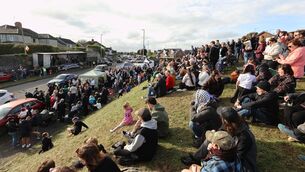
“This is a processor’s contract,” he said yesterday as about 70 dairy farmers from all over Cork protested at the company’s processing plant in Mitchelstown, Co Cork.
“I would urge suppliers not to sign this agreement unless they get legal and professional advice,” he said.
“And to the people who have signed it, I would urge them to write to the co-op secretary and withdraw their signature because they did not understand it.
“You’d have to read it three or four times to get even half an understanding of this document.
“If you are a shareholder with Dairygold, there is no need for a contract because you are bound by the rules of the co-op. Why the need for this agreement, at all?”
Another dairy farmer, Tom Barrett, from Lombardstown, who has been milking cows for 40 years, said the contract in its current form could put several farmers out of business.
“I may have to get out of farming in a few months,” he said.
Dairygold has spent several months engaging with its milk suppliers trying to convince them to sign up to its new seven-year milk supply agreement.
Farmers have criticised several elements of the contract, including the requirement on farmers to contribute 0.5c per litre of milk towards a “revolving fund” over seven years to help fund Dairygold’s expansion plans.
The first 75,000 litres each year will be exempt and when the Dairygold “quoted milk price” falls below 27c per litre, the contributions will not be deducted.
These contributions will be repaid in the eighth year after receipt — contributions made during 2013 will be repaid in 2020, 2014 payments in 2021, and so on.
Farmers also criticised the creation of a new link between the volume of milk a farmer produces and the minimum shareholding he must have in the co-op — a minimum shareholding of 4,000 shares per 100,000 litres of milk.
It means a farmer producing 450,000 litres of milk annually, who might only own 2,000 shares, would have to buy another 16,000 shares at €1 per share.
They also criticised the absence of a commitment on the price Dairygold will pay for milk over the term of the contract.
“We as suppliers are effectively being asked to put our trust in the Dairygold board to deliver the best price they can to us the suppliers,” one young farmer said.
“In my view, in a legally binding agreement, both sides should know where they stand. Key matters should be committed to writing.”
He slated the co-op’s threat of a financial penalty for farmers who don’t sign up by Mar 31.
“2012 has been one of the worst years weather-wise for dairy farmers,” he said.
“Many farmers are financially vulnerable. In 2013 Dairygold intends to commence collecting its development funding thus putting extra pressure on Dairygold suppliers.”
This farmer said the average price Dairygold paid him for milk last year was 34.5c per litre. The cost of producing it was 22c per litre, with production and feed costs on the increase.
Mr Sheehan led a delegation yesterday which presented suppliers’ concerns to Dairygold’s chief executive Jim Woulfe, board chairman Bertie O’Leary, and vice-chairman Denis Lynch.
He said the executives told them they would outline their concerns to a board meeting, which was due to take place yesterday afternoon, before reverting to suppliers.
Mr Sheehan said suppliers will stage more and bigger protests until they get the changes they want.
Dairygold was not available for comment.