Jarveys take dung-catcher row to Supreme Court
The 27 jarveys decided on the appeal after meeting their legal advisers, barrister Elizabeth Murphy and solicitor Paul O’Donoghue, on Thursday night.
They brought the action against the National Parks and Wildlife Service (NPWS) in a bid to lift a court order that bans them from Killarney National Park unless they use the controversial dung catchers.
Killarney Jarvey Association chairman Pat O’Sullivan said they were “highly disappointed” with Mr Justice Liam McKechnie’s decision in the High Court.
The NPWS has welcomed the High Court decision, however, and its director John Fitzgerald thanked the people of Killarney and local tourism interests for their support.
It was important that the NPWS and the jarveys now discussed the implementation of the ruling, he said.
“We’re hoping the jarveys will use the devices. They are welcome to come into the park provided they use them and that remains our position. These devices are used throughout the world,” he said.
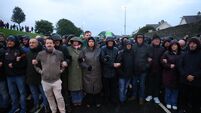
The jarveys, who staged protests at the entrance to Muckross House, centrepiece of Killarney National Park, have been locked out of the park since last October due to their continued refusal to fit the devices.
The NPWS has offered to provide them with the devices free of charge, but the jarveys have refused to give the devices a trial, claiming they are unsafe. Metal dung containers placed at locations around the park by the NPWS last year remain unused.
A DVD has been made available by the NPWS, showing how to fit and use the dung catchers and a training programme has also been offered to jarveys.
Jarveys will be allowed back into the park once the NPWS is satisfied that their horses are suitably trained with the dung catchers.
Kerry Fine Gael Senator Paul Coghlan appealed for the sides to engage in talks.
“We must ensure that everyone acts in the public interest where Killarney (National) Park is concerned because, as Judge McKechnie stressed, the park is effectively the people’s park which was a generous gift to the people of Ireland by the Bourne Vincent family in 1932,” he said.