Food for thought
LISTENING to the chatter on the streets, you’ll often hear the cry: “Food’s never been so expensive.”
And this time, the shopper is entirely right: inflation figures show food prices have risen 8.5% in the past 12 months, adding about €13.26 to the average family’s weekly bill of €168.96.
In total, the average family spends €8,786 a year on food and non-alcoholic drinks, an increase of €688 on last year.
It seems everything is up: bread, milk, eggs, fresh meat, vegetables and butter have all risen by as much as half in a year, yet little apart from pork seems to be falling (see graphic).
Yet some shoppers will remember the hullabaloo two years ago over the Groceries’ Order of 1987.
The order banned below-cost selling and was believed to be the reason food, drink and household essentials were so expensive for years.
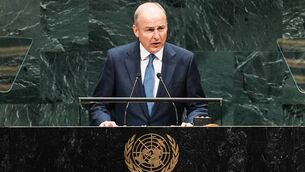
So when Enterprise Minister Micheál Martin axed the order two years ago this week, the shopper was supposed to be put on the path to supermarket nirvana.
Newspapers suggested “Save €1,000 on your shopping bill”, while the Competition Authority reckoned bills could fall €500.
But two years on, the latest inflation figures will tell you no one is saving €500 let alone €1,000.
“At its heart the order of 1987 had quite a lot of good intention and was originally a pro-consumer measure,” says Dermott Jewell, of the Consumers’ Association of Ireland.
“Beyond the ban on below-cost selling, the order banned abuses like ‘hello money’ where suppliers paid supermarkets to stock their goods.”
To understand the order you’d have to go back to what today seems like another world: the Ireland of the mid-1980s.
The country had just seen the fall of the H Williams chain after a cut-throat price war with Dunnes Stores.
The end of H Williams meant consumers had one less supermarket to rely on for their groceries, sparking fears about the consequences of big players dominating the grocery market.
The trade feared independent retailers would be forced out of business and overseas supermarkets, with their greater buying power, would move in.
Suppliers, too, feared they would buckle under the pressure from retailers to provide ever-cheaper foods and other groceries.
So in 1987 the Fianna Fáil Government’s commerce minister, Albert Reynolds, brought in the Groceries’ Order, the eighth time such a trade law had been brought in.
To stop price wars, shops were banned from selling the majority of the stock on their shelves at a lower cost than they paid for it once the supplier’s discount had been knocked off.
SO a retailer who bought 10,000 tins of beans for, say, £1,000 (after a £250 official discount from the supplier) could not sell the tins any lower than 10p each.
All shops, give or take the size of the discount on the invoice, were equal and so the aggression of retailers’ price wars was limited.
“The idea was to protect quite a small number of retailers by having a ban on below-cost selling,” says Mr Jewell.
But the order had three unforeseen and damning consequences:
* Big retailers realised they could make extra money if they persuaded the supplier to give an unofficial bonus known as an “off-invoice discount”.
As the discount did not appear on the invoice, the retailers could easily show they were selling their groceries at the price allowed while making extra money.
* Without the threat from big retailers, small shops flourished by banding together and reaping the rewards of their combined purchasing power.
* The deal between retailers and suppliers meant the prices paid by the consumer were artificially high as competition between shops was discouraged.
“So what was originally a pro-consumer measure ended up becoming anti-consumer,” says Mr Jewell.
From 1987 to 2006 the trade enjoyed a golden era, protected from the kind of aggressive competition that was spreading like a wildfire on the other side of the Irish Sea.
But as early as 1991, the three-person Fair Trade Commission recognised the higher prices consumers were having to pay while retailers were enjoying a period of calm, good profits and growth.
Thanks to sustained lobbying from big-name retailers and suppliers, review after review gave the order a reprieve until 2004 when Mary Harney, then tánaiste and trade minister, set up the Consumer Strategy Group.
The group — a forerunner of today’s National Consumer Agency — danced to a different tune, concluding after a study of the grocery market: “Our key recommendation is that the order is revoked immediately.”
The Competition Authority was also part of the chorus, saying grocery bills were €500-a-year higher than they ought to be.
And Corkman Eddie Hobbs’ summer 2005 show Rip-Off Republic was the final nail in the coffin as he proved what newspapers were saying for years: we were being ripped off by the order.
He urged viewers to send nappies — costly because of the order — to Cork South-Central TD Micheál Martin, who had succeeded Ms Harney.
After a postbag containing 2,000 nappies arrived, Mr Martin got the message and in November that year he lifted the order despite a concerted campaign from the trade.
Four months later, in March, he signed the order and consigned the last manifestation of 1980s protectionist Irish price controls to history.
But it is one thing to take a horse to water and another to make it drink.
Especially after the grocery trade has spent the past 19 years having it all their own way.
“The expected benefits have not appeared,” says Mr Jewell.
“There’s a lack of a competitive edge and we’re not as competitive as our nearest neighbour.”
Indeed the NCA, which sowed the seeds of the order’s destruction, acknowledged as much last month when its grocery survey found the big supermarkets were virtually identical on price for key items.
“There’s a comfortable co-existence between those who are most dominant in the market,” Mr Jewell says.
“They’re not challenging each other and are in a comfort zone, thinking they can all make a reasonable profit if they just leave things alone.”
After 19 years in a cosy market, it’s understandable the trade is reluctant to embark on a price war, which can cost many scalps and not just those of the defeated. But there are options in the form of German-owned discounters Aldi and Lidl, which were held up as price champions by the NCA survey. “With Aldi and Lidl, it’s their business to compete and the more we have of them, ultimately, the better we will be,” says Mr Jewell.
“It’s going to take time but it’s arguable that the Irish consumer does not have time because their budgets are under such pressure today.”
Q: What was the Groceries’ Order?
A: A law introduced 21 years ago this month to ensure fair competition between retailers and to stop suppliers having to pay shops for shelf space
Q: How did it work?
A: Shops were banned from selling groceries below the supplier’s invoice price (so-called below-cost selling) so they could not offer “loss-leaders” or undercut one another on price.
Q: What was covered?
A: Around 75% of food, drink and household necessities. The remaining 25% — perishable foods like raw meat and fresh vegetables — was excluded.
Q: Who was supposed to benefit?
A: Consumers. The aim was to protect competition and consumer choice by preventing another fight to the death among retailers.
Q: Did the order protect consumers?
A: Both the Consumers’ Association of Ireland (CAI) and the government argued the order kept grocery prices artificially high for 18 years, benefitting retailers but not shoppers.
Q: How did it benefit retailers?
A: Anecdotally, shops were getting unofficial discounts known as “off-invoice discounts” but the saving was never passed on to the consumer, leading to bigger profits for retailers.
Q: What’s happened since the order was scrapped?
A: The Competition Authority reckoned annual bills would fall €500, which has not happened, say consumer champions.