Nurses threaten strike unless managers honour agreements
The warning was issued by Irish Nurses Organisation (INO) president Ann Martin who said the union would no longer tolerate failure to implement agreements by employers who knew nurses could not respond with strike action. Participation in benchmarking and Sustaining Progress precludes nurses from striking.
“Employers are adopting the view that they are free to engage in negative, unhelpful and counter-productive action as the INO cannot respond with industrial action. Let me make it quite clear this is the rock upon which they will founder,” Ms Martin said.
Speaking yesterday at the union’s AGM in Killarney, she said the INO would no longer tolerate “such blatant breaches of agreements by employers”, and if management practices continued, nurses would be left with no option but to strike.
More than 10 national agreements have not been honoured over the past number of years, said the INO. Industrial relations chief Dave Hughes said examples included failure by all health boards, bar the Southern Health Board, to make premium payments for “acting up”, a reference to staff temporarily acting in higher positions.
Failure to award these monies meant nurses who had “acted up” for periods of more than a week since 1974 had been underpaid by varying amounts. Mr Hughes estimated the overall amount at near €10m.
Another example was a Department of Health promise in 2000 to pay postgraduate public health nurses on a full-time study course the minimum point of their salary scale during their study year. Mr Hughes said health boards initially honoured the agreement, but had gone back on it.
While the issues alone were unlikely to spark a strike, Mr Hughes said constant breaches of agreements by employers could have a snowball effect.
However, he advised delegates against passing a motion calling for withdrawal from Sustaining Progress.
A pay anomaly which saw non-medically qualified houseparents/childcare workers get a 27% pay rise and registered mental handicap nurses get only 8%, is also causing discontent.
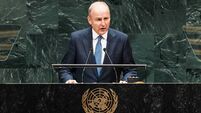
Delegates called on Health Minister Micheál Martin to address the anomaly.
Mr Martin said while he agreed there was an anomaly, nothing could be done under benchmarking.
“In terms of broad public pay policy, the Government is not going to re-open benchmarking, but I will continue to look at the issue with the organisation.”