Leaving Cert repeaters hog places in medicine
However, a member of the Governmentâs task force on medical education and training (MET group) has criticised this route to medicine saying it can deny more suitable candidates the opportunity to train as a doctor.
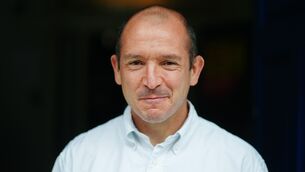
At a recent forum on medical education in the University of Limerick, Dr Cillian Twomey said: âIt is madness of the highest order, the grinds culture, the one-to-one grinds. If thatâs the way you go, you will get there eventually, but others who could be as good a doctor or better are being denied places.
âI am quite certain those who achieve under 550 could do just as good a job.â
In his presentation, the chairman of Comhairle - the body responsible for regulating consultant posts - said it was not clear whether the highest academic achievers in the Leaving Cert were the most suitable medical students.
He blamed the huge number of repeats as âa key factorâ driving CAO points to record levels for the four disciplines. He said they were squeezing first-time- round Leaving Cert students out of the high-demand courses.
CAO figures for 2004 show of 823 places available to medicine, pharmacy, dentistry and veterinary, 142 went to repeat Leaving Certificate students. Another 165 went to students from Britain and the North.
Dr Twomey, a consultant geriatrician at Cork University Hospital and St Finbarrâs in Cork, said there was âover-dependence on part-time and occasional teaching staff in our medical schoolsâ, and Irish schools operate with less than 10% of the equivalent senior academic clinical staffing of British medical schools.
Irish Medical Council President Dr John Hillery said their 2003 review of Irish medical schools found increasing evidence that staff enthusiasm for teaching was being affected by managerial, regulatory and clinical pressures and that it is still common for lectures and clinical teaching to be cancelled without adequate warning. Students reported âno-showâ rates of 30% for clinical teaching sessions were the norm.
Dr Twomey said Fottrell (the report of the MET group) has also found clinical training is âeffectively invisibleâ to those charged with assessing the quality of medical graduates.
It also says the need to produce doctors of a uniform competency âis a critical issueâ.